The question behind this page
Can my part be laser cut — in which material, how thick, and what do I need to send to get it made?
Key Takeaways
- Three material families: acrylic and wood are cut on a CO2 laser; stainless steel is cut on a fibre laser.
- Acrylic: clear sheet in 3 mm and 5 mm is the everyday stock, with some 6 mm and 10 mm. Coloured acrylic is mostly 3 mm.
- Stainless steel: thin sheet, up to about 2 mm, for letters, plates and decorative panels.
- Biggest single piece: a full sheet, 2400 × 1200 mm.
- Send a vector file (AI, PDF, SVG or DXF) at real size in millimetres, plus material, thickness and quantity.
- Lead time is typically 3–5 working days after payment and design confirmation.
The Short Answer
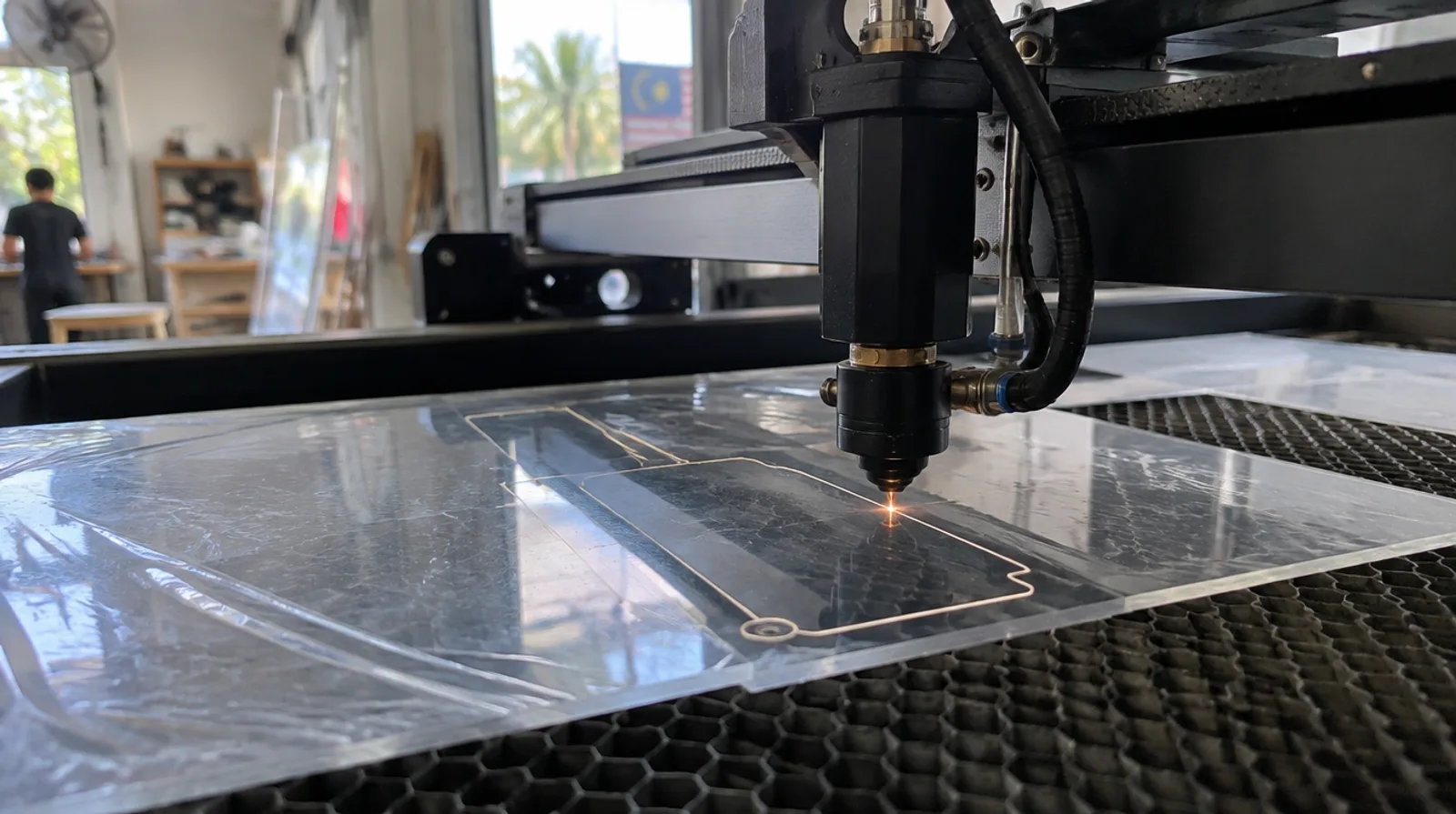
At UMAKE we laser cut acrylic, wood and thin stainless steel. Acrylic and wood go on a CO2 laser. Stainless steel goes on a fibre laser, which handles sheet up to about 2 mm. The largest piece we can cut in one go is a full 2400 × 1200 mm sheet.
If your part fits those limits, the job is usually simple: send a vector drawing at real size, tell us the material, thickness and quantity, and we quote on WhatsApp. Production is typically 3–5 working days once payment and the design are confirmed.
| Material | Laser | Thickness we commonly cut | Typical use |
|---|---|---|---|
| Clear acrylic | CO2 | 3 mm and 5 mm; some 6 mm and 10 mm | Signs, display boxes, covers, stands |
| Coloured acrylic | CO2 | Mostly 3 mm | Letters, logos, layered signs |
| Wood (plywood, MDF) | CO2 | Thin sheet — ask for the thickness you need | Letters, plaques, decor, cake toppers |
| Stainless steel | Fibre | Up to about 2 mm | Letters, house plates, panels |
The service pages have the full detail: laser cutting and engraving services, acrylic laser cutting and stainless steel laser cutting.
Acrylic: Thickness and Edge Finish
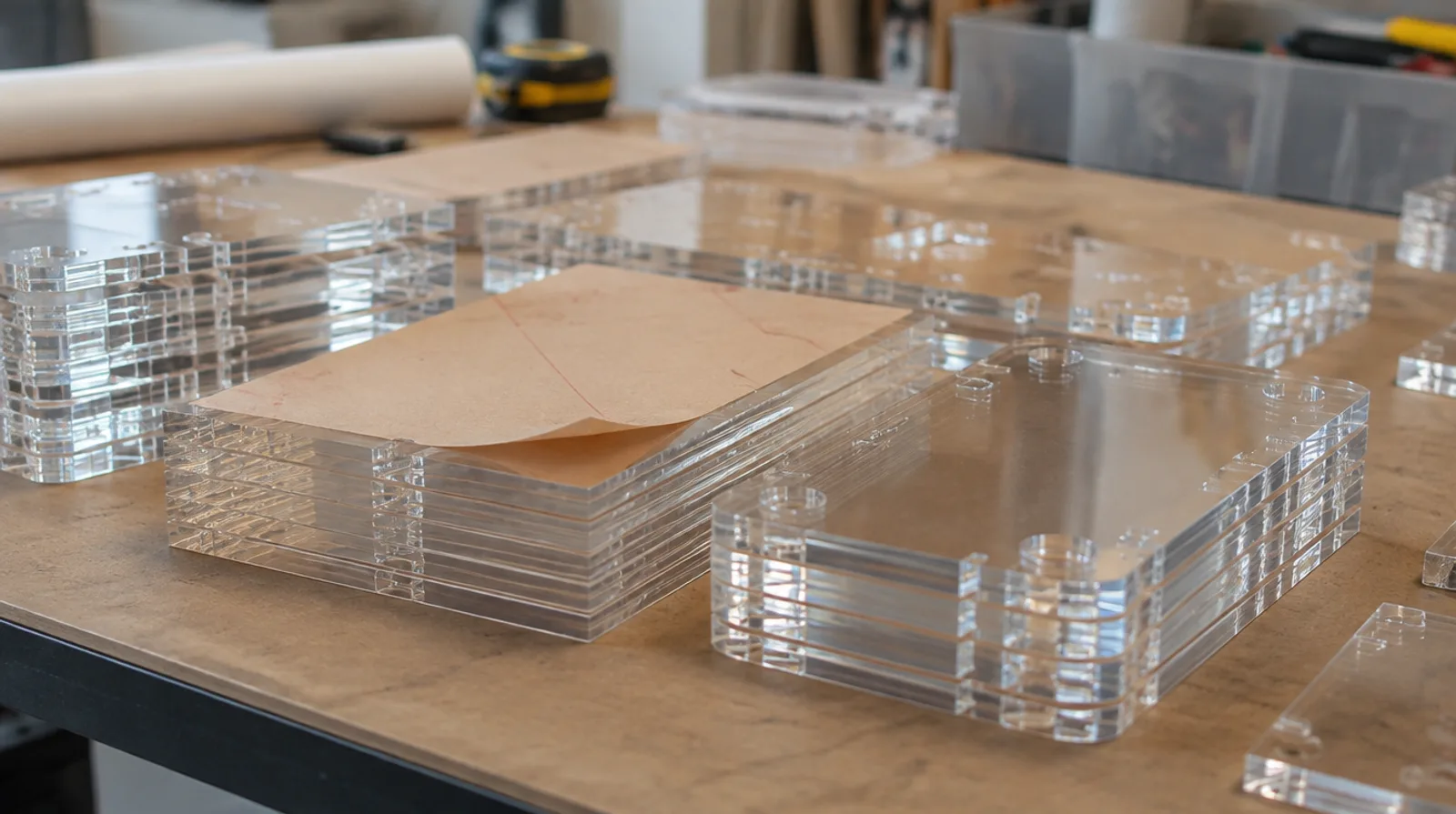
Acrylic is the material a CO2 laser cuts best. The beam melts through the sheet and leaves a smooth, glossy edge, so most parts need no sanding or polishing afterwards. That is why acrylic signs and display boxes are nearly always laser cut rather than sawn.
What we keep and cut most:
- 3 mm clear — the default for small signs, covers, tags and self-assembly boxes.
- 5 mm clear — stiffer; used for larger signs, shelves and boxes that carry weight.
- 6 mm and 10 mm clear — available in some stock for bases, blocks and thick plaques. Check with us before you design around it.
- Coloured acrylic — mostly 3 mm. Black, white and common colours are the safe choices; ask about a specific shade.
Two limits worth knowing. Thicker sheet cuts more slowly, and the cut edge has a very slight taper, which matters only if parts must slot together tightly. And very thin details — a letter stroke narrower than the sheet is thick — become fragile. As a working rule, keep the narrowest part of your design at least as wide as the sheet thickness.
If you only need plain rectangles or panels, see acrylic sheet cut to size.
Wood: Plywood and MDF
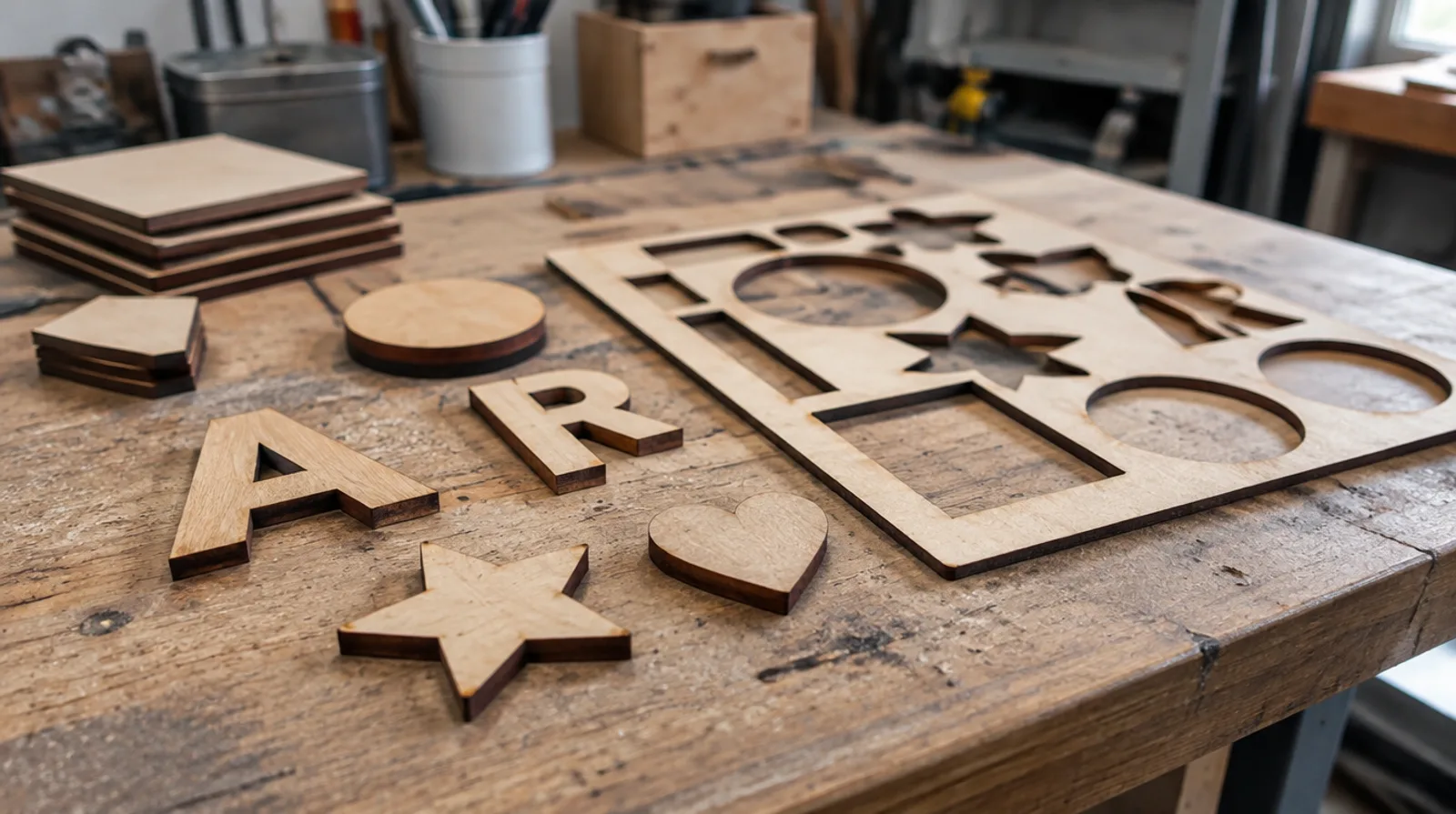
Wood is cut on the same CO2 laser. The difference you will see is the edge: the laser burns its way through, so the cut edge is dark brown. On a wooden letter or plaque that dark edge is part of the look. If you want a pale edge, the part has to be sanded or painted after cutting.
Need help with Laser Cutting?
Get a free quote from UMAKE — custom signage designed and manufactured in Malaysia.
Thin plywood and MDF sheet are the usual choices. Solid timber varies in density and resin, so the result is less predictable. Tell us the thickness you want and what the part is for, and we will confirm whether the laser or another cutting method suits it better. Finished examples include our wood letter signs.
Stainless Steel: Up to About 2 mm
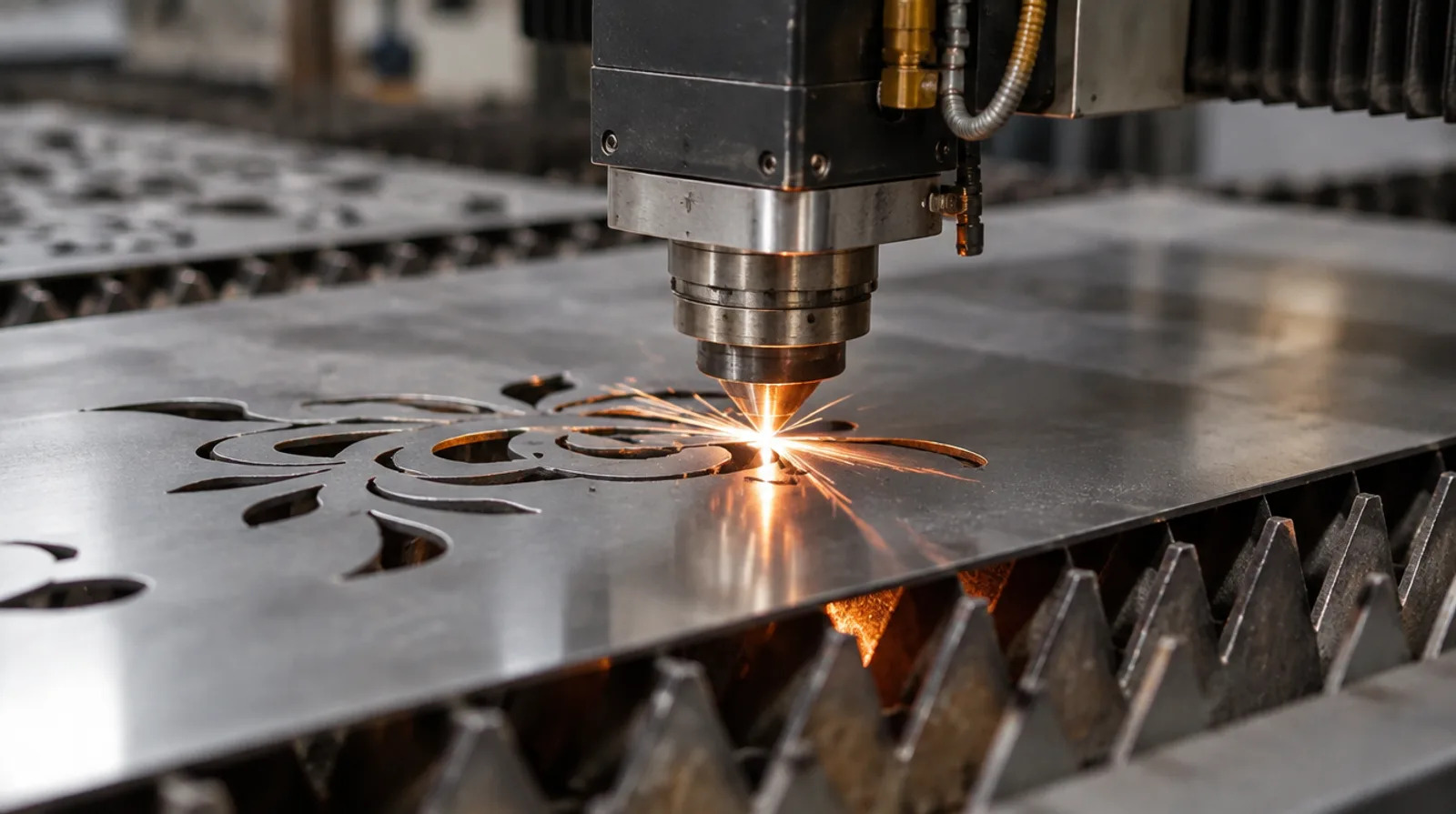
A CO2 laser cannot cut metal sheet. For stainless steel we use a fibre laser, which cuts thin sheet up to about 2 mm cleanly. That range covers most signage work: cut-out letters, logo plates, house number plates and decorative panels.
Things to plan for with stainless steel:
- Finish. Brushed (hairline) and mirror finishes look very different. Say which you want.
- Small holes and thin strokes. Very fine detail in metal can distort from heat. Keep slots and strokes wider than the sheet thickness.
- Thicker plate. Anything well above 2 mm is outside what we laser cut. Ask us first rather than assuming.
See 304 stainless steel cut-out signage for what the finished result looks like.
What a Laser Should Not Cut
Not every sheet material belongs under a laser. PVC and PVC foam board release corrosive fumes when burnt, so they are cut with a router or blade instead. Thick metal plate, glass and stone are also not laser-cutting jobs.
That does not mean we cannot make the part. It means the cutting method changes, and so do the edge finish and the price. If you are unsure whether you need cutting or surface marking, read laser cutting vs laser engraving.
What File Do I Send?
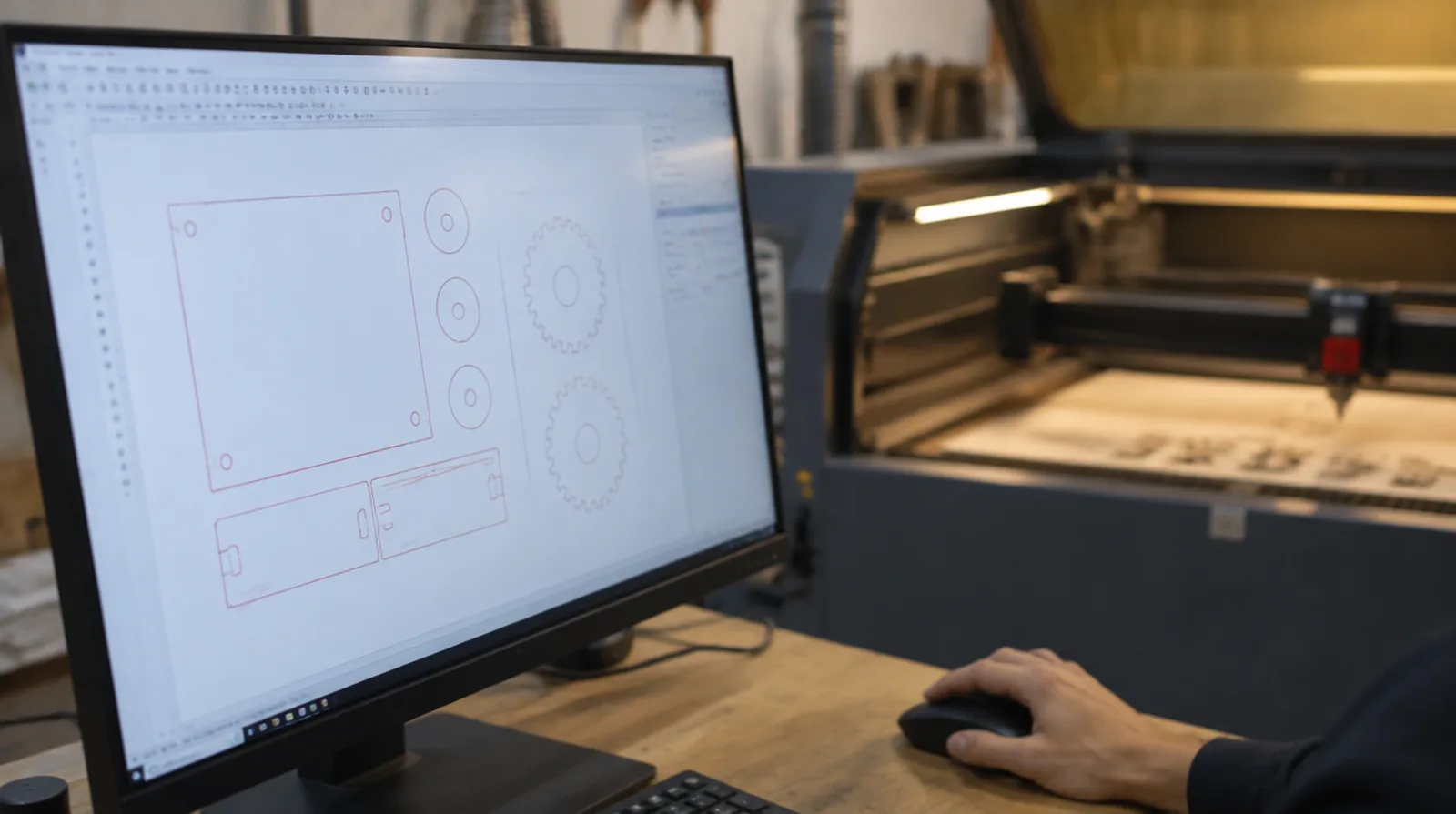
A laser follows lines, so it needs a vector file. The formats that work without trouble are AI, PDF (saved from a vector program), SVG and DXF.
Before you send it, check five things:
- Real size, in millimetres. Draw at 1:1 and also write the finished width and height in your message.
- Text converted to outlines (curves), so the font cannot change on our computer.
- Closed shapes. Every outline must join up. Open paths do not cut a clean part.
- No duplicate lines stacked on top of each other. The laser will cut the same line twice.
- Mark what is cut and what is engraved, if the part has both.
A JPG, PNG or phone photo is not a cutting file. We can redraw simple artwork from an image, but that is design time, and it is quoted separately. For more depth, use the file format and artwork guide and the final approval checklist for acrylic laser cutting.
What Drives the Price
We do not publish a flat rate, because two parts of the same size can cost very different amounts. These are the things that move a laser cutting quote:
- Material and thickness. Thicker sheet costs more and cuts more slowly. Stainless steel costs more than acrylic.
- Total cutting length. A plain rectangle is quick. The same rectangle filled with small cut-outs takes many times longer.
- How well the parts fit on a sheet. Odd shapes waste material between parts.
- Quantity. Setup is shared across the batch, so the price per piece falls as quantity rises.
- Artwork condition. A clean vector file is ready to cut. A redraw adds design time.
- Extra steps. Engraving, UV printing, bending, gluing and assembly are each added work.
For a closer look at acrylic specifically, see what custom acrylic cutting costs.
Lead Time and How to Order
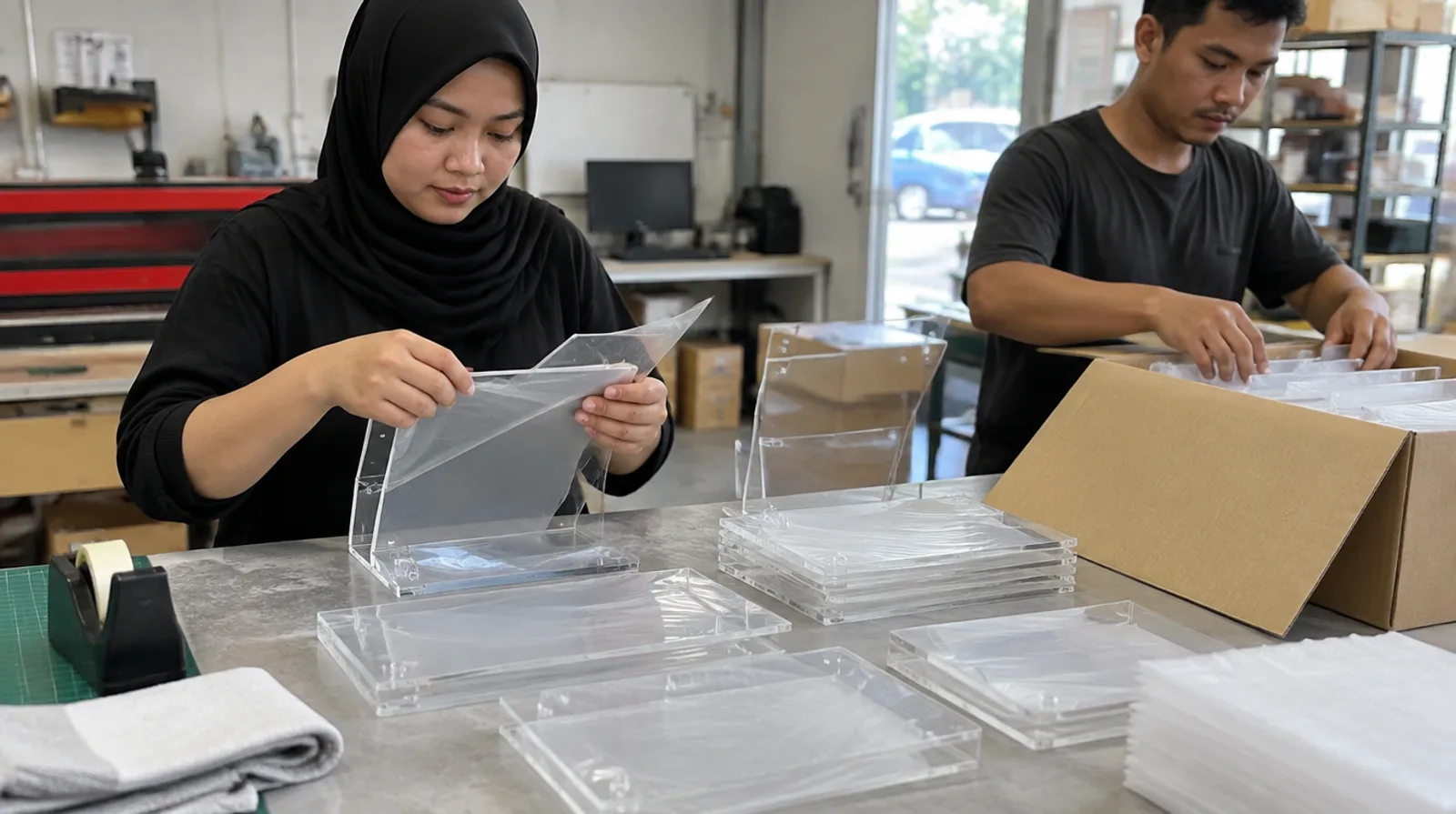
Typical lead time is 3–5 working days, counted from the day payment is made and the design is confirmed — not from the first message. Large quantities, special materials and jobs with printing or assembly take longer; we tell you when we quote.
The order steps are short:
- Send your file, material, thickness, quantity and deadline through the contact page or WhatsApp.
- We check the file and reply with a quote.
- You confirm the drawing and pay.
- We cut, check and pack.
- Collect from our workshop in Balakong, Selangor, or have it delivered. Flat parts ship across Malaysia by courier; on-site installation is offered in KL and Selangor only.
Frequently Asked Questions
What is the thickest acrylic you can laser cut?
Our everyday clear acrylic is 3 mm and 5 mm, and we hold some 6 mm and 10 mm. Coloured acrylic is mostly 3 mm. If your design needs a thickness outside these, ask before you finalise the drawing so we can confirm stock and the right cutting method.
Can you laser cut stainless steel?
Yes. Stainless steel is cut on a fibre laser, in thin sheet up to about 2 mm. That covers cut-out letters, logo plates, house number plates and decorative panels. Thicker plate is outside what we laser cut.
What is the biggest size you can cut?
The largest single piece is one full sheet, 2400 x 1200 mm. Larger signs and panels are made in sections and joined or mounted side by side.
What file format do I need for laser cutting?
A vector file: AI, PDF saved from a vector program, SVG or DXF. Draw it at real size in millimetres, convert text to outlines, and make sure every shape is closed. A JPG or PNG cannot be cut directly and has to be redrawn first.
How long does laser cutting take?
Typically 3-5 working days after payment and design confirmation. Large quantities, special materials, and jobs that also need printing, bending or assembly take longer, and we state the time when we quote.
Can I order just one piece?
Yes, single pieces and prototypes are fine. The price per piece is higher for one-offs because the file check and machine setup are not shared across a batch.


