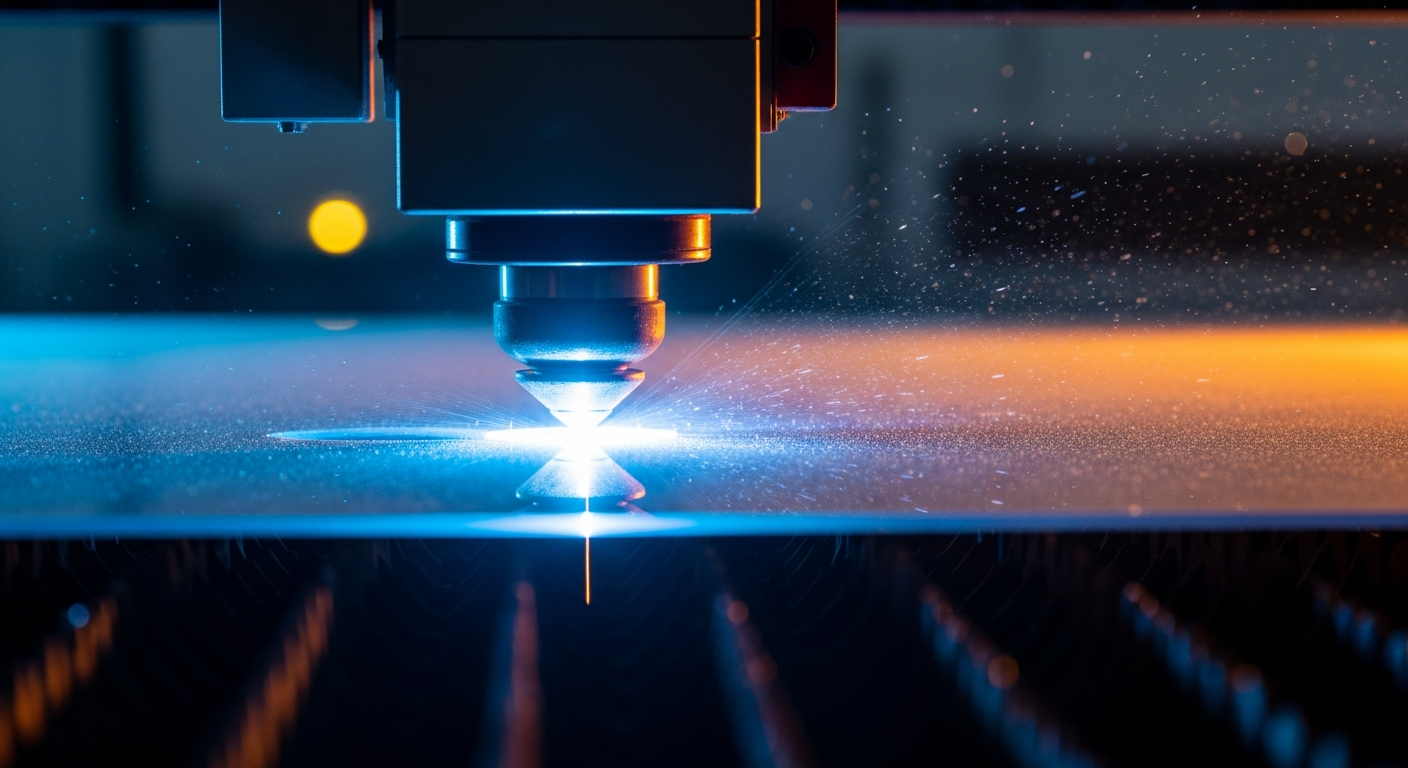
If you are sourcing custom signage, gifts, tags or plates in Malaysia, you have probably seen the terms laser cutting and laser engraving used almost interchangeably. They are not the same process, and knowing the difference saves you money and avoids ordering the wrong thing. In short: laser cutting slices all the way through a material to create a shape, while laser engraving marks or etches the surface without cutting through. At UMAKE in Selangor we run both CO2 and fibre lasers in-house, so we deal with this question every day.
The core difference in one line
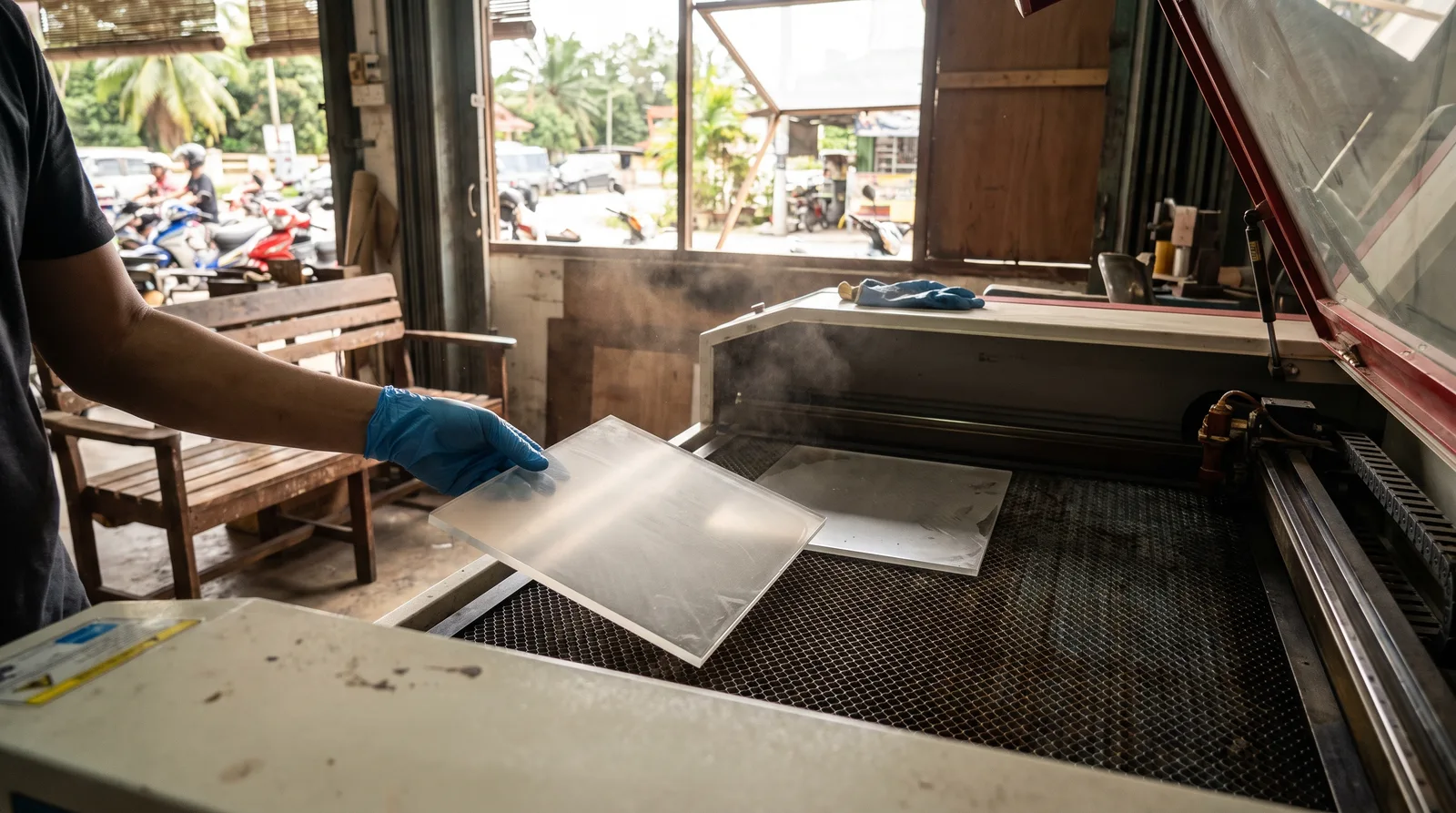
Laser cutting separates one piece of material into two by burning, melting or vaporising a thin line all the way through the thickness. Laser engraving fires a lower-power, faster beam that only removes or discolours the top surface, leaving a permanent mark while the material stays in one piece. The same machine can often do both jobs by changing the power, speed and number of passes.
| Aspect | Laser cutting | Laser engraving |
|---|---|---|
| What it does | Cuts through to make a shape | Marks the surface only |
| Beam power | Higher, often multiple passes | Lower, faster, shallow |
| Result | Two separate pieces / a cut-out | One piece with a permanent design |
| Typical use | Letters, shapes, plates, panels | Logos, text, serial numbers, artwork |
How laser engraving works
Engraving uses the same kind of beam but at lower power and higher speed, scanning back and forth like a printer to remove only the top layer or change its colour. On wood and acrylic the surface is burned or frosted; on coated metals the beam ablates the coating to reveal the base; on bare metals a fibre laser creates a permanent mark through localised heating. Nothing is cut through, so the part stays whole and you get crisp text, logos, QR codes or photo-style artwork that will not rub off.
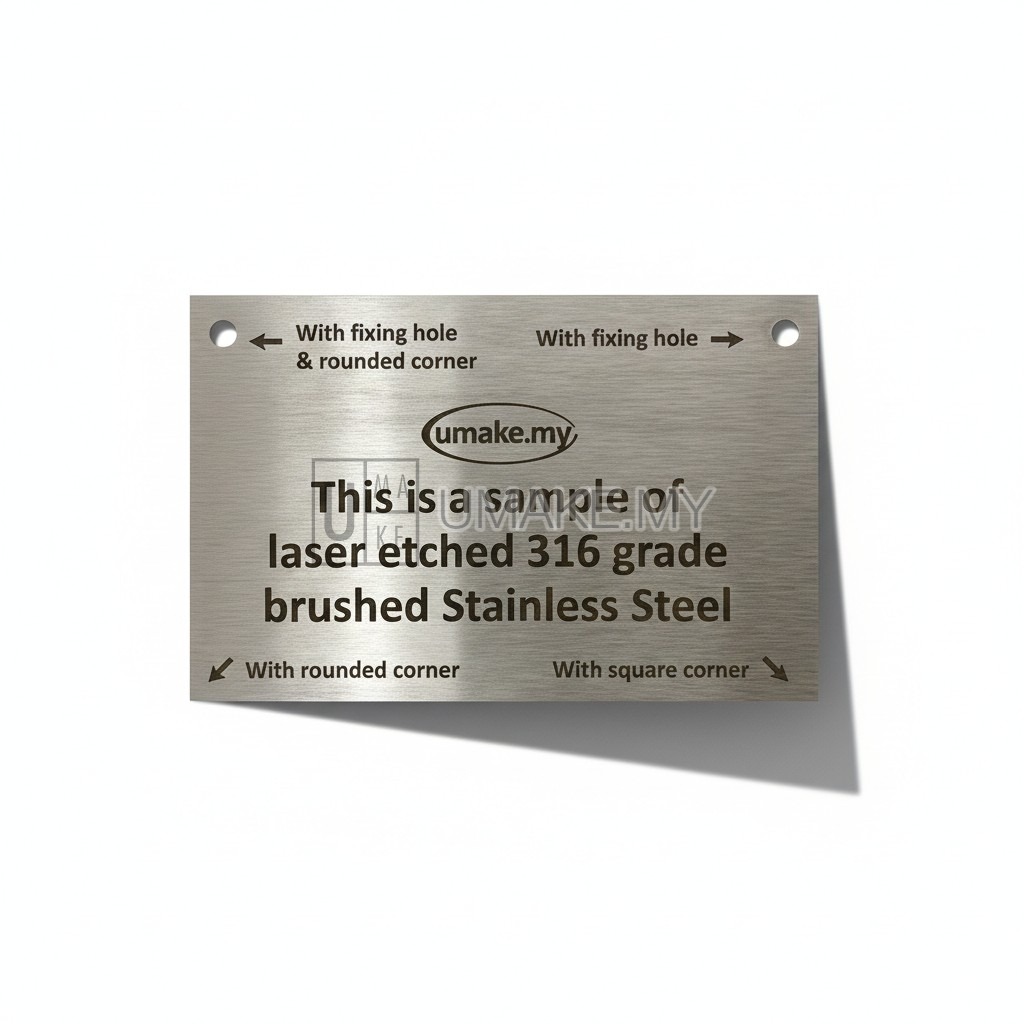
Engraving marks the surface only: a Stainless Steel Engraved Sign (from RM6.90) keeps its full sheet while the text is etched in.
How laser cutting works
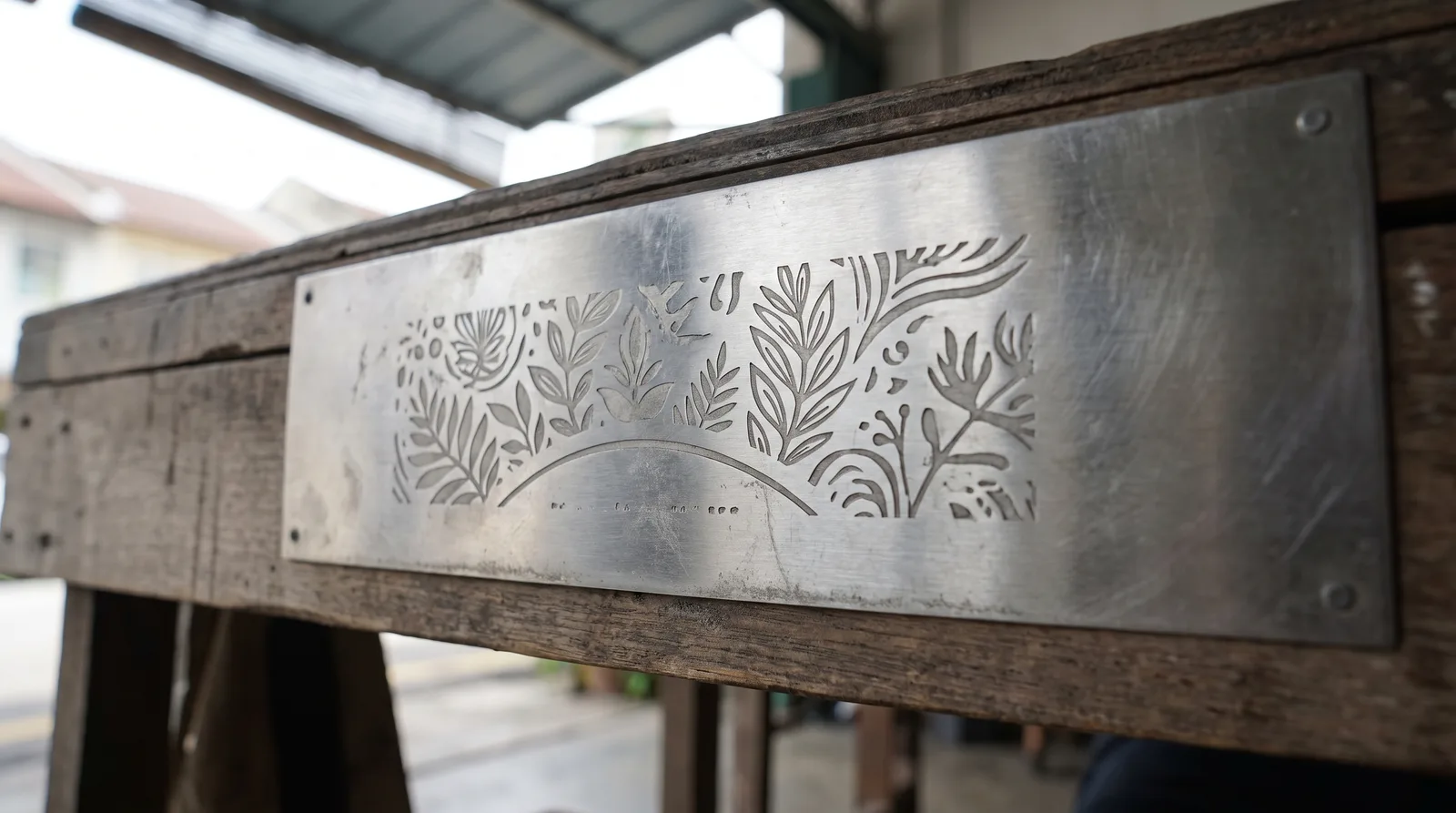
In cutting, the beam is focused to a tiny point and driven at high power along the outline of your design. It melts or vaporises material along that line, and an assist gas blows the molten debris away, leaving a clean edge. Because the beam goes fully through the sheet, you end up with a finished shape: an acrylic letter, a metal bracket, a number plate, a gift tag. Edge quality matters here. On acrylic, a CO2 laser gives a beautifully clear, polished edge that looks flame-finished, which is why acrylic is so popular for premium custom pieces.
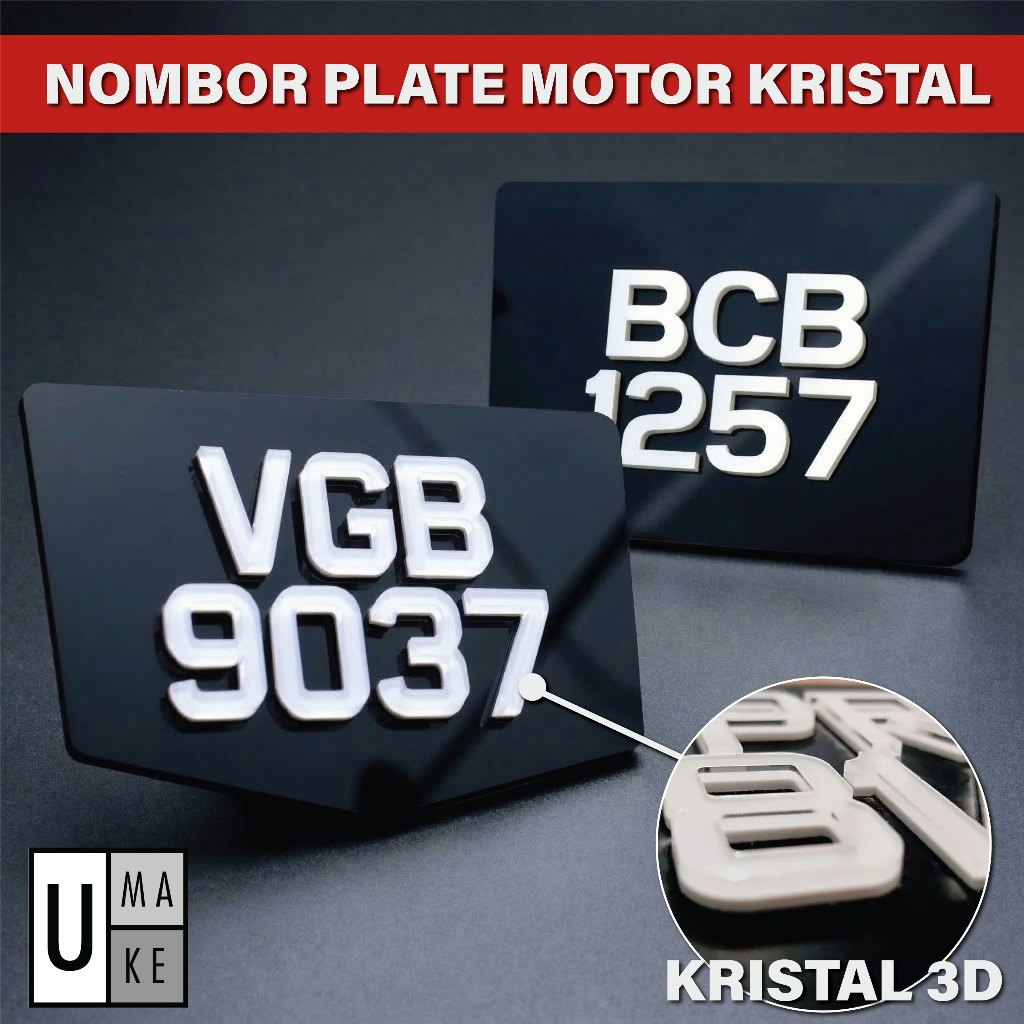
Laser cutting goes all the way through: this Acrylic Laser-Cut Crystal Plate (from RM3.90) is cut to its exact outline.
Need help with laser cutting?
Get a free quote from UMAKE — custom signage designed and manufactured in Malaysia.
Which materials suit each process
The right process depends heavily on the material. Here is a quick guide based on what we run on our CO2 and fibre machines.
| Material | Cutting | Engraving |
|---|---|---|
| Acrylic | Yes (CO2) - clear edges | Yes - frosted/etched look |
| Wood / MDF | Yes (CO2) | Yes - burned tone |
| Stainless steel | Fibre/specialist only | Yes (fibre) - permanent |
| Coated/anodised metal | Limited | Yes - reveal base layer |
| Two-colour board | Yes (CO2) | Yes - reveal contrast colour |
A two-colour board is a perfect example of engraving being the star: our Double-Colour Engraving Board (from RM7.90) has a top layer and a contrasting base, so engraving through the top instantly reveals sharp gold-on-black or similar text. For a deeper look at material behaviour, see our guide on laser engraving materials.
When you need one, the other, or both
Most real-world products use both processes together. The classic workflow is: cut the shape first, then engrave the design onto it. An acrylic table number is cut to its rounded rectangle, then the number and any logo are engraved on the surface. A name plate is cut from a sheet, then the name is etched in. A keychain is cut to outline, then engraved with a logo.
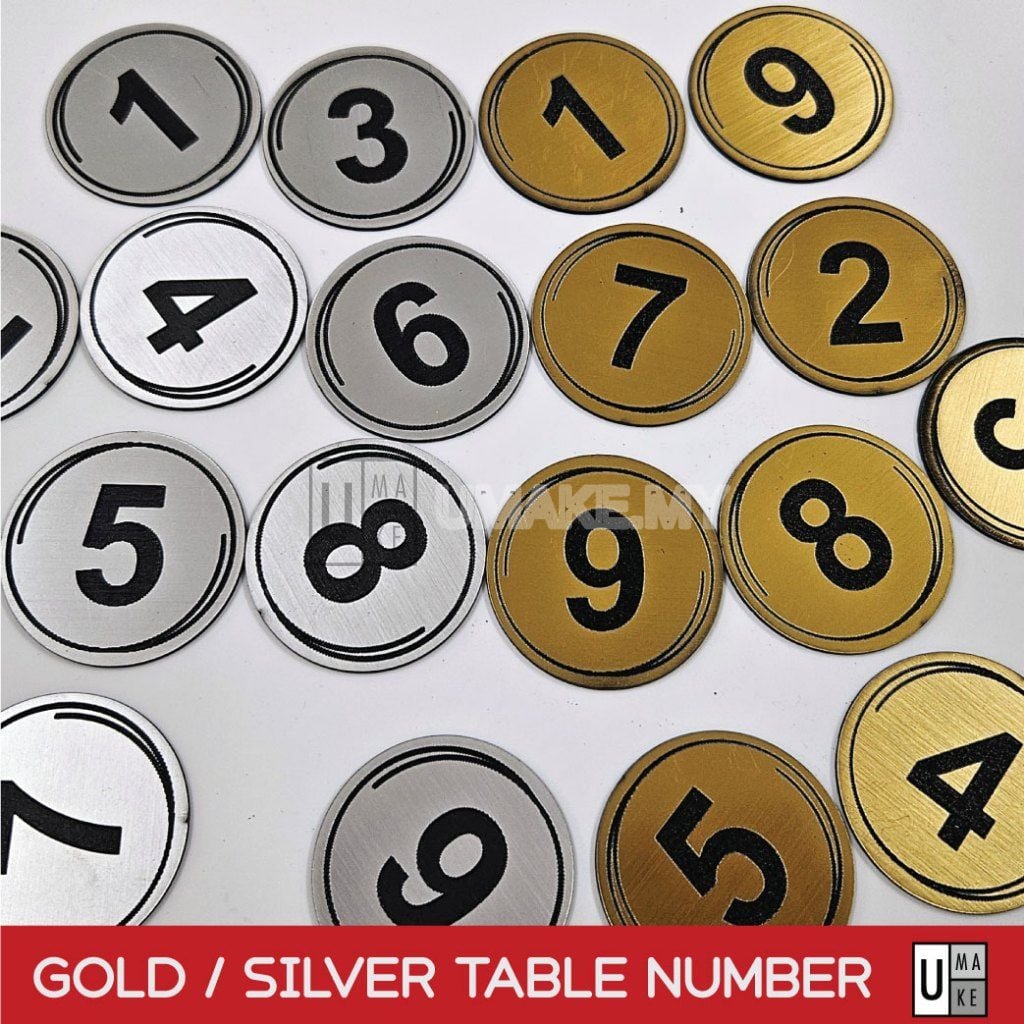
Both processes together: this Laser Engraved Acrylic Signage (from RM15.00) is cut to shape, then engraved.
You only need one process when the material already comes in the final shape. If you have a ready-cut stainless plate and just want text on it, that is pure engraving. If you only need a blank acrylic shape with no markings, that is pure cutting. Choose cutting only for shapes and outlines, engraving only for marking an existing object, and both for the vast majority of custom signage and gifts.
Cost implications
Cost is driven by machine time, material and complexity. Engraving large filled areas takes longer because the laser scans every line, so a fully engraved background costs more than thin outline text. Cutting cost scales with the total length of the cut line and the material thickness, since thicker sheets need more passes. As a rough rule:
- Simple engraving (a name or short logo) is usually the cheapest add-on.
- Cutting an outline is moderate, rising with intricate shapes and thickness.
- Large filled engraving (photos, full backgrounds) is the most time-intensive.
Doing both in one order is efficient because the part is set up once. Our Laser Engraved Acrylic Signage (from RM15.00) is a good example of a cut-and-engrave piece priced as a finished product. For a full breakdown of pricing factors, read our laser engraving cost guide, and if you are comparing suppliers, our notes on choosing a laser engraving service will help.
Why CO2 and fibre lasers both matter
There is no single laser that does everything well. CO2 lasers excel at non-metals: acrylic, wood, leather, paper and two-colour board, giving clean cuts and rich engraving. Fibre lasers are made for metals, marking and engraving stainless steel, aluminium and coated metals permanently. Because UMAKE runs both types in-house in Selangor, we can cut your acrylic shape and fibre-engrave your stainless plate without outsourcing, with nationwide delivery across Malaysia.
Frequently asked questions
What is the main difference between laser cutting and laser engraving?
Laser cutting slices all the way through a material to create a separate shape, while laser engraving only marks or etches the surface without cutting through, leaving the material in one piece.
Can one laser machine do both cutting and engraving?
Yes. Many machines do both by adjusting power, speed and passes - high power to cut through, lower power and faster scanning to engrave the surface. At UMAKE we use CO2 lasers for non-metals and fibre lasers for metals.
Which materials are best for laser cutting versus engraving in Malaysia?
Acrylic, wood and two-colour board cut and engrave beautifully on a CO2 laser. Stainless steel and coated metals are best engraved or marked with a fibre laser rather than cut, since cutting metal needs specialist equipment.
Is engraving or cutting more expensive?
It depends on the job. Simple text engraving is usually the cheapest add-on, cutting an outline is moderate and scales with shape complexity and thickness, while large filled engraving such as photos takes the most machine time and costs more.
Do I need both processes for a custom sign or plate?
Usually yes. The common workflow is to cut the shape first, then engrave the text or logo onto it. You only need one process if the material already comes in the final shape or only needs surface marking.
Not sure whether your project needs cutting, engraving or both? Send us your design and we will advise the right process, material and price. Contact UMAKE for a quote - we run CO2 and fibre lasers in-house in Selangor with nationwide delivery across Malaysia.


