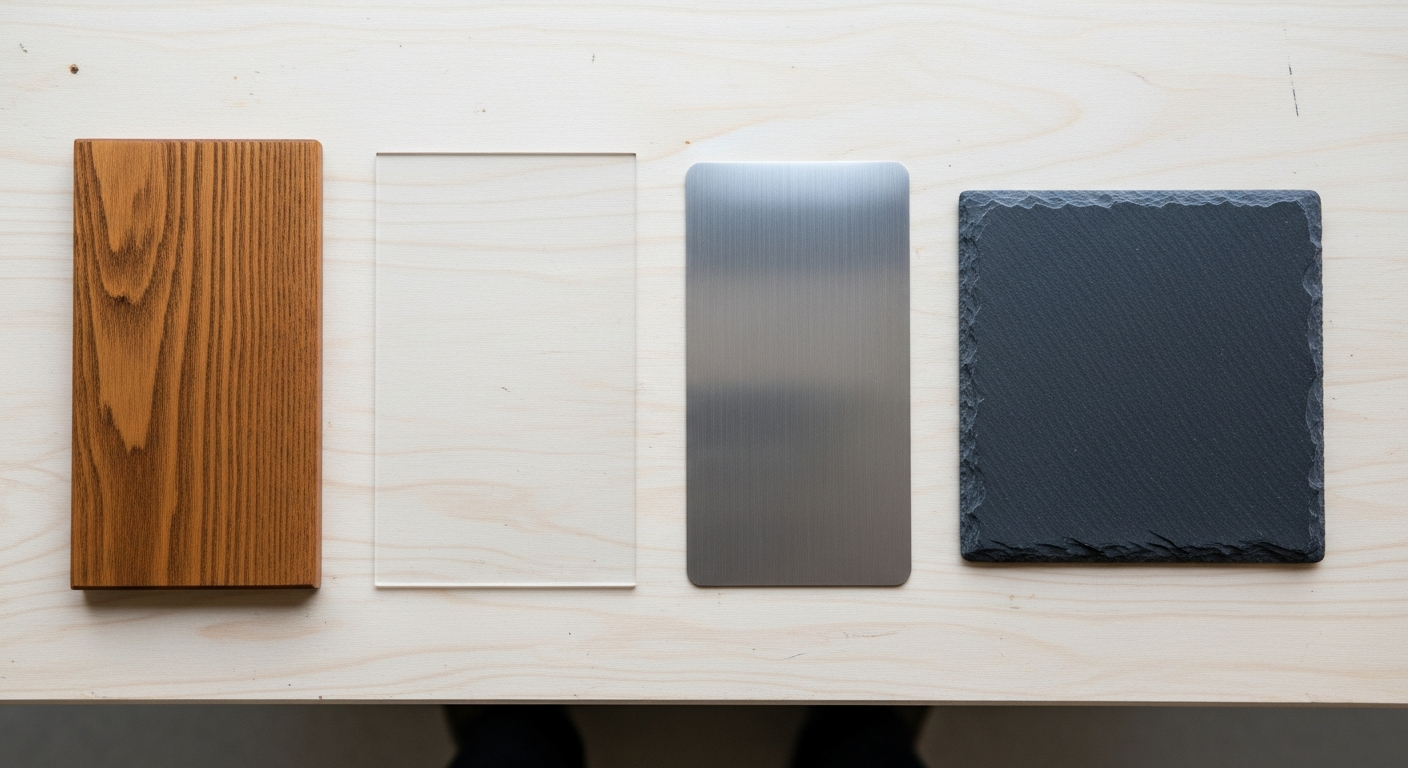
Laser engraving works on a surprisingly wide range of materials — but not every material reacts to a laser the same way, and the right machine matters. Whether you're making metal name tags, wood signage or acrylic displays, this guide explains which materials are suitable for laser engraving in Malaysia, what each one looks like engraved, and when to use a CO2 versus a fibre laser.
Which materials can be laser engraved?
Here are the materials most commonly laser engraved in Malaysia, the machine that suits each, and the typical result:
| Material | Best machine | Engraved result | Common uses |
|---|---|---|---|
| Stainless steel | Fibre | Permanent dark or frosted mark | Name tags, plaques, house plates |
| Anodised / coated aluminium | Fibre / CO2 | Crisp light-on-dark mark | Awards, labels, gadgets |
| Wood, plywood & MDF | CO2 | Natural burnt-brown engraving | Signage, gifts, décor |
| Acrylic | CO2 | Frosted etch + clean cut edges | Signage, displays, table numbers |
| Double-colour ABS board | CO2 | Sharp colour-contrast lettering | Name plates, door signs |
| Leather, glass & slate | CO2 | Debossed / frosted etch | Gifts, awards, coasters |
Safety note: PVC and vinyl should never be laser cut — they release corrosive chlorine gas. A reputable engraver will always check your material first.
Metal: stainless steel, aluminium & brass
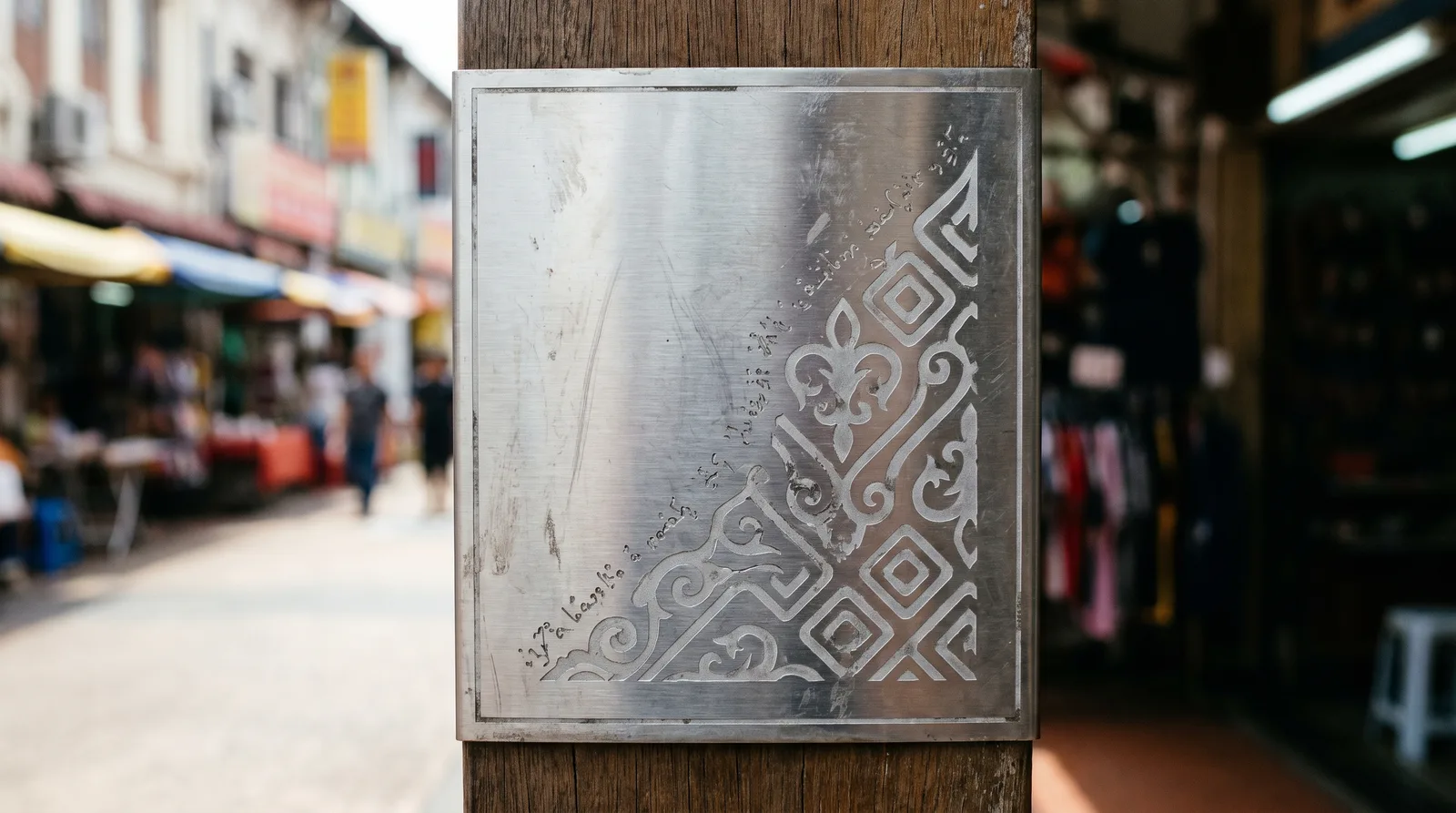
Metal is best engraved with a fibre laser, which marks the surface permanently — no paint, no stickers, nothing to peel off. 304 stainless steel is the workhorse in Malaysia: it produces a clean dark or frosted mark, resists rust, and survives outdoors, making it ideal for house number plates, industrial tags and engraved signs. Aluminium and brass engrave beautifully too, and anodised aluminium gives a striking light-on-dark contrast popular for awards.
Need help with laser engraving?
Get a free quote from UMAKE — custom signage designed and manufactured in Malaysia.
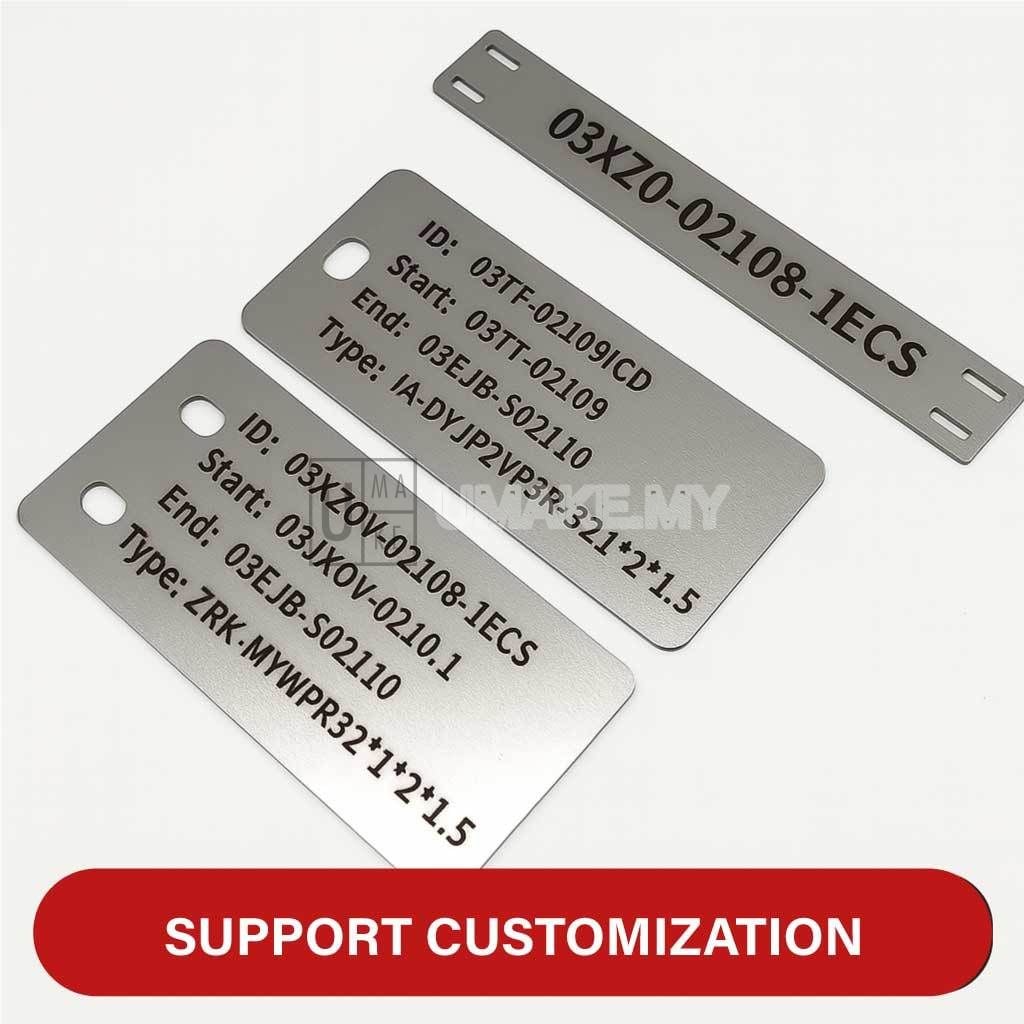
Fibre-laser engraved stainless steel marks are permanent and weatherproof — perfect for outdoor use.
Wood: plywood, MDF & solid wood
Wood is the classic CO2 laser material. The laser burns a natural brown engraving into the surface, with the grain adding character. Plywood and MDF give consistent, predictable results and are great for budget signage; solid wood (oak, pine, beech) gives a premium, gift-worthy finish. We use it for wood name tags and engraved wood signage.
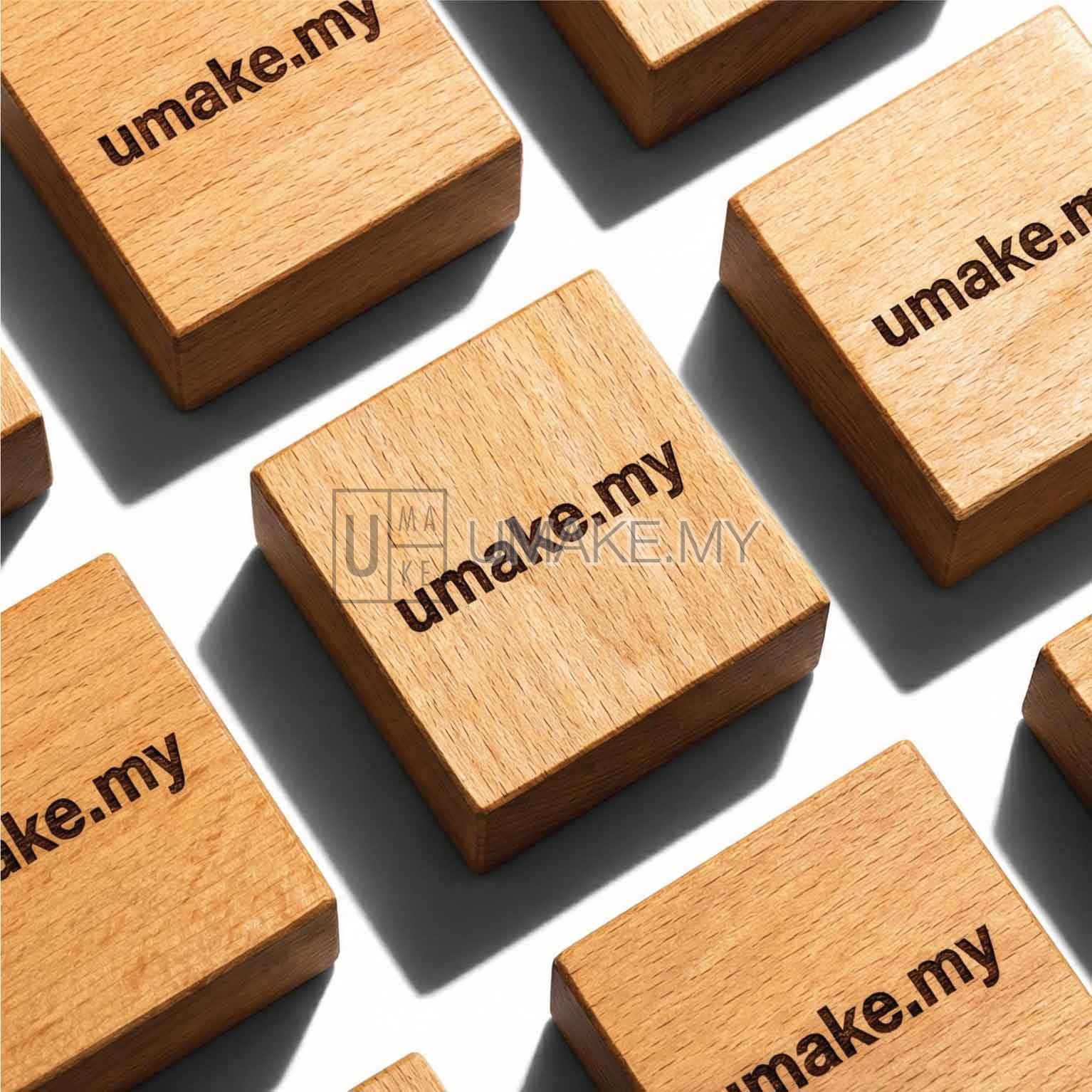
Engraved wood signage — natural burnt-brown contrast from a CO2 laser.
Acrylic & double-colour board
Acrylic is a CO2 favourite because the same machine both engraves a frosted-white mark and cuts clean, polished edges — so you can make a fully custom shape and engrave it in one pass. It's behind our laser-engraved acrylic signage and acrylic table numbers. Double-colour ABS board has a coloured top layer over a contrasting core — engrave through the top and crisp lettering appears, ideal for door signs and name plates.
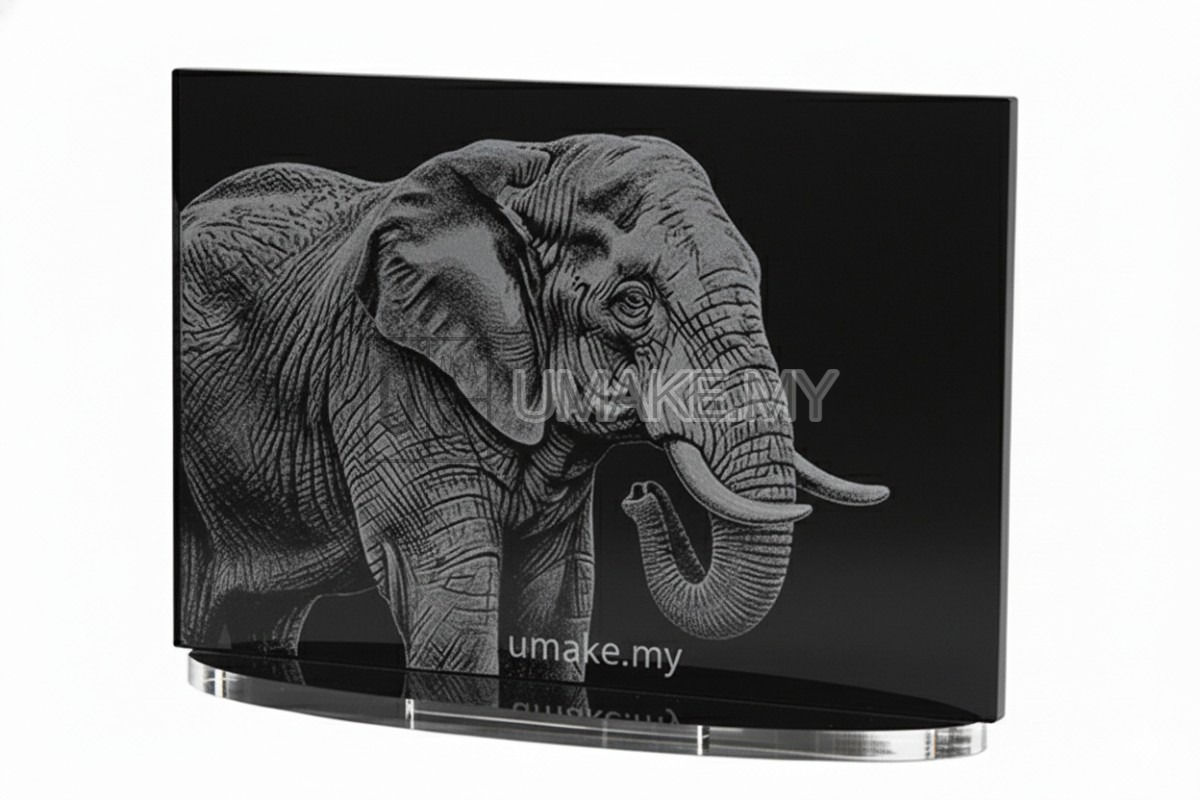
Laser-engraved acrylic signage — frosted etch with clean laser-cut edges.
Other materials: leather, glass, slate & coated metal
A CO2 laser also engraves leather (debossed burnt mark for tags and wallets), glass (frosted etch for awards and bottles), slate and stone (light-grey etch for plaques and coasters), plus paper, card and many coated metals. If you have an unusual material, send us a sample — a quick test cut tells us exactly how it will turn out.
CO2 vs fibre laser: which machine for which material?
The short version: CO2 lasers excel on organic and non-metal materials — wood, acrylic, leather, glass and paper. Fibre lasers are built for bare metals — stainless steel, aluminium and brass — where they leave a permanent, high-contrast mark. Using the wrong machine is the most common reason a DIY or hobby engraving looks weak, so a shop that runs both gives you the best result for every material.
What UMAKE laser engraves
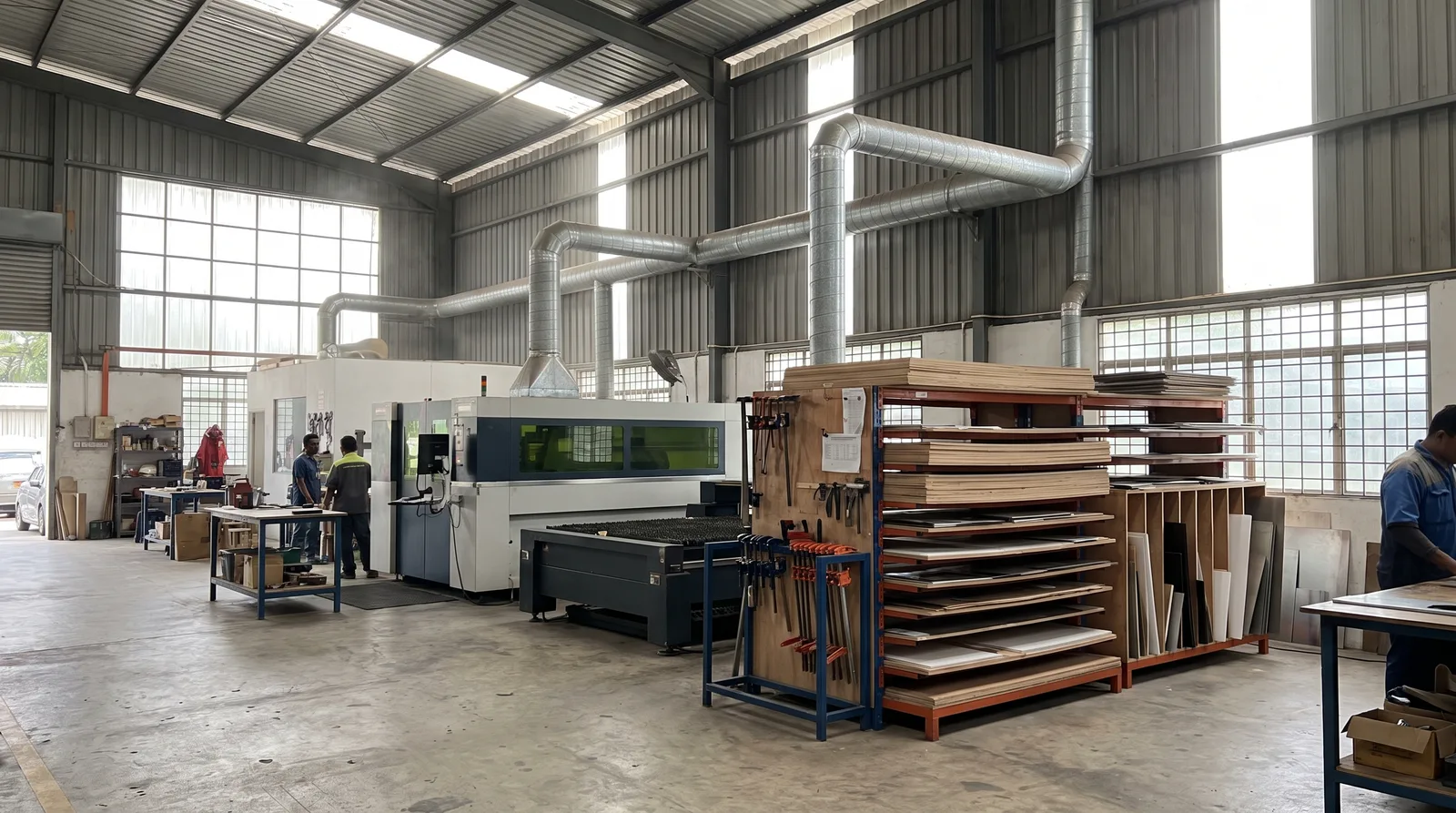
UMAKE runs both CO2 and fibre lasers in-house in Malaysia, so we engrave and cut stainless steel, acrylic, wood, double-colour board and mild steel under one roof — name tags, signage, plaques, awards and industrial parts. Not sure which material suits your project? Compare materials and prices in our cost guide, or send your design for advice.
Frequently asked questions
What materials can be laser engraved?
The most common are stainless steel, aluminium, brass, wood, plywood, MDF, acrylic, double-colour ABS board, leather, glass and slate. Metals are engraved with a fibre laser; wood, acrylic and other non-metals with a CO2 laser.
Can you laser engrave both metal and wood?
Yes, but usually with different machines. Metal needs a fibre laser for a permanent mark, while wood is engraved with a CO2 laser. UMAKE runs both, so we handle metal and wood in the same workshop.
What is the difference between CO2 and fibre laser engraving?
CO2 lasers are best for non-metals such as wood, acrylic, leather and glass. Fibre lasers are designed for bare metals like stainless steel, aluminium and brass, producing a permanent high-contrast mark.
Can acrylic be laser engraved and cut?
Yes. A CO2 laser can both engrave a frosted-white mark and cut clean, polished edges on acrylic, so custom shapes and engraving can be done in a single process.
Which material is best for outdoor laser engraving?
304 stainless steel is the top choice for outdoor use because the engraving is permanent and the metal resists rust and weather — ideal for house number plates and outdoor signage.
Have a material in mind? Send UMAKE your design and we'll recommend the best material, machine and finish for your project.


