The question behind this page
Which kind of acrylic sign should I order — printed, cut-out letters or layered — and will it suit where I am putting it?
Key Takeaways
- Three main types: UV-printed panels, cut-out letters, and layered (3D) signs that combine both.
- UV print handles full-colour logos, photos and small text on one panel. Reverse print sits behind the acrylic and is protected by it.
- Cut-out letters give a cleaner, more premium look, but each letter is a separate piece, so fine text is not suitable.
- Layered signs add depth: a back panel with raised letters or a raised logo on top.
- Indoors all three work. Outdoors, prefer reverse print or solid coloured acrylic, and avoid full afternoon sun where you can.
- One panel can be up to 2400 × 1200 mm; most signs use 3 mm or 5 mm sheet.
The Short Answer
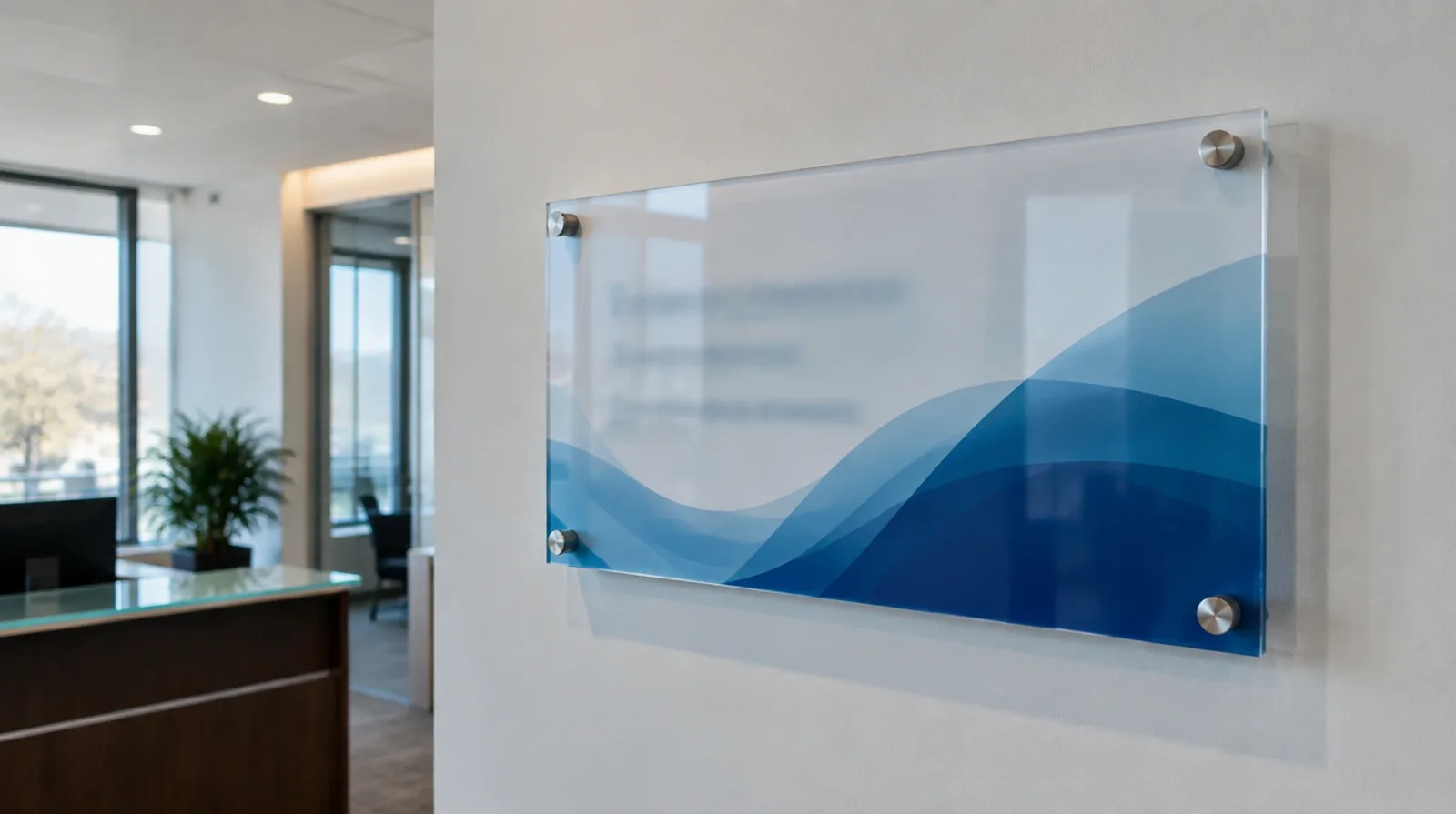
If your artwork has several colours, gradients or small text, order a UV-printed acrylic panel. If it is a short name or logo in one or two flat colours, cut-out letters look sharper. If you want the sign to stand out from the wall, go layered.
All three are made from the same material — cast acrylic sheet, laser cut to shape. What changes is how the design is put on: printed onto the sheet, cut out of it, or built up in layers.
The most ordered version is the reverse UV print acrylic signage; the wider range is on the acrylic signs page.
UV-Printed Acrylic Signs
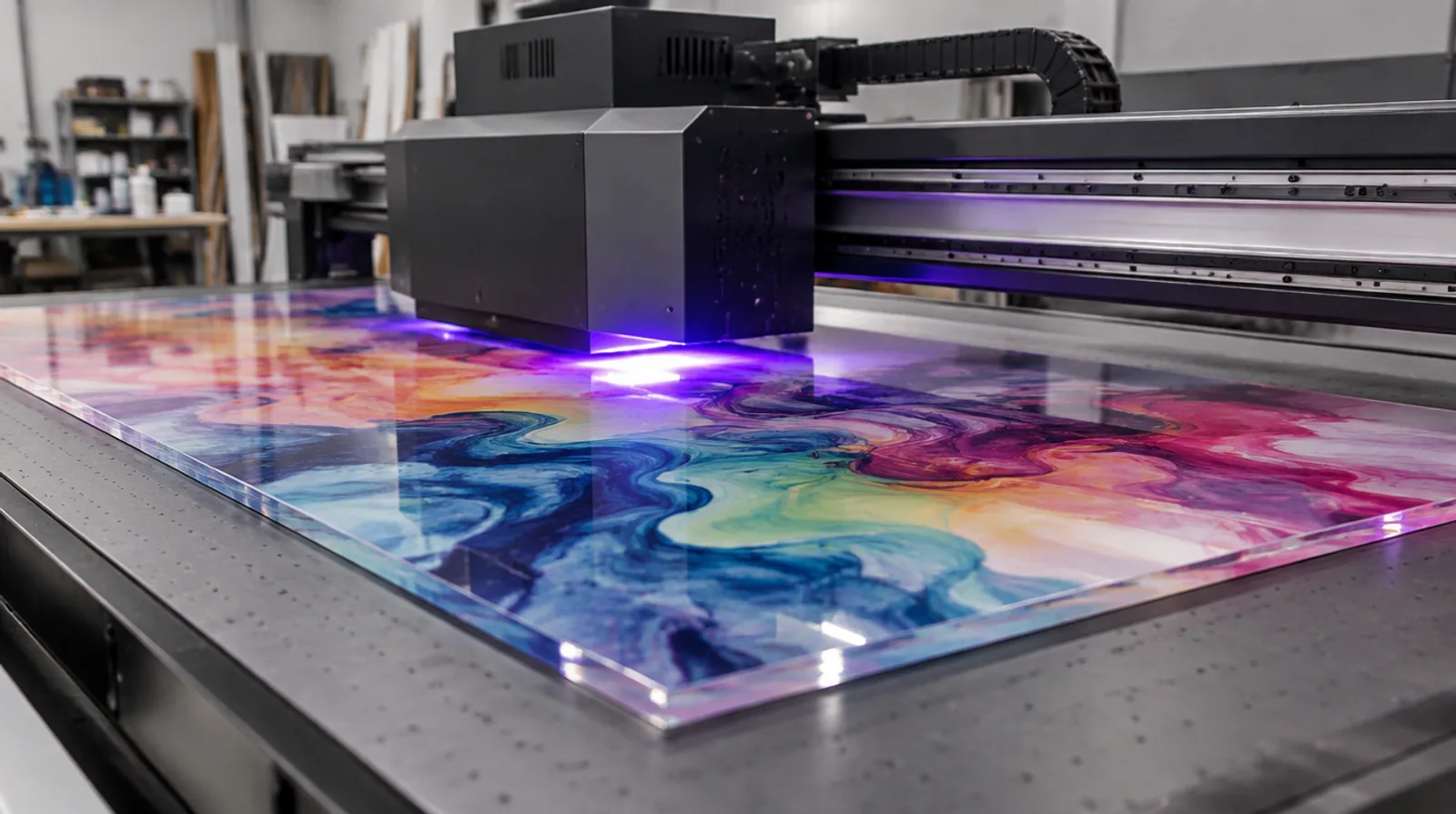
A flatbed UV printer lays ink straight onto the acrylic and cures it with ultraviolet light as it prints. There is no sticker to peel or bubble. It comes in two forms.
Reverse UV print. The design is printed mirrored on the back of clear acrylic, usually with a white layer behind the colours. You look at it through the sheet. The front stays smooth and glossy, like glass, and the ink is protected from fingers, cleaning and rain by the acrylic itself. This is the usual choice for company signs, reception signs and door plates. Details are on the UV reverse printing service page.
Direct UV print. The design is printed on the front surface. It works on coloured, white, black and frosted acrylic, where printing from behind would not show. The printed area has a slight texture and sits on the surface, so it is more exposed to scratching. See direct UV print acrylic signage.
Choose printing when the design has photos, gradients, many colours, a QR code or lines of small text. One panel carries everything, so it is also the most economical type for a detailed design.
Cut-Out Acrylic Letters
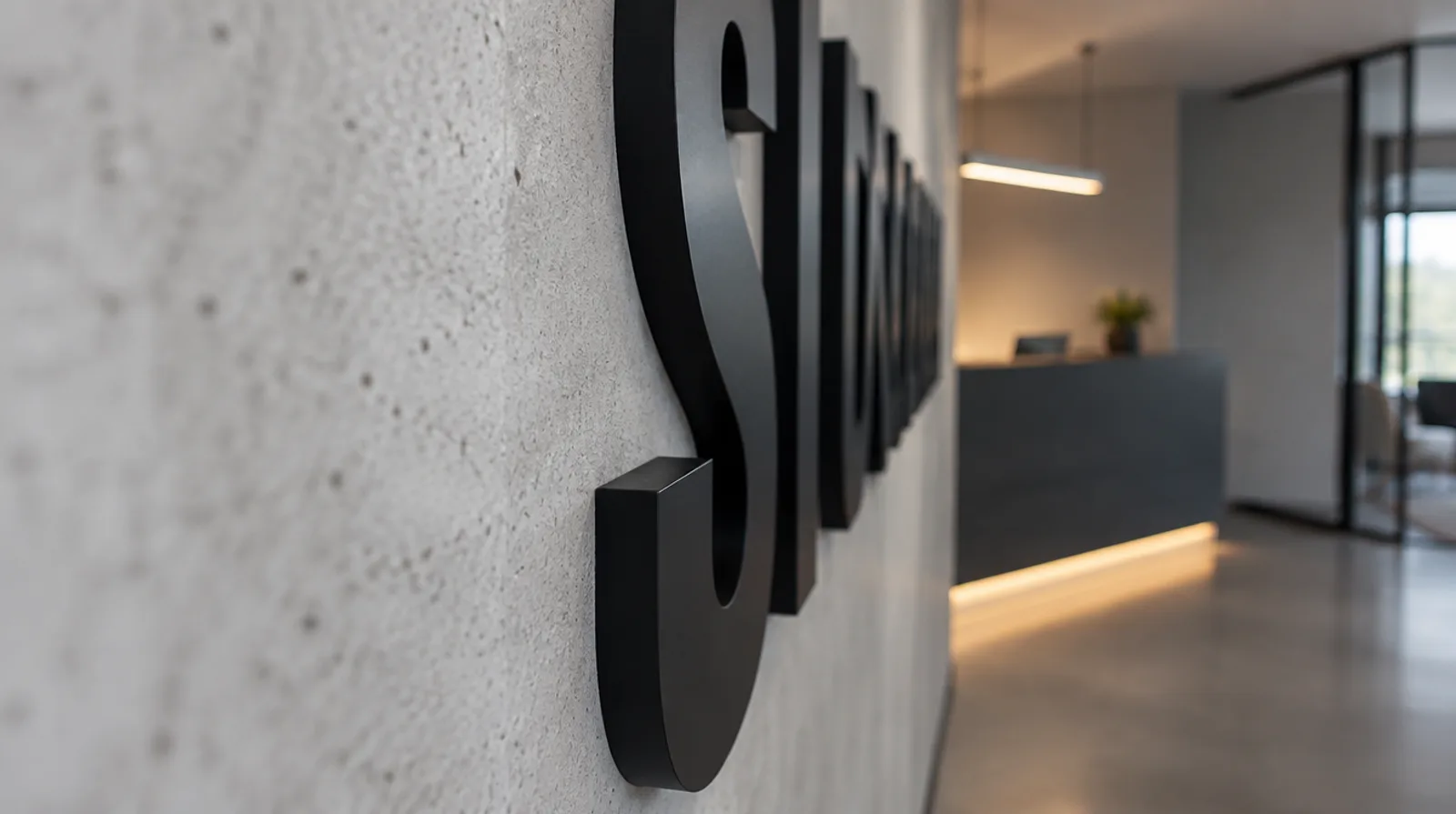
Here there is no panel. Each letter and logo shape is laser cut from solid coloured acrylic and fixed to the wall on its own. The wall becomes the background.
The result looks cleaner and more permanent than a printed plate, which is why it is common on reception walls and feature walls. The limits are practical ones:
Need help with Acrylic Signage?
Get a free quote from UMAKE — custom signage designed and manufactured in Malaysia.
- Flat colours only. A letter is the colour of its sheet. Gradients and photos are not possible.
- No fine text. Thin strokes snap and small letters are hard to fix straight. Keep taglines, addresses and phone numbers for a printed panel.
- More fixing work. Every piece is positioned separately, normally with a paper template.
Products: acrylic solid colour letter signage, or acrylic letters with stud mount if you want the letters to float off the wall.
Layered and 3D Acrylic Signs
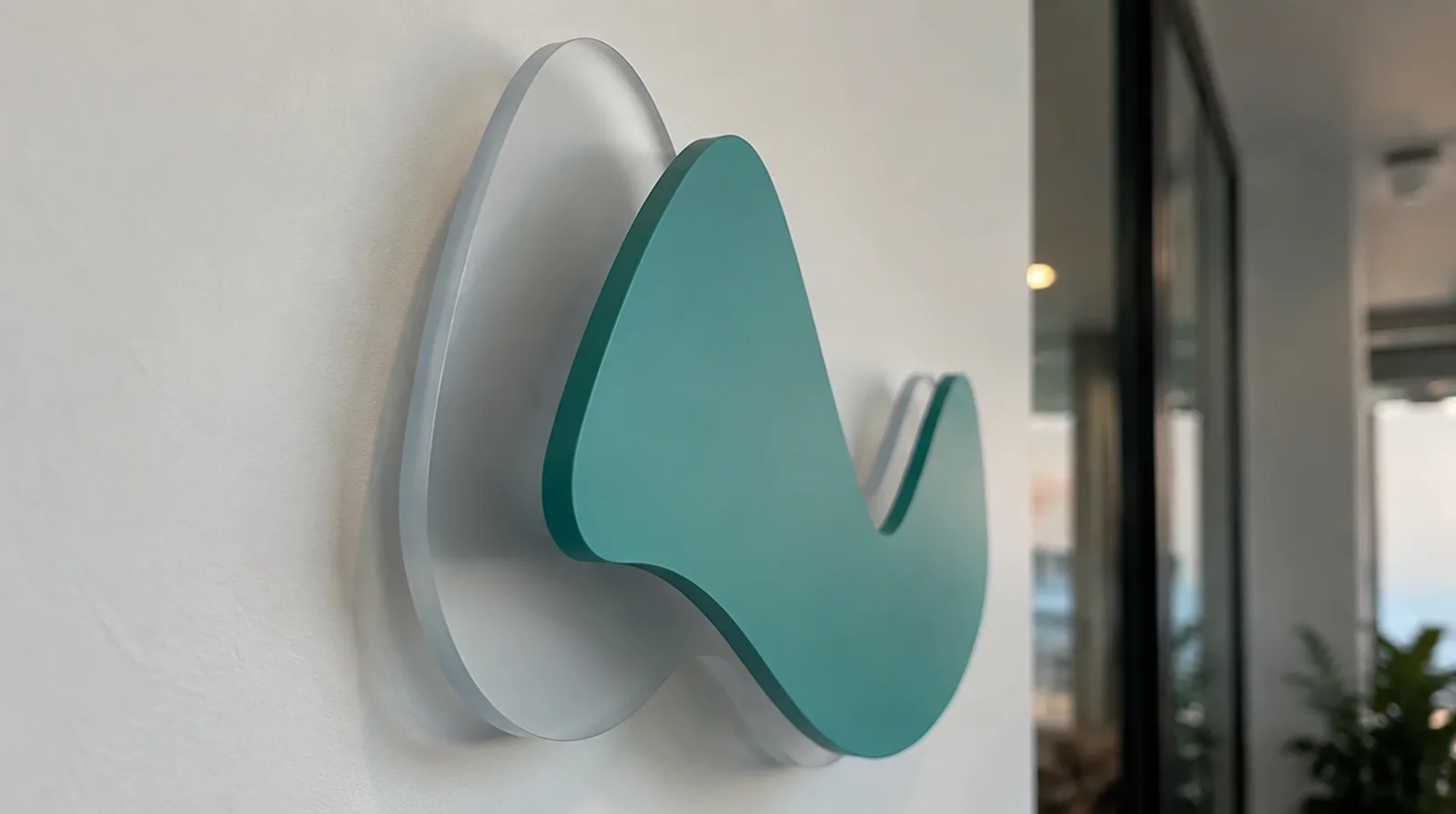
A layered sign stacks two or more pieces of acrylic. The typical build is a back panel — clear, frosted, black or white — with cut-out letters or a logo bonded on top. The raised layer casts a small shadow, so the sign reads as three-dimensional even though it is only a few millimetres deep.
Layering also lets you mix methods. A common combination is a raised cut-out logo and business name, with the smaller details UV printed on the back panel underneath. You get the depth of cut-out letters and the detail of print in one sign that goes up as a single piece.
For deeper letters, illuminated letters or metal faces, you are moving from acrylic signage into box-up lettering — see 3D lettering.
Which Type for Which Job
| UV-printed panel | Cut-out letters | Layered | |
|---|---|---|---|
| Best for | Full-colour logos, small text, QR codes | Short names, simple logos | Logo plus details, with depth |
| Colours | Unlimited | Flat sheet colours | Flat colours plus print |
| Fine detail | Yes | No | On the printed layer |
| Look | Glossy, glass-like | Clean, architectural | Raised, three-dimensional |
| Installation | One piece | Many pieces, by template | One piece |
| Relative cost | Lowest for detailed designs | Rises with the number of letters | Highest of the three |
Indoor vs Outdoor
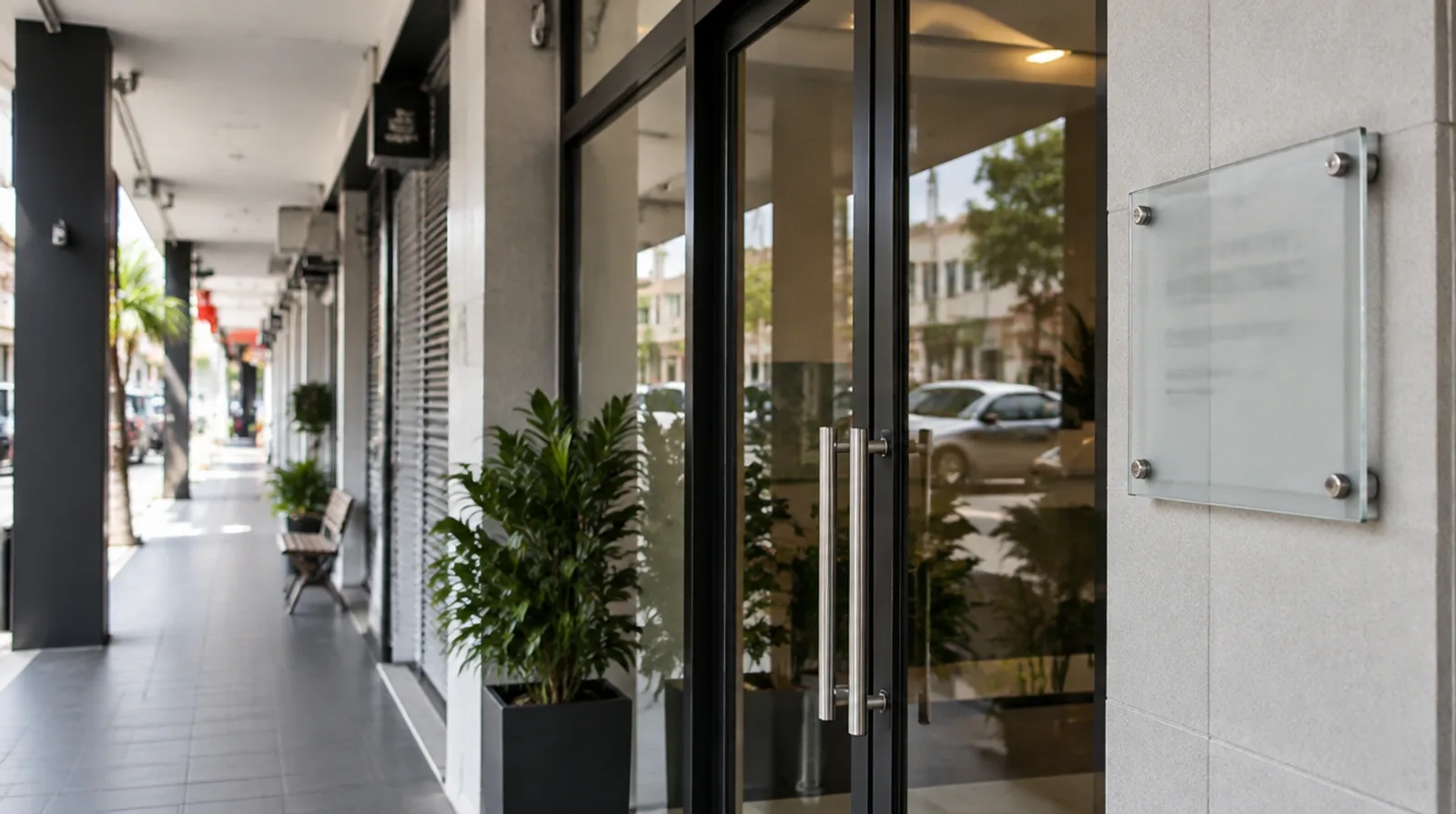
Indoors, any of the three types will last for years with nothing more than a soft cloth.
Outdoors in Malaysia, sun and rain decide the choice:
- Acrylic sheet itself copes well with weather. It does not rust or rot.
- Reverse print is the better printed option outside, because the acrylic shields the ink from rain and abrasion.
- Direct print is more exposed. Use it under shelter.
- Solid coloured letters are coloured through the whole sheet, so there is no printed layer to wear.
- Any printed colour fades faster in direct afternoon sun. A sign under a covered walkway or porch will keep its colour much longer than one on an open west-facing wall.
A deeper comparison of materials is in durable outdoor signage materials for Malaysian weather.
Sizes and Thickness
We print and cut on sheet up to 2400 × 1200 mm, so a single panel can be as large as that. Anything bigger is made in sections.
Most acrylic signs are much smaller. Door and room signs are roughly A5 to A4. Reception and company signs are commonly 60 to 120 cm wide. Thickness follows size:
- 3 mm — door signs, small plates, and most coloured cut-out letters.
- 5 mm — larger panels and anything on standoffs, where a thicker edge looks better and the sheet stays flat.
Mounting: Spacers, Tape or Studs
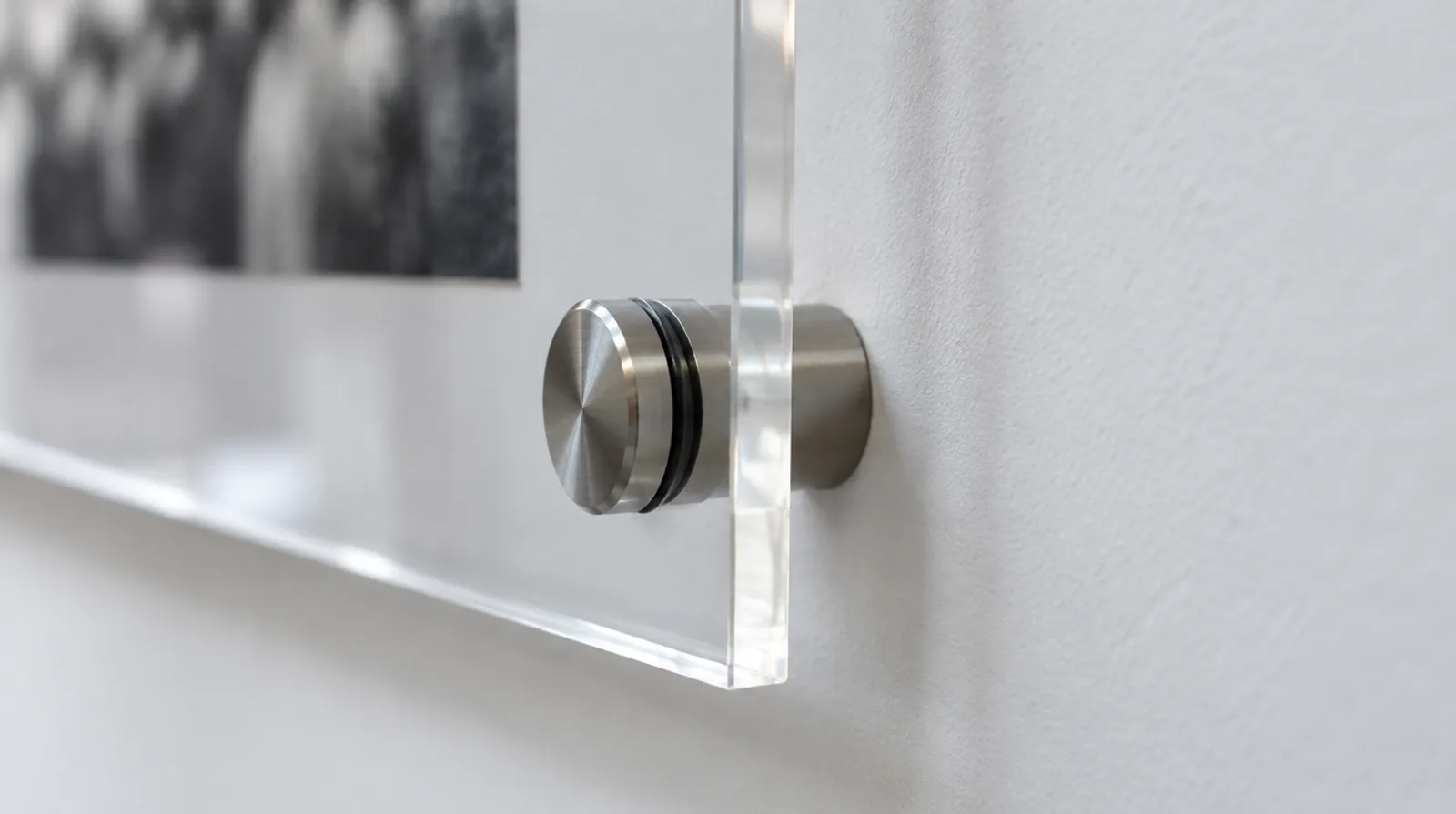
How the sign is fixed changes how it looks, so decide before production — the holes are cut at the same time as the sign.
- Standoff spacers. Metal barrels at the corners hold the panel a short distance off the wall. This is the classic look for a reverse-printed sign, and it needs holes in the panel and screws in the wall.
- Double-sided tape. No holes; suited to small, light signs on smooth surfaces such as glass or laminate.
- Studs. Small pins on the back of cut-out letters, for a floating effect on a solid wall.
We supply the fixings with the sign. On-site installation is available in KL and Selangor only; elsewhere the sign is delivered with its fixings and a template for your own installer. Send your logo, size and wall type through the contact page or WhatsApp for a quote. Typical lead time is 3–5 working days after payment and design confirmation.
Frequently Asked Questions
What is the difference between reverse UV print and direct UV print on acrylic?
Reverse UV print is printed mirrored on the back of clear acrylic and viewed through the sheet, so the front is smooth and glossy and the ink is protected. Direct UV print is printed on the front surface, which is needed for coloured, black, white or frosted acrylic but leaves the ink more exposed.
Can acrylic signage be used outdoors in Malaysia?
Yes. Acrylic sheet copes well with rain and does not rust or rot. For outdoor use choose reverse print or solid coloured acrylic, and place the sign under shelter where possible, because any printed colour fades faster in direct afternoon sun.
Which is better, a printed acrylic sign or cut-out letters?
It depends on the artwork. A printed panel is better for full-colour logos, gradients, small text and QR codes. Cut-out letters look cleaner for a short business name or simple logo in flat colours, but cannot show fine detail.
How thick should an acrylic sign be?
3 mm is used for door signs, small plates and most coloured cut-out letters. 5 mm is used for larger panels and for signs mounted on standoff spacers, where the thicker edge looks better and the sheet stays flat.
What is the largest acrylic sign you can make in one piece?
A single panel can be up to 2400 x 1200 mm, which is the full sheet size we print and cut. Larger signs are made in sections.
Do you install acrylic signs?
On-site installation is available in KL and Selangor only. For other locations the sign is delivered with its fixings and a positioning template so your own installer can fit it.


