Disclaimer: This article is general information, not legal advice. Signboard rules, fees and procedures are set by each local authority (PBT) and change over time. Always confirm the exact requirements with your specific council before designing or installing a signboard.
The Short Answer
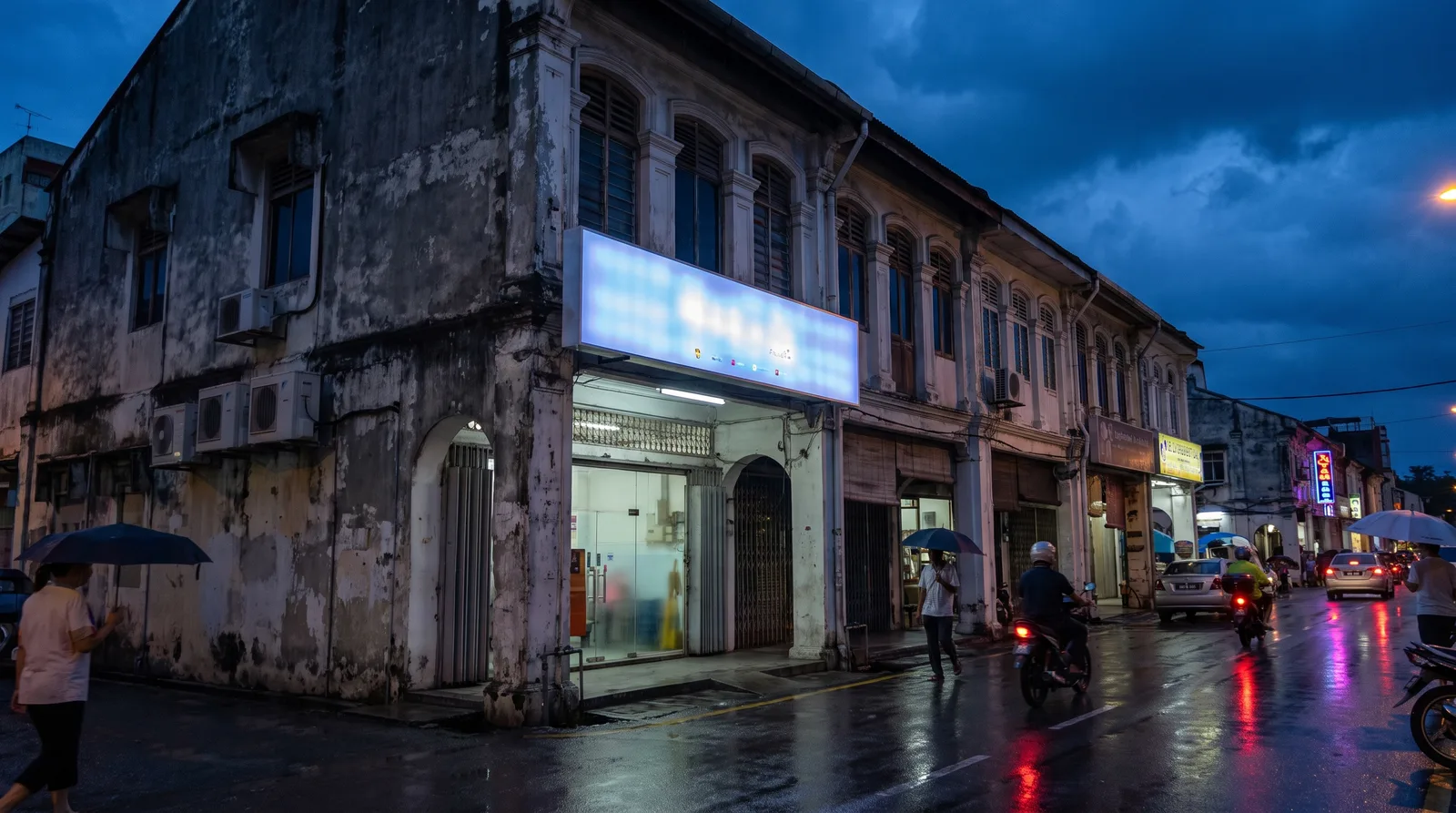
Yes — there is a signboard law in Malaysia, but it is not one single national statute that lists every rule. Instead, business signboards are regulated by your local council (Pihak Berkuasa Tempatan, or PBT) — bodies such as DBKL, MBPJ or MBSA — using powers given to them by the Local Government Act 1976 (Act 171). In practice this means two things almost everywhere: first, you generally need an advertisement / signboard licence before you display a business sign, and that licence is normally renewed every year; second, Bahasa Malaysia must appear and be the most prominent (largest) text on the sign. Display an unlicensed or non-compliant signboard and the council can issue a compound (fine) and remove the sign. This guide explains the framework — the "what and why" — and points you to our step-by-step council application guides for the "how".
Who Regulates Signboards in Malaysia
The single most useful thing to understand is that there is no central "signboard department" for the whole country. Signage on business premises is treated as a form of advertisement, and the power to license advertisements sits with local authorities. The framework works like this:
- Local Government Act 1976 (Act 171) — the federal law that empowers local councils to license advertisements and to make their own advertisement by-laws. This is the legal source of a council's authority over your signboard.
- Pihak Berkuasa Tempatan (PBT) — your local council — the body that actually issues the licence, sets the fees, and enforces the rules in your area. Examples include DBKL (Kuala Lumpur), MBPJ (Petaling Jaya), MBSA (Shah Alam), MBSJ, MPK and dozens of others.
- Advertisement By-Laws (Undang-Undang Kecil Iklan) — each council enacts its own by-laws under Act 171. They cover what needs a licence, the application process, the fees, the language rule, size and safety limits, and the penalties. Because each council writes its own, the details differ from one council to the next.
- Dewan Bahasa dan Pustaka (DBP) — the national language body. Its language guidelines on signage are widely adopted into council by-laws and underpin the Bahasa-largest requirement that councils enforce.
So the correct mental model is: one federal enabling law (Act 171) → many local councils (PBT) → each with its own advertisement by-laws. To know the exact rules and fees that apply to you, you have to look at your council. For the step-by-step process in the major councils, see our complete signboard licence guide for Malaysia, the DBKL signboard licence guide, and the MBPJ signboard licence guide.
Do You Need a Licence?
As a general rule, yes — if you display a signboard advertising a business at your premises, you almost certainly need an advertisement / signboard licence from your local council before it goes up. This is the most common point where businesses unknowingly fall foul of the law: they fit out a shop, install a nice sign, open for business, and only later discover the sign was never licensed.
At a concept level, here is what is generally true across councils — though the specifics vary, so treat this as orientation rather than a checklist:
- A licence is normally required before display, not after. The application is usually tied to your premises and business registration.
- Licences are typically renewed annually. A signboard licence is rarely a one-and-done; expect a yearly renewal and fee.
- Fees depend on the sign — its size, its type (an illuminated / lit-up sign usually costs more than a plain non-illuminated one), and sometimes the location or commercial zone. Each council publishes its own fee schedule.
- The council may need to approve the design, including the wording, language and dimensions, before issuing the licence.
This article deliberately does not walk through the application forms and documents — that is exactly what our council-specific guides are for. Once you understand that a licence is needed, head to the step-by-step: the Malaysia-wide signboard licence guide for the general process, or the DBKL and MBPJ guides if you are in KL or PJ.
The Bahasa Malaysia "Most Prominent" Rule
If there is one rule that catches more businesses than any other, it is this one. Malaysian councils require Bahasa Malaysia to appear on a business signboard and to be the most prominent — that is, the largest — text on it. Other languages, such as English or Chinese, are generally allowed, but they should not be displayed larger than the Bahasa Malaysia text. Historically the rule has also expected the Bahasa text to sit on top and/or be the most dominant element. This requirement traces back to Dewan Bahasa dan Pustaka (DBP) guidelines that councils have adopted into their advertisement by-laws, and it is actively enforced — DBKL, for instance, is known to act on signs that break it.
Because this is adopted council-by-council, the precise wording and tolerances can differ. But as a general rule of thumb you are on safe ground when:
| Compliant signboard | Likely non-compliant signboard |
|---|---|
| Bahasa Malaysia text is the largest on the sign | English or Chinese is the largest, with Bahasa small or absent |
| Bahasa is positioned prominently (commonly on top) | Bahasa is tucked in a corner or as a tiny subtitle |
| Other languages are present but smaller than Bahasa | A foreign language only, with no Bahasa Malaysia at all |
| Wording was checked against the council's by-laws first | Design printed and installed without checking the rule |
A quick example: a cafe called "Sunrise Coffee" would typically put the Bahasa wording — for instance "Kedai Kopi Sunrise" — as the largest line, and may add the English name below it in smaller text. The opposite, where "Sunrise Coffee" dominates and a tiny "Kedai Kopi" hides beneath, is the classic mistake. For more of these, see our guide to common signage mistakes in Malaysia. Always verify the exact size ratio and placement your council expects, since the specifics are set in each council's by-laws.
Need help with Signboard?
Get a free quote from UMAKE — custom signage designed and manufactured in Malaysia.
Other Common Requirements
The language rule and the licence are the headline issues, but councils' advertisement by-laws typically cover several other areas as well. Treat the following as common requirements to be aware of — the exact limits are set by your council, so confirm them locally:
| Requirement area | What it generally means |
|---|---|
| Structural safety | The sign must be securely fixed and not pose a falling or collapse hazard, especially for larger or projecting signs. |
| Size limits | Councils may cap how large a sign can be relative to the shopfront, and the fee often scales with size. |
| Placement & obstruction | A sign should not obstruct the road, footpath, traffic sightlines or public view, and projecting signs may have clearance rules. |
| Illumination | Lit / illuminated signs are usually a separate (often higher-fee) category and may face extra conditions. |
| Content standards | Content must not be misleading, offensive, or otherwise prohibited under the by-laws. |
None of these should be a surprise once you see the logic: a council is balancing public safety, orderly streetscape, the national language and honest advertising. The practical takeaway is to settle your size, lighting and wording before you finalise the design, and to confirm the specific limits with your council's advertisement by-laws.
Who Is Responsible — Owner vs Tenant
A common question, especially for rented shoplots: who actually has to hold the licence and keep the sign compliant? As a general matter, the business owner or occupier — the person running the business displaying the sign — is responsible for ensuring the signboard is licensed and compliant. In some situations the premises owner (landlord) may also be involved or held partly responsible, particularly where the structure is attached to the building.
In practice that means:
- If you run the business, do not assume the landlord, your previous tenant, or your signboard contractor has sorted the licence — confirm it yourself.
- When you take over an existing premises with a sign already in place, check whether a valid, current licence exists, and whether it needs to be transferred or re-applied in your name.
- Clarify responsibility for the signboard licence in your tenancy agreement so there is no ambiguity at renewal time or if the council raises an issue.
As with everything here, the precise allocation of responsibility can depend on your council's by-laws and your tenancy terms, so confirm both.
What Happens If You Break the Rules
Non-compliance is not just a paperwork problem. If a signboard is unlicensed or does not meet the by-laws — for example, the language rule is broken, no licence was obtained, or the sign is unsafe — councils can take enforcement action. In general terms, that can include:
- Compounds / fines. Councils may issue a compound (an on-the-spot or notice-based fine) for displaying an unlicensed or non-compliant sign. The amounts are set by each council and we deliberately do not quote a figure here — check your council for the current rates.
- Removal of the signboard. Councils have the power to order the removal of, or themselves remove, a non-compliant or unlicensed sign — sometimes at the business's cost.
- Repeat exposure. Because licences renew annually and enforcement is ongoing, a sign that is wrong stays a recurring risk until it is corrected.
The good news is that this is entirely avoidable. Get the licence, follow the Bahasa-largest rule, keep the sign safe and within size limits, and renew on time. The cost of doing it right the first time is far lower than a remake plus a compound.
Need a Signboard Designed to Pass the Rules?
UMAKE makes custom business signboards — stainless steel cut-outs, acrylic and more — designed from the start with Bahasa Malaysia as the most prominent text, so your sign is built to meet your council's by-laws. Factory-direct from Balakong, Selangor.
WhatsApp Us for a Quote →Get a Compliant Signboard Made
Once you know the rules, the next step is a sign that is built to fit them. UMAKE manufactures custom business signboards in-house, and we design with the Bahasa-largest rule in mind so your wording, language and proportions start out compliant:
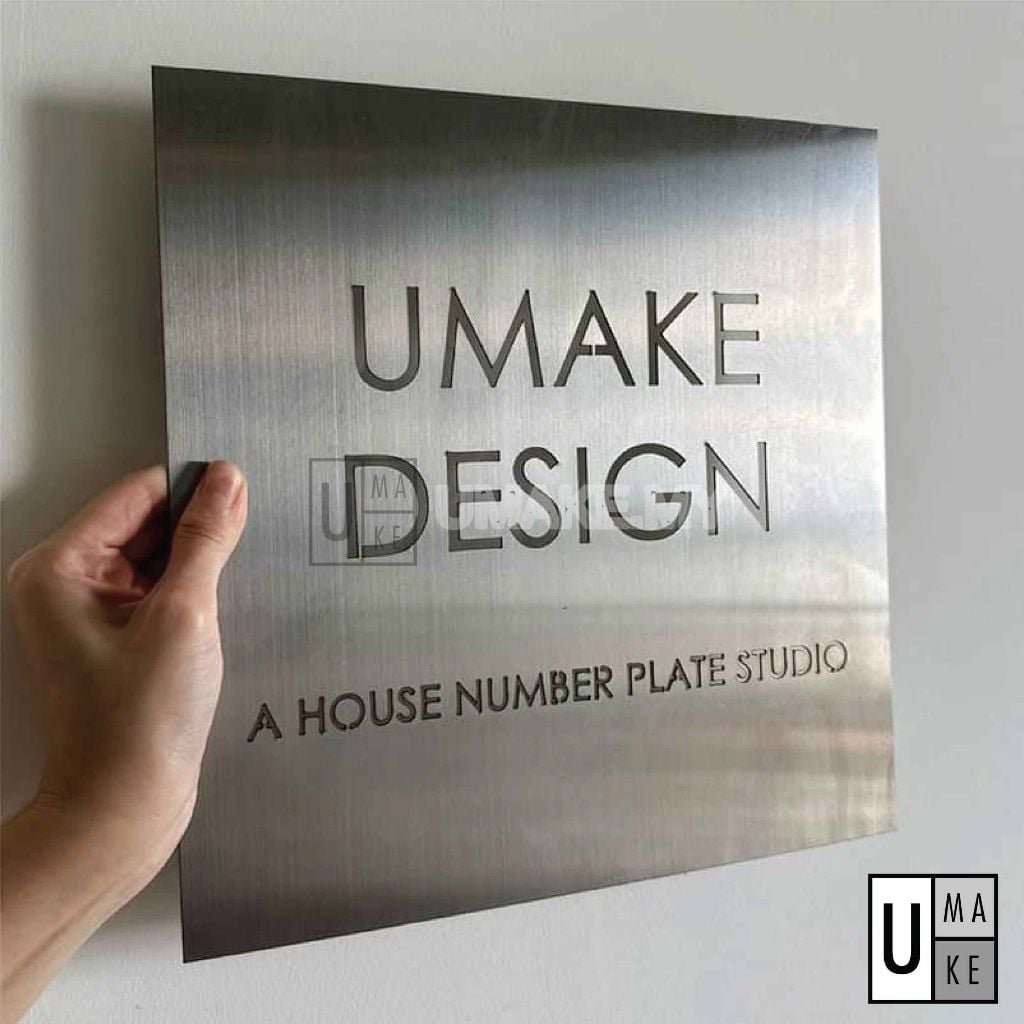
Custom Stainless Steel Business Signboard
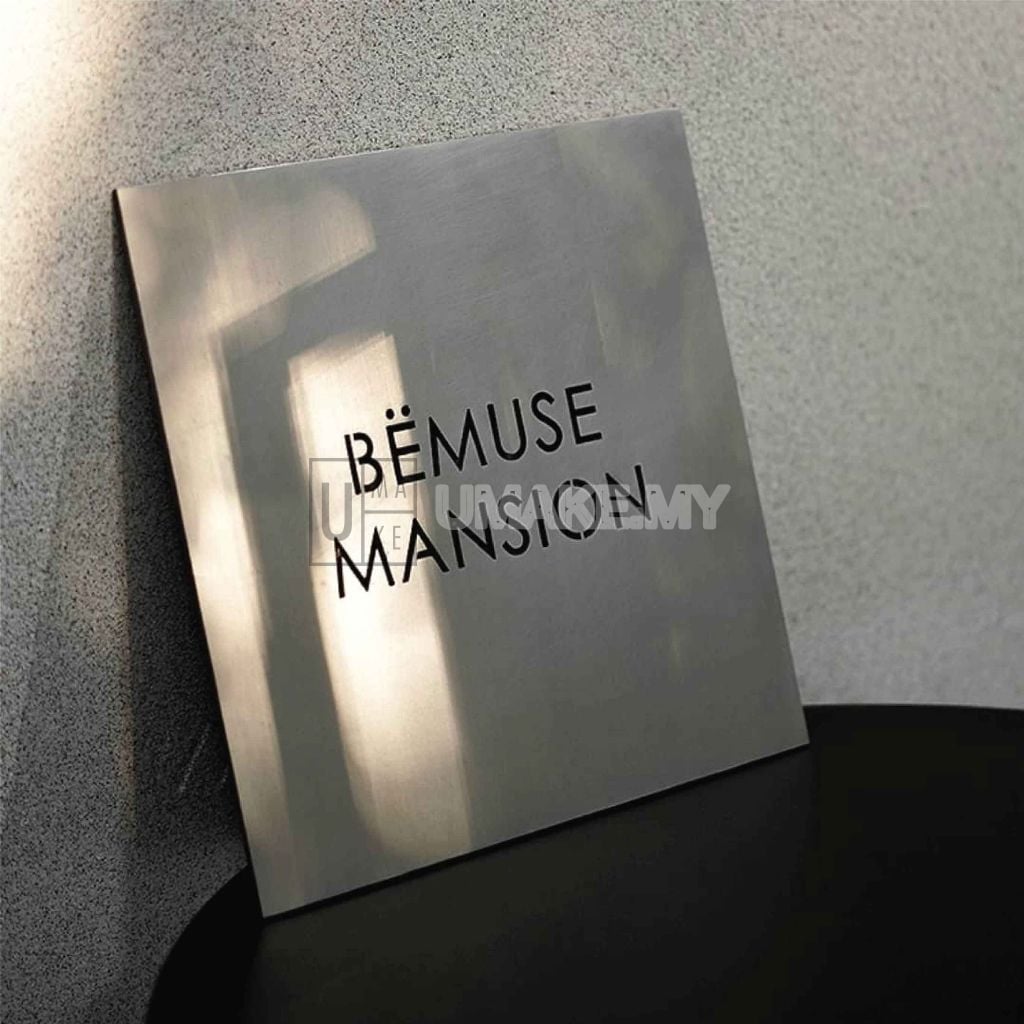
A premium metal cut-out signboard for shopfronts, cafes, offices and studios — durable, weather-resistant and laid out with Bahasa Malaysia as the dominant line. From RM79.90. View the Stainless Steel Business Signboard →
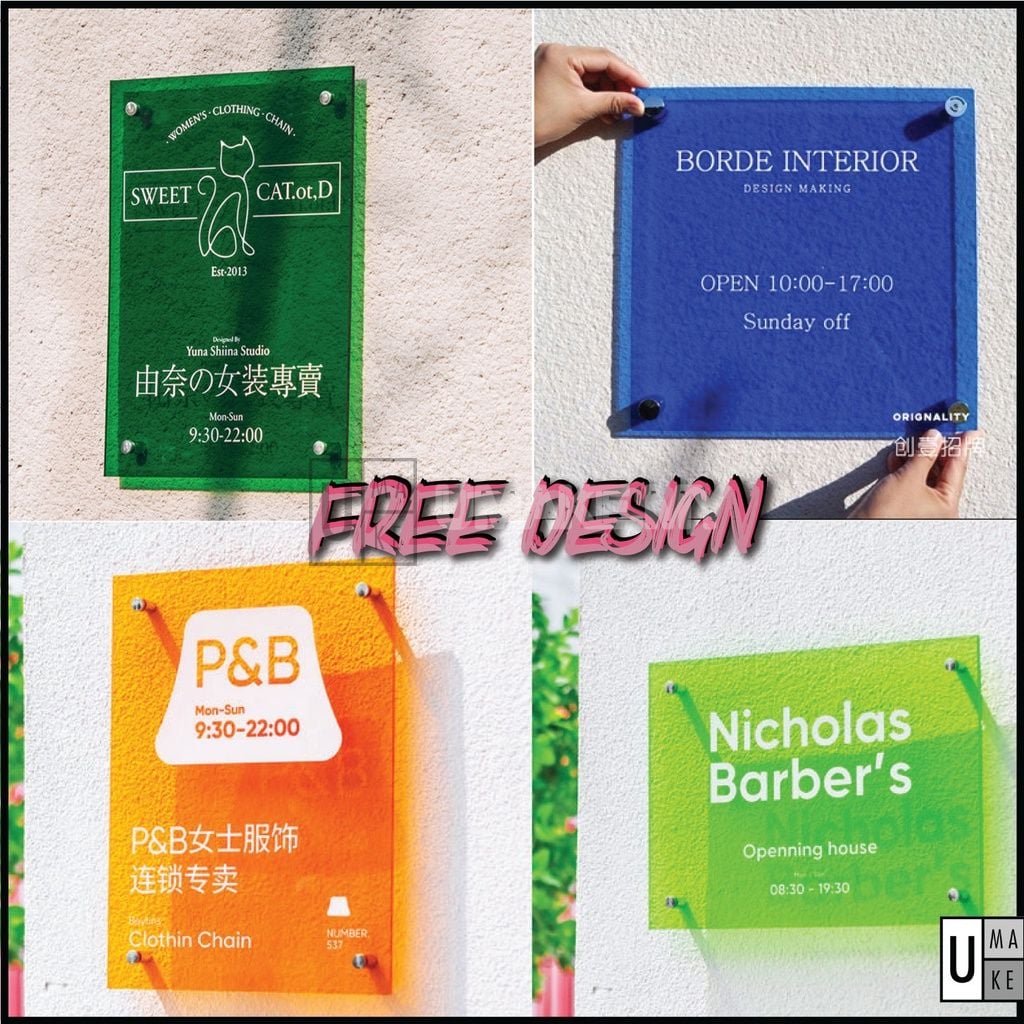
Coloured Transparent Acrylic Business Signboard
A modern coloured transparent acrylic sign — ideal for cafes, studios and boutique shopfronts — laid out so the Bahasa Malaysia wording leads. From RM79.90. View the Acrylic Business Signboard →
Browse the full range in our custom signages & letters catalogue, and remember: a great-looking sign still needs the licence and the language rule, so pair it with the application steps in our council guides.
Frequently Asked Questions
Is there a signboard law in Malaysia?
Yes. There is no single national "signboard act", but business signboards are regulated by your local council (PBT) under the Local Government Act 1976 (Act 171), which lets councils license advertisements and make advertisement by-laws. The exact rules are set by each council, so check your specific PBT.
Do I need a licence for a shop signboard?
Generally yes. In most areas you need an advertisement / signboard licence from your local council before you display a business sign, and it is usually renewed every year. The process and fees vary by council — see our council application guides for the steps.
Must Bahasa Malaysia be the largest text on a signboard?
As a general rule, yes. Councils require Bahasa Malaysia to appear and to be the most prominent (largest) text on a business signboard, with other languages allowed but not larger than the Bahasa text. The precise size and placement rules are in each council's by-laws, so confirm locally.
Can my signboard be in English or Chinese only?
Generally no. Councils typically require Bahasa Malaysia to be present and the most prominent on a business sign. You can usually include English or Chinese as well, but not as the largest or only language. Check your council's advertisement by-laws for the exact requirement.
Who issues signboard licences in Malaysia?
Your local authority (PBT) — for example DBKL in Kuala Lumpur, MBPJ in Petaling Jaya, or MBSA in Shah Alam. They issue the licence, set the fees, and enforce the rules under powers from the Local Government Act 1976.
What happens if my signboard is not licensed or not compliant?
Councils can take enforcement action, which may include issuing a compound (fine) and ordering or carrying out removal of the sign, sometimes at the business's cost. Exact amounts vary by council and are not quoted here — confirm with your PBT.
Who is responsible for the signboard licence — the owner or the tenant?
Usually the business owner or occupier displaying the sign is responsible for ensuring it is licensed and compliant; in some cases the premises owner (landlord) may also be involved. Clarify this in your tenancy agreement and confirm with your council.
How often must a signboard licence be renewed?
In most councils a signboard / advertisement licence is renewed annually, with a fee that depends on the sign's size, type and location. Check your specific council for its renewal cycle and fee schedule.
Get a Compliant Business Signboard from UMAKE
Understand the framework — council-licensed under the Local Government Act 1976, Bahasa Malaysia largest, renewed yearly — then apply through your council using our step-by-step guides, and have your sign built right the first time. UMAKE manufactures custom business signboards in-house in Balakong, Selangor, designed with the language rule in mind.


