Your signage is often the very first thing a potential customer sees — before they read your menu, browse your products, or speak to your staff. In Malaysia's competitive retail landscape, effective signage can increase foot traffic by up to 50% according to international retail studies. Yet every day, Malaysian business owners spend thousands of ringgit on signage that fails within months, breaks local council rules, or simply does not attract customers.
After manufacturing thousands of business signs at our factory in Balakong, Selangor, we have seen the same mistakes repeated over and over. This guide breaks down the 10 most common signage mistakes Malaysian businesses make — and exactly how to avoid each one.
Mistake #1: Choosing the Wrong Material for Malaysian Weather
Malaysia's tropical climate is one of the harshest environments in the world for outdoor signage. With a UV index regularly hitting 10–12 (classified as "very high" to "extreme" by MetMalaysia), annual rainfall exceeding 2,500mm, and humidity consistently between 73% and 82%, your signboard faces relentless punishment every single day.
We regularly see business owners bring in signs that looked great on day one but turned into faded, warped, or cracked eyesores within six months. The culprit is almost always the wrong material choice for outdoor Malaysian conditions.
Materials That Fail Outdoors in Malaysia
| Material | Problem in Malaysian Climate | Typical Lifespan (Outdoor) |
|---|---|---|
| Thin PVC foam board | Warps in heat, yellows under UV | 3–6 months |
| Paper/vinyl sticker (unlaminated) | Peels in rain, fades in sun | 2–4 months |
| Untreated mild steel | Rusts rapidly in humidity | 6–12 months |
| Standard acrylic (non-UV grade) | Yellows and becomes brittle | 1–2 years |
How to Avoid This
For outdoor signage in Malaysia, invest in UV-stabilised acrylic, powder-coated stainless steel, or aluminium composite panels (ACP). These materials are engineered to resist tropical UV, rain, and humidity. A quality stainless steel sign can last 10+ years outdoors with minimal maintenance.
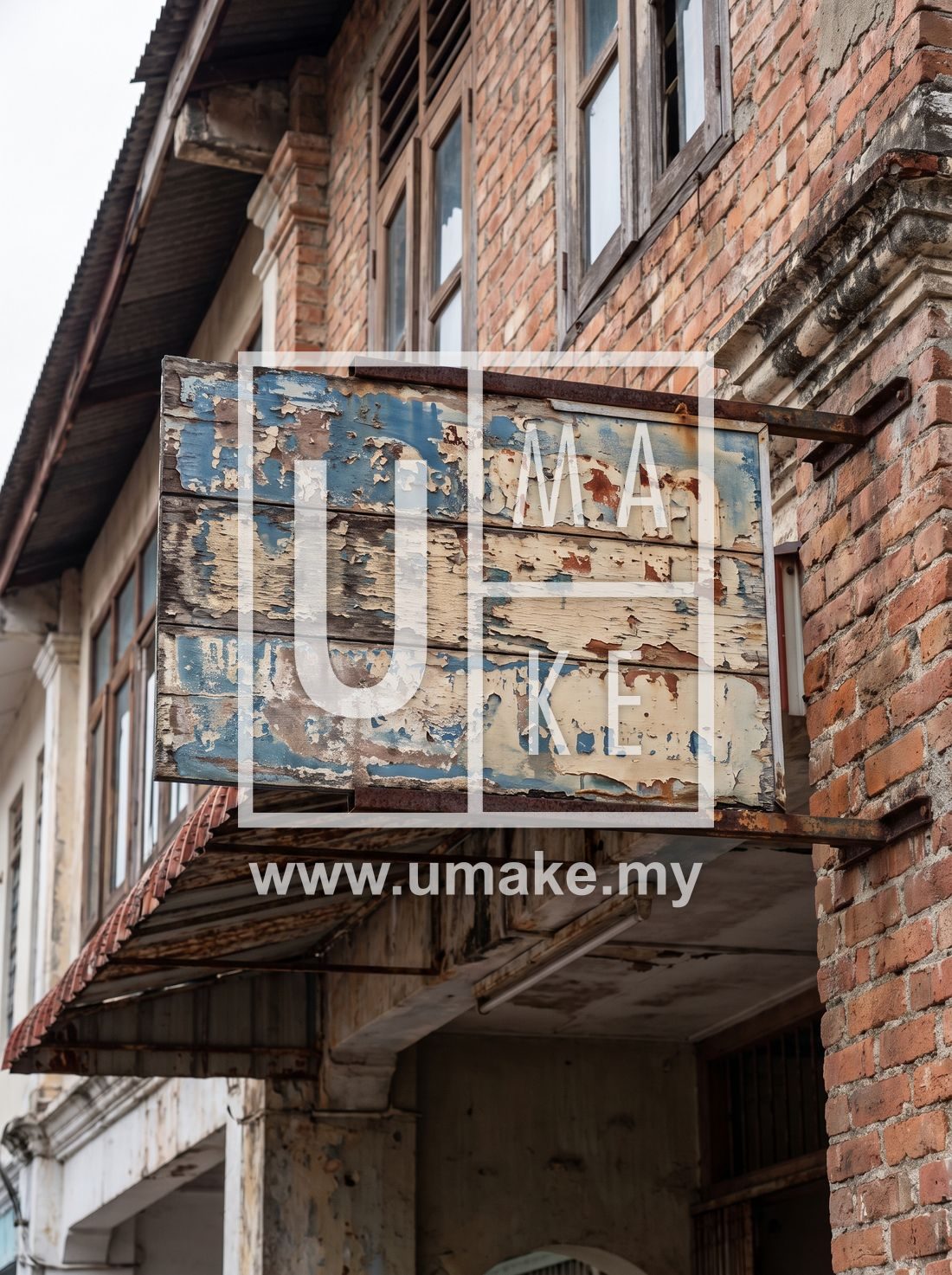
A faded, weather-damaged sign — the result of choosing the wrong material for Malaysia's harsh tropical climate.
Mistake #2: Too Much Text — Breaking the 7-Word Rule
Walk through any Malaysian shophouse area and you will spot signs crammed with the business name, tagline, phone number, address, WhatsApp number, opening hours, and a list of services — all on one board. The result? Nobody reads any of it.
The signage industry follows the "7-word rule": a passing motorist or pedestrian has roughly 3–5 seconds to read your sign. In that time, the human eye can process about 7 words maximum. Every word beyond that reduces the chance your message is absorbed.
How to Avoid This
- Primary signboard: Business name + one key message only (e.g., "Ali's Nasi Lemak — Est. 1998")
- Secondary details: Use a separate smaller sign, A-frame board, or window decal for phone numbers, hours, and services
- Hierarchy: If you must include more text, make the business name at least 3x larger than secondary information
Mistake #3: Poor Colour Contrast That Kills Readability
We have seen dark blue text on a black background, grey text on white, and red text on green (which is invisible to the roughly 8% of men with colour vision deficiency). Poor contrast makes your sign effectively invisible, even if the design looks "nice" up close on a computer screen.
Highest-Contrast Colour Combinations for Signage
| Rank | Combination | Readability |
|---|---|---|
| 1 | Black text on yellow/white background | Excellent |
| 2 | White text on dark blue/black background | Excellent |
| 3 | Dark text on light background (any) | Good |
| 4 | Red text on white background | Good |
How to Avoid This
Test your sign from a distance. Print a scaled-down version and hold it at arm's length. If you cannot read every word instantly, increase the contrast. As a rule, always pair a dark colour with a light colour — never dark-on-dark or light-on-light.
Cluttered signs with poor contrast compete for attention and end up being ignored by passers-by.
Mistake #4: Wrong Size and Placement
A beautifully designed sign means nothing if customers cannot see it. We frequently encounter two problems: signs that are too small for the viewing distance, and signs placed at the wrong height or angle.
Signage Size Guidelines
| Viewing Distance | Minimum Letter Height | Example Use |
|---|---|---|
| 3–5 metres (indoor) | 25–50mm (1–2 inches) | Door signs, wayfinding |
| 10–15 metres | 75–100mm (3–4 inches) | Shop front (pedestrian street) |
| 30–50 metres | 150–200mm (6–8 inches) | Roadside shop signboard |
| 100+ metres | 300mm+ (12+ inches) | Highway billboard, building sign |
Placement Tips
- Eye level: Indoor wayfinding signs should be at 1.5–1.7m height (average Malaysian eye level)
- Perpendicular blade signs: If your shop faces a busy walkway, add a projecting sign perpendicular to the wall so pedestrians walking along the corridor can spot you
- Avoid obstructions: Check that trees, pillars, parked cars, or neighbouring signboards do not block the view
- Angle for traffic: For roadside shops, angle the sign 5–10 degrees toward oncoming traffic
Mistake #5: Ignoring Bilingual (Bahasa Malaysia) Requirements
This is one of the most consequential mistakes a business can make in Malaysia — and one that can result in enforcement notices, fines, and forced removal of your signboard.
Under the Advertisements (Federal Territories) By-Laws 1982 and equivalent regulations in other states, all commercial signboards in Malaysia must include Bahasa Malaysia, and the Malay text must be given prominence — meaning it must be larger or more prominent than text in any other language.
Key Rules to Know
- Bahasa Malaysia is mandatory on all commercial signboards
- BM text must be larger than text in other languages (English, Chinese, Tamil, etc.)
- Registered business names in other languages (as registered with SSM) do not need to be translated, but additional descriptive text must be in BM
- The Malay wording may need to be validated by Dewan Bahasa dan Pustaka (DBP) to ensure correct usage
- Non-compliant premises receive a 14-day notice to rectify, after which further enforcement action is taken
In late 2024, DBKL (Kuala Lumpur City Hall) intensified enforcement, collaborating with Dewan Bahasa dan Pustaka to inspect signboards across six shopping malls and issue 31 enforcement notices. MBPJ, MBSA, and other Selangor councils carry out similar operations regularly.
How to Avoid This
Always design your signboard with Bahasa Malaysia as the primary language. If your business uses English, Chinese, or other languages, ensure the BM text is displayed in a larger font size. When in doubt, consult your signboard manufacturer or licensing agent — a good manufacturer like UMAKE will flag compliance issues before production.
Mistake #6: Choosing the Cheapest Materials That Fail in 6 Months
Need help with common signage mistakes malaysia?
Get a free quote from UMAKE — custom signage designed and manufactured in Malaysia.
Budget is real — we understand that. But there is a critical difference between affordable and cheap. We have seen business owners spend RM300 on a PVC foam signboard that warps and fades within months, then spend another RM300 on a replacement, and then another. Within two years, they have spent RM900+ on disposable signage when a single RM500 acrylic or stainless steel sign would have lasted 5–10 years.
Cost Per Year Comparison
| Material | Upfront Cost | Lifespan | Cost Per Year |
|---|---|---|---|
| PVC foam board | RM150–300 | 6 months | RM300–600/year |
| Vinyl sticker on board | RM100–250 | 3–6 months | RM400–1,000/year |
| UV-grade acrylic sign | RM300–800 | 5–8 years | RM60–160/year |
| Stainless steel sign | RM500–2,000 | 10–15 years | RM50–130/year |
The bottom line: Durable materials cost more upfront but are significantly cheaper per year. Think of signage as a long-term investment, not an expense. For a breakdown of options, see our custom acrylic signage range.
Professional 3D letter signage on a building facade — durable materials that withstand years of exposure.
Mistake #7: No Lighting for Night Visibility
Malaysia gets dark by 7:30 PM year-round. If your business operates in the evening — restaurants, clinics, convenience stores, service centres — an unlit sign is essentially invisible for half your operating hours. You are paying rent, utilities, and staff wages for the evening shift, but your signage is doing zero work after sunset.
Lighting Options for Signage
- LED backlit signs: Light shines through or around the letters, creating a professional halo effect. Best for premium businesses.
- LED neon flex signs: Trendy, Instagram-worthy option. Great for cafes, salons, and retail shops. Creates a warm, inviting glow.
- External spotlights / gooseneck lights: The simplest retrofit — mount a spotlight above your existing sign. Budget-friendly at RM50–150 per light.
- Lightbox signs: Illuminated panels with internal fluorescent or LED lighting. Classic and highly visible for roadside businesses.
How to Avoid This
If your business is open past 7 PM, lighting is not optional — it is essential. Even if you currently have no plans for an illuminated sign, at minimum install a gooseneck LED spotlight above your signboard. The RM100–200 investment will pay for itself many times over in evening foot traffic.
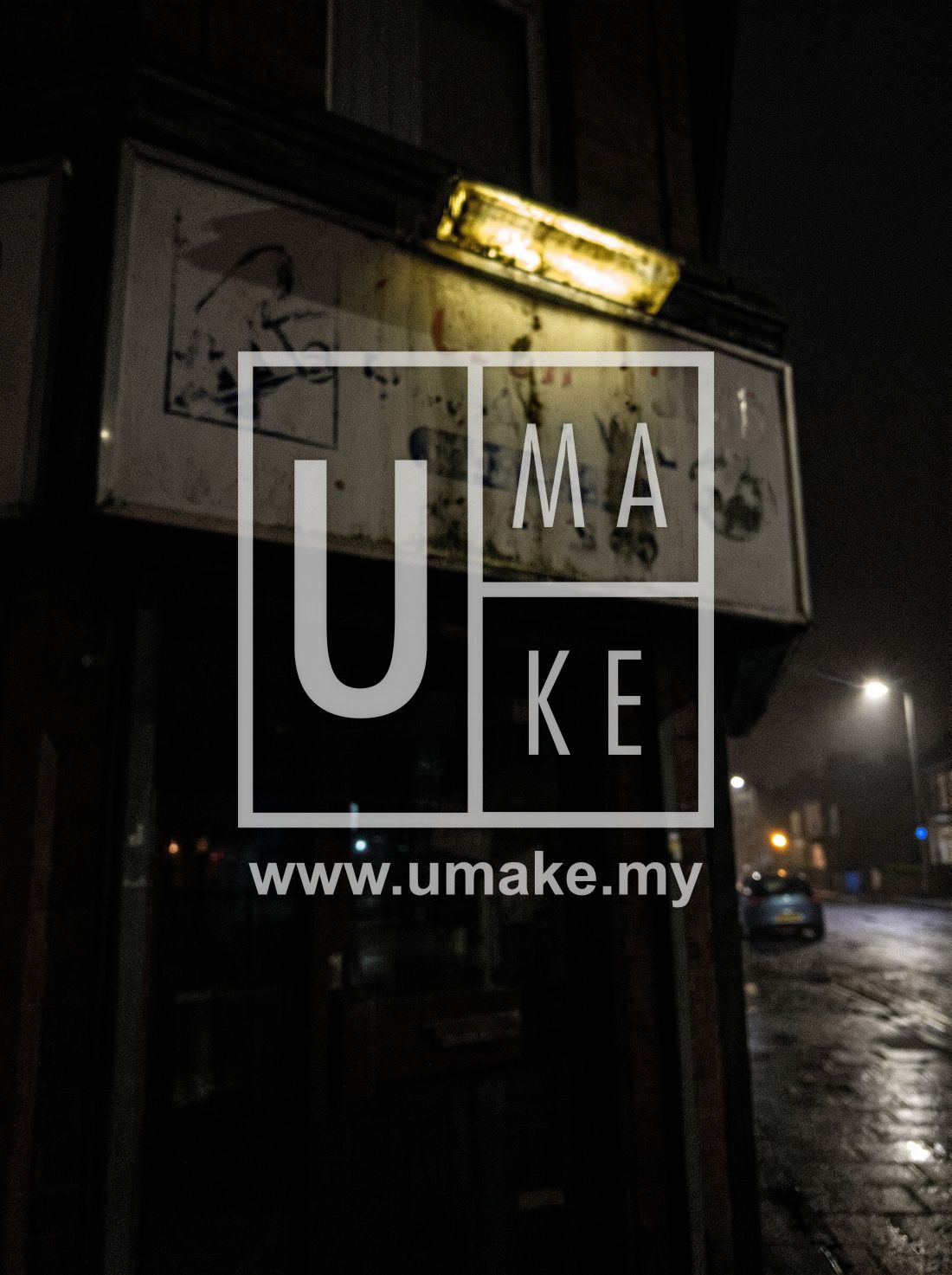
A well-lit sign glowing at night — proper illumination ensures your business is visible after dark.
Mistake #8: Cluttered Design Without Visual Hierarchy
When everything is bold, nothing is bold. A cluttered sign with five different fonts, six colours, and no clear focal point confuses rather than attracts. Your customer's brain needs a clear visual path: what to look at first, second, and third.
The 3-Level Hierarchy Rule
- Level 1 — Primary (biggest, boldest): Business name or logo
- Level 2 — Secondary (medium): One key descriptor (e.g., "Specialty Coffee" or "Auto Workshop")
- Level 3 — Tertiary (smallest): Contact number or address (if space allows)
Design Best Practices
- Use maximum 2 fonts (one for headings, one for body text)
- Use maximum 3 colours (including background)
- Leave white space — empty space around text and graphics makes everything more readable
- Align elements consistently (left-aligned or centred, not mixed)
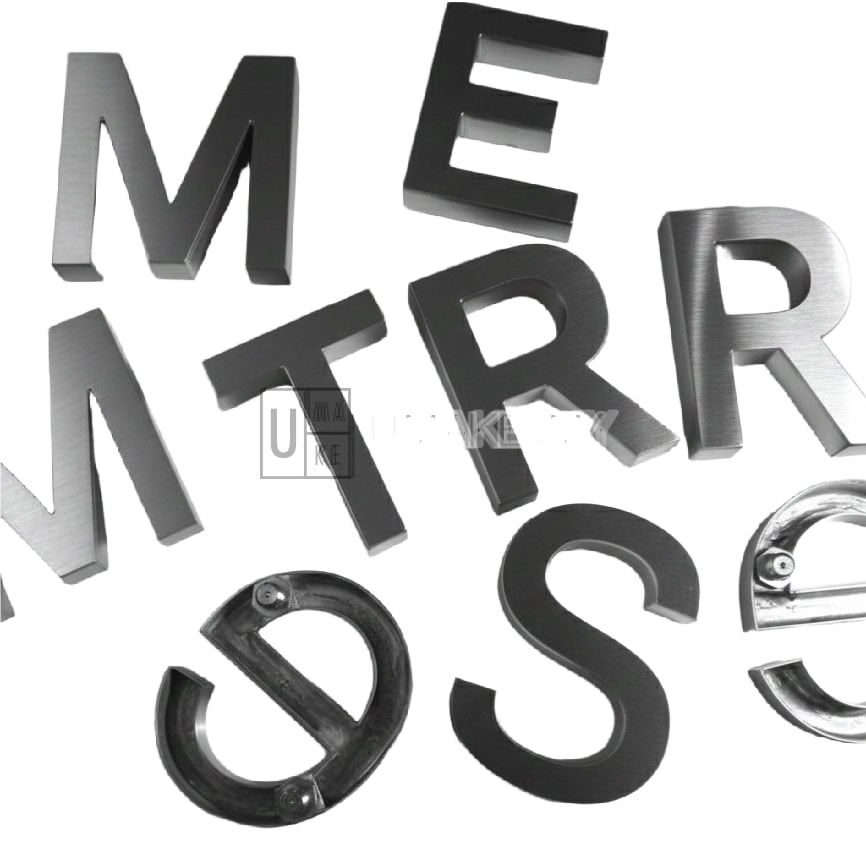
A clean modern storefront with professional signage — clear hierarchy, minimal clutter, and strong brand presence.
Mistake #9: Forgetting the Signboard License
Many Malaysian business owners do not realise that displaying a commercial signboard requires a license from your local council (Majlis). Operating without one can result in fines, forced removal of your sign, and even complications with your business license renewal.
Signboard License Key Facts
| Detail | Information |
|---|---|
| Governing law | Advertisements By-Laws under Local Government Act 1976 |
| Annual government fee | RM200–400 (varies by signboard size and council) |
| Total cost with agent | ~RM1,200 (first application, including agent fees) |
| Annual renewal with agent | ~RM1,500 |
| Payment deadline | Within 30 days of approval letter |
| Common councils | DBKL (KL), MBPJ (PJ), MBSA (Shah Alam), MPSJ (Subang Jaya) |
How to Avoid This
Apply for your signboard license before or at the same time as installing your sign — not after. Many business owners install their sign first, then scramble when the council issues a notice. Work with a licensing agent or a manufacturer who understands local requirements.
For a complete walkthrough, read our detailed guide: DBKL Signboard License Guide: KL Requirements & Fees.
Mistake #10: DIY When You Should Go Professional
We are all for saving money. Printing a simple A4 notice on your office printer? Absolutely fine. But when it comes to your main business signboard — the one that represents your brand 24/7 to every person who walks or drives past — the DIY approach almost always backfires.
When DIY is Acceptable
- Temporary promotional signs (less than 2 weeks)
- Internal office notices and wayfinding
- Event banners for one-time use
When You Need a Professional
- Main shop front signboard
- Outdoor signage of any kind
- Signs that must meet council compliance
- Any sign that will be seen by customers daily
- Wayfinding systems for offices, clinics, or retail spaces
A professional signage manufacturer will handle material selection, design optimisation, compliance with local council rules, and proper installation — saving you from all nine mistakes above.
Your Signage Checklist: Before You Order
Before committing to any signage purchase, run through this checklist:
- ☑ Material: Is it rated for outdoor use in tropical conditions? (UV-stable, waterproof)
- ☑ Text: Can you read the sign in under 5 seconds from the intended viewing distance?
- ☑ Contrast: Is there a strong light-dark colour contrast between text and background?
- ☑ Size: Are the letters large enough for the viewing distance? (refer to size chart above)
- ☑ Language: Is Bahasa Malaysia included and given prominence?
- ☑ Durability: Will the material last at least 3–5 years to justify the cost?
- ☑ Lighting: If open past 7 PM, is the sign illuminated?
- ☑ Design: Maximum 2 fonts, 3 colours, clear visual hierarchy?
- ☑ License: Has the signboard license been applied for with your local council?
- ☑ Professional: Is the sign important enough to justify professional manufacturing?
Frequently Asked Questions
Professional Signage Solutions from UMAKE
Avoid all 10 mistakes by working with a manufacturer who understands Malaysian conditions, local regulations, and professional design principles. Here are our most popular signage products:
3D Premium Acrylic Signage
Professional 3D raised lettering on acrylic backboard. UV-resistant, weather-durable, and customisable for any business. The top choice for offices, clinics, and retail shops.
View Product →Minimalist Printed Acrylic Sign
Clean, modern printed signage on premium acrylic. Perfect for no-smoking signs, wayfinding, and business notice boards. High-contrast printing that stays readable for years.
View Product →Stainless Steel Letter Sign (Flat)
Laser-cut stainless steel letters — the gold standard for outdoor durability. Powder-coated finish resists rust, UV, and rain for 10+ years. Ideal for shop fronts and building signage.
View Product →Modern Acrylic Door Sign
Sleek door and wayfinding signs for offices, restaurants, and clinics. Clean design with excellent visual hierarchy. Available in multiple sizes and colour options.
View Product →Need Professional Signage?
Contact us for free consultation and best pricing. No MOQ, factory direct pricing.
Browse Signage → WhatsApp Us →