The question behind this page
I want 3D letters for my sign — should they light up, and if so front-lit or back-lit, in which material, and how big do they have to be?
Key Takeaways
- Three lighting options: non-lit, front-lit (the face glows) and back-lit (a halo on the wall behind).
- Front-lit is the most readable from far away at night. Back-lit looks more refined but needs a suitable wall and is read from closer.
- LED letters need room inside. Plan on a letter height of about 15–20 cm or more, with bold strokes.
- Material follows lighting: acrylic faces for front-lit, stainless steel or aluminium for back-lit, and acrylic or PVC for non-lit indoor letters.
- Non-lit letters are the simplest and cheapest, and are enough for most indoor walls.
- Installation is available in KL and Selangor only.
The Short Answer
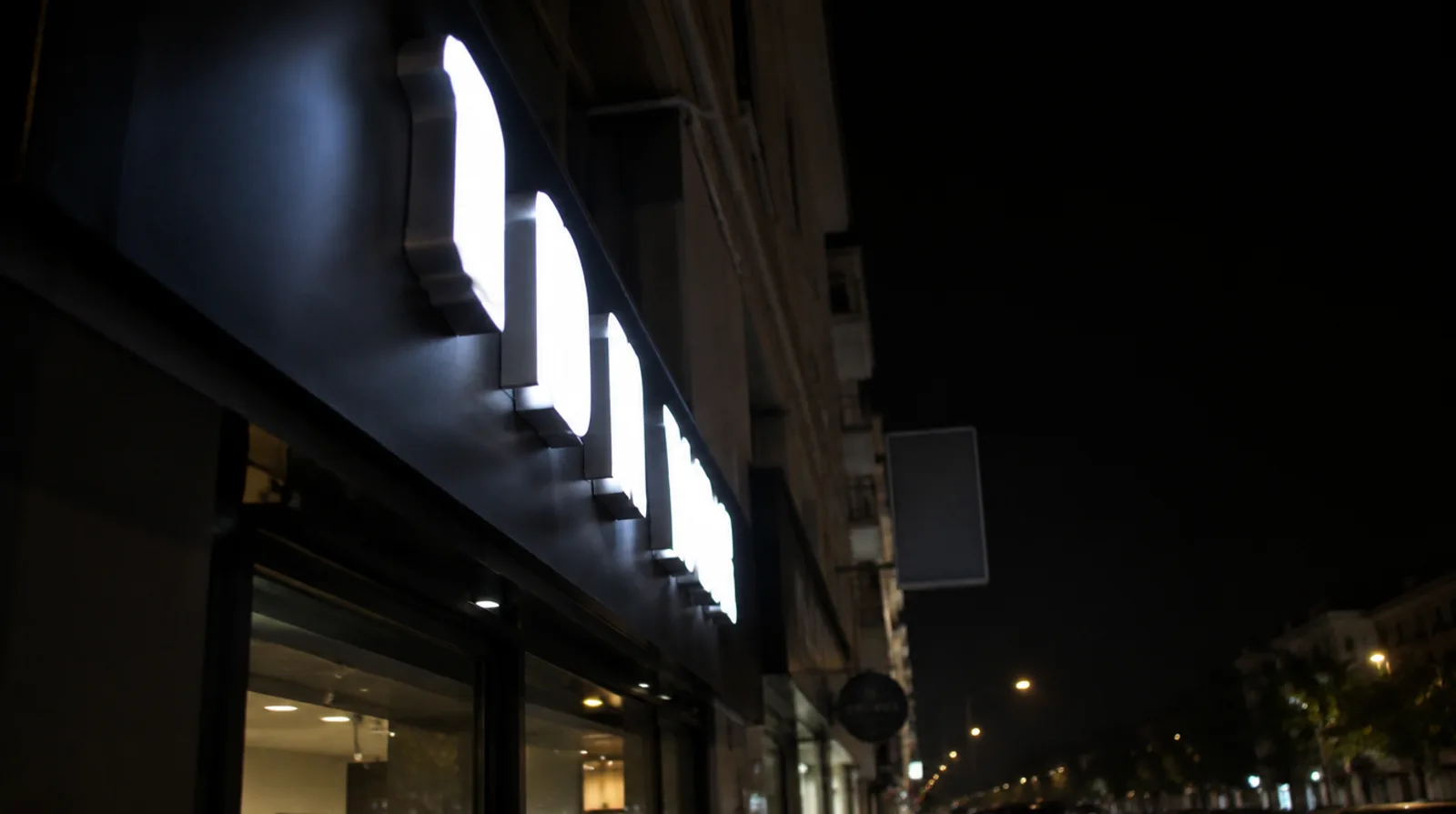
Choose front-lit letters if the sign must be read from the road at night. Choose back-lit letters if the sign is seen from closer and you want a quieter, premium look. Choose non-lit letters for indoor walls and for shops that only trade in daylight.
The lighting choice comes first because it decides the material, the minimum size and the wall you need. This guide goes through each. For the range we make and photos of finished work, see the 3D lettering page.
Front-Lit Letters
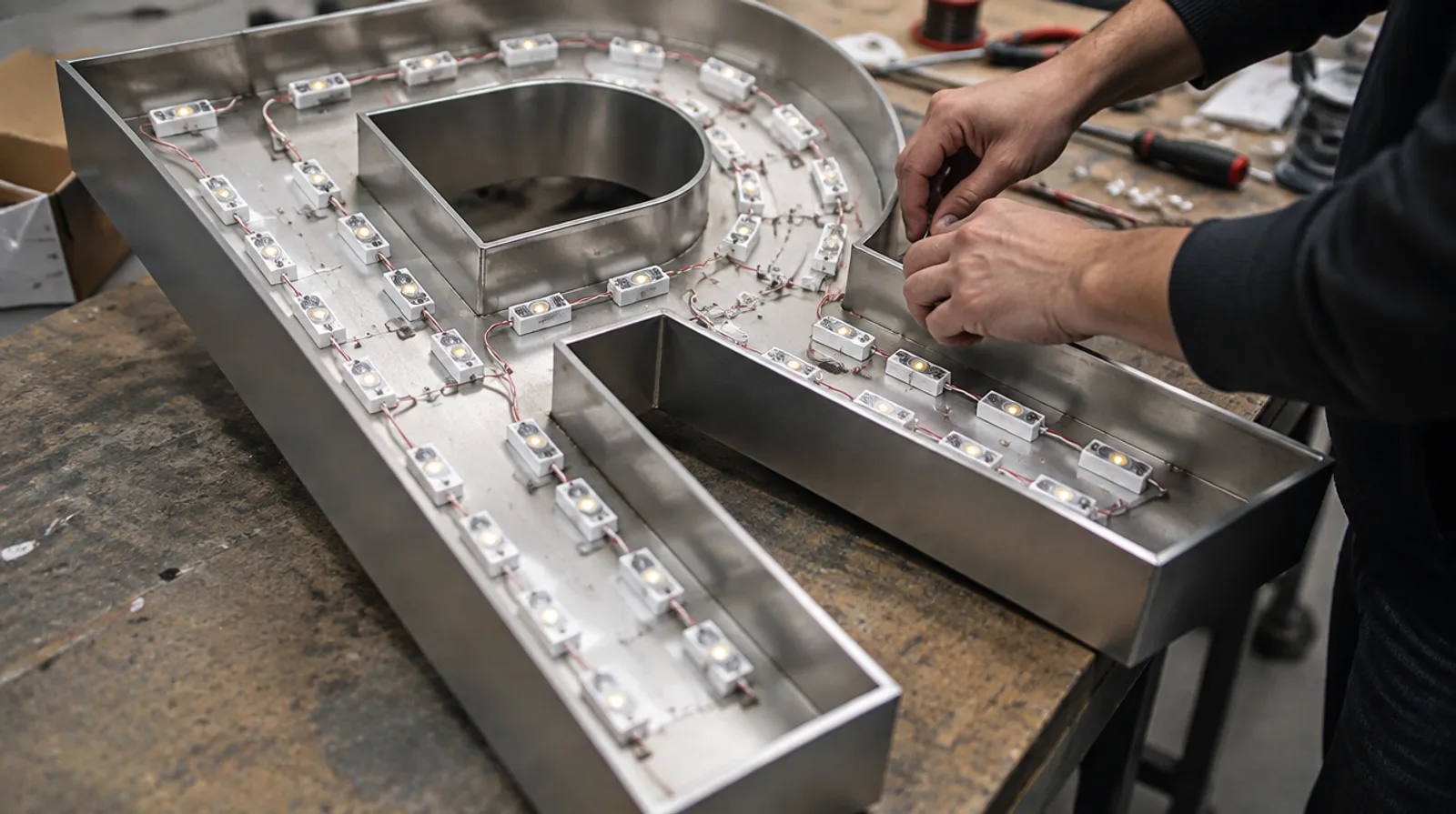
A front-lit letter is a hollow box. The sides (called returns) and the back are metal, LED modules are fixed inside, and the face is translucent acrylic. When the LEDs are on, the whole face of the letter glows in its colour.
Good at: distance. A glowing face is the brightest, most readable form of 3D lettering, which is why it is the standard for restaurants, clinics, pharmacies and retail shopfronts facing a road.
Things to know:
- The face colour comes from the acrylic, so brand colours are matched to the nearest acrylic or a printed face.
- Light is even only if the stroke is wide enough for the LEDs to spread. Narrow strokes show bright spots.
- By day the letter shows its acrylic face colour and metal sides, so check the daytime look too.
Product: LED box-up channel letter signboard.
Back-Lit (Halo) Letters
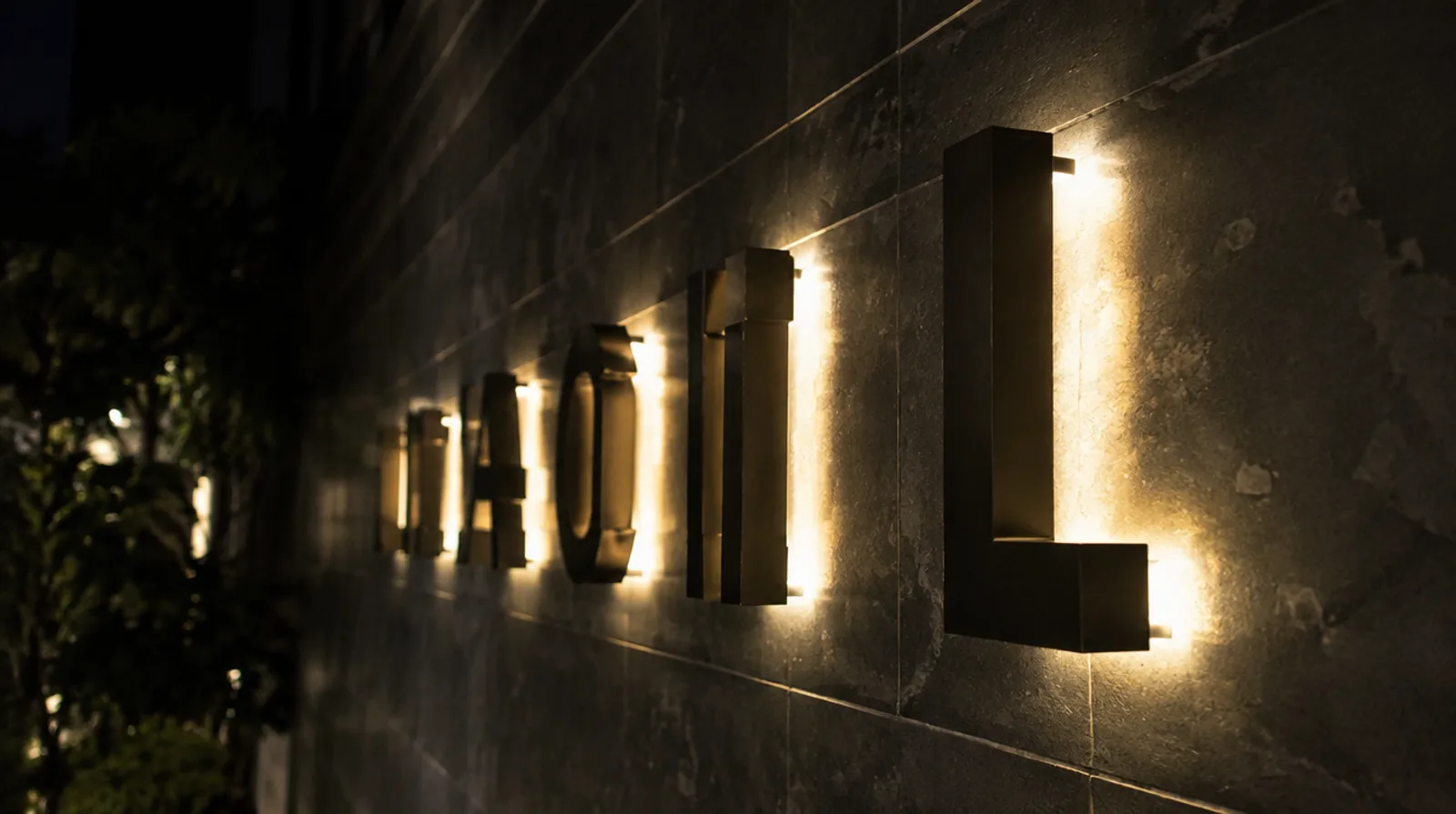
A back-lit letter turns the idea around. The face and sides are solid metal, the back is open or clear, and the letter is mounted on spacers a few centimetres off the wall. The LEDs shine backwards, so the wall glows around each letter and the letter itself reads as a dark silhouette.
Good at: atmosphere. Halo lighting is common on hotel, office, clinic and showroom signs, and on feature walls behind reception desks.
Things to know:
- The wall is part of the sign. A matt, light-coloured, flat wall gives a clean halo. A glossy wall — polished tile, glass, mirror-finish panel — reflects the individual LEDs as dots.
- It needs a gap. The spacers set the size of the halo. Too close and the glow is a thin line; too far and it washes out.
- It is read from closer. A halo is softer than a glowing face. On a wide road, front-lit wins.
Product: custom LED metal business signboard (back-lit).
Non-Lit 3D Letters
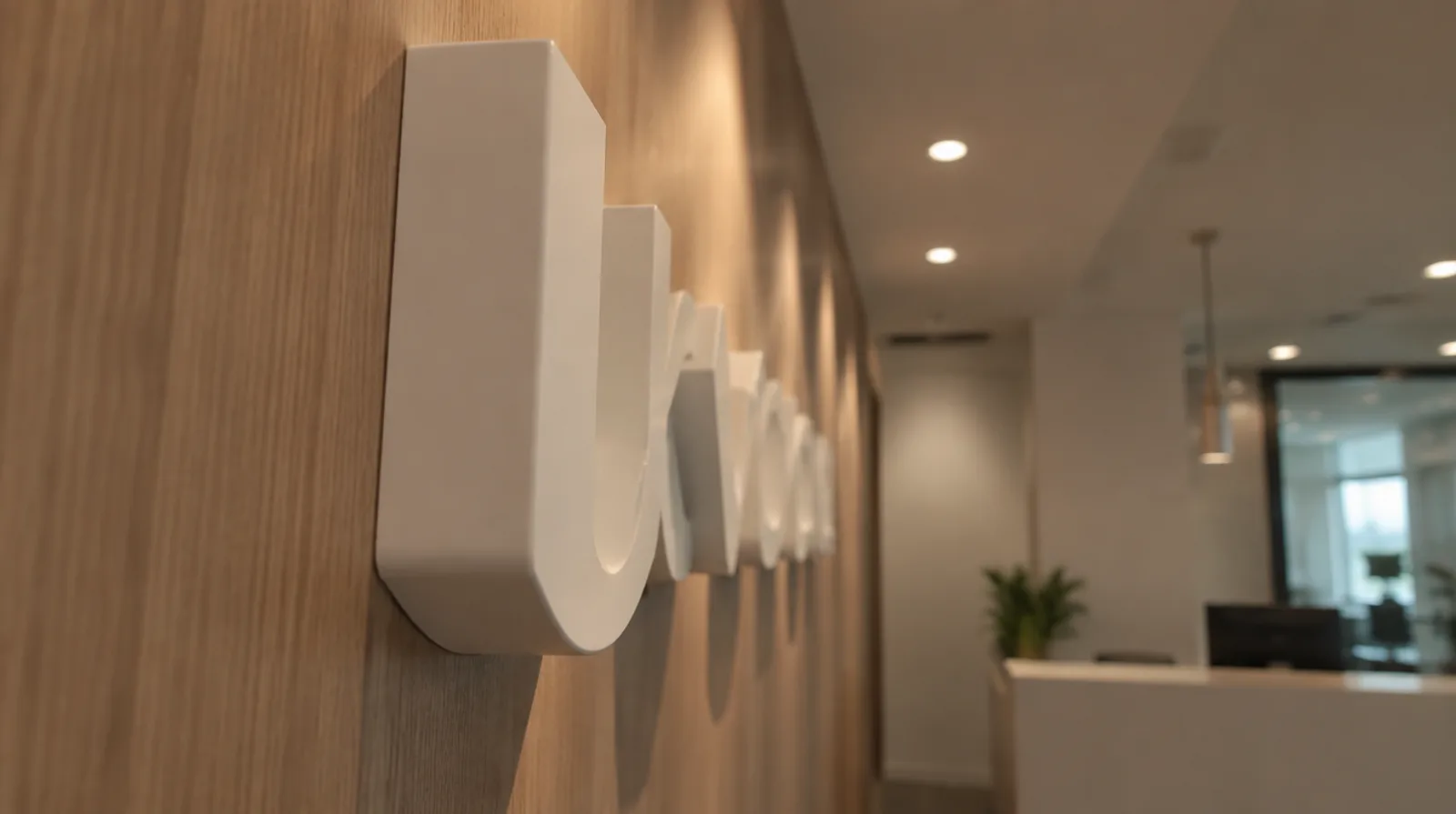
Without LEDs there is no wiring, no power supply and nothing to service. The letters can be thinner, smaller and lighter, and they cost less.
Need help with 3D Lettering?
Get a free quote from UMAKE — custom signage designed and manufactured in Malaysia.
Non-lit letters are the right choice for most indoor walls, where room lighting already does the job, and for outdoor signs on businesses that close before dark. A pair of spotlights aimed at the letters is a simple way to add night visibility later.
Options include solid colour acrylic letters, flat-cut PVC letters in several thicknesses, and aluminium box-up letters without LED.
Front-Lit vs Back-Lit vs Non-Lit
| Front-lit | Back-lit (halo) | Non-lit | |
|---|---|---|---|
| What glows | The letter face | The wall behind | Nothing |
| Night reading distance | Longest | Medium | Depends on other lighting |
| Typical face | Acrylic | Stainless steel or aluminium | Acrylic, PVC or metal |
| Wall needed | Any | Flat, matt, preferably light | Any |
| Power and wiring | Yes | Yes | No |
| Relative cost | Higher | Highest | Lowest |
| Typical use | Road-facing shopfronts | Offices, hotels, feature walls | Reception walls, daytime shops |
Which Material for Which Letter
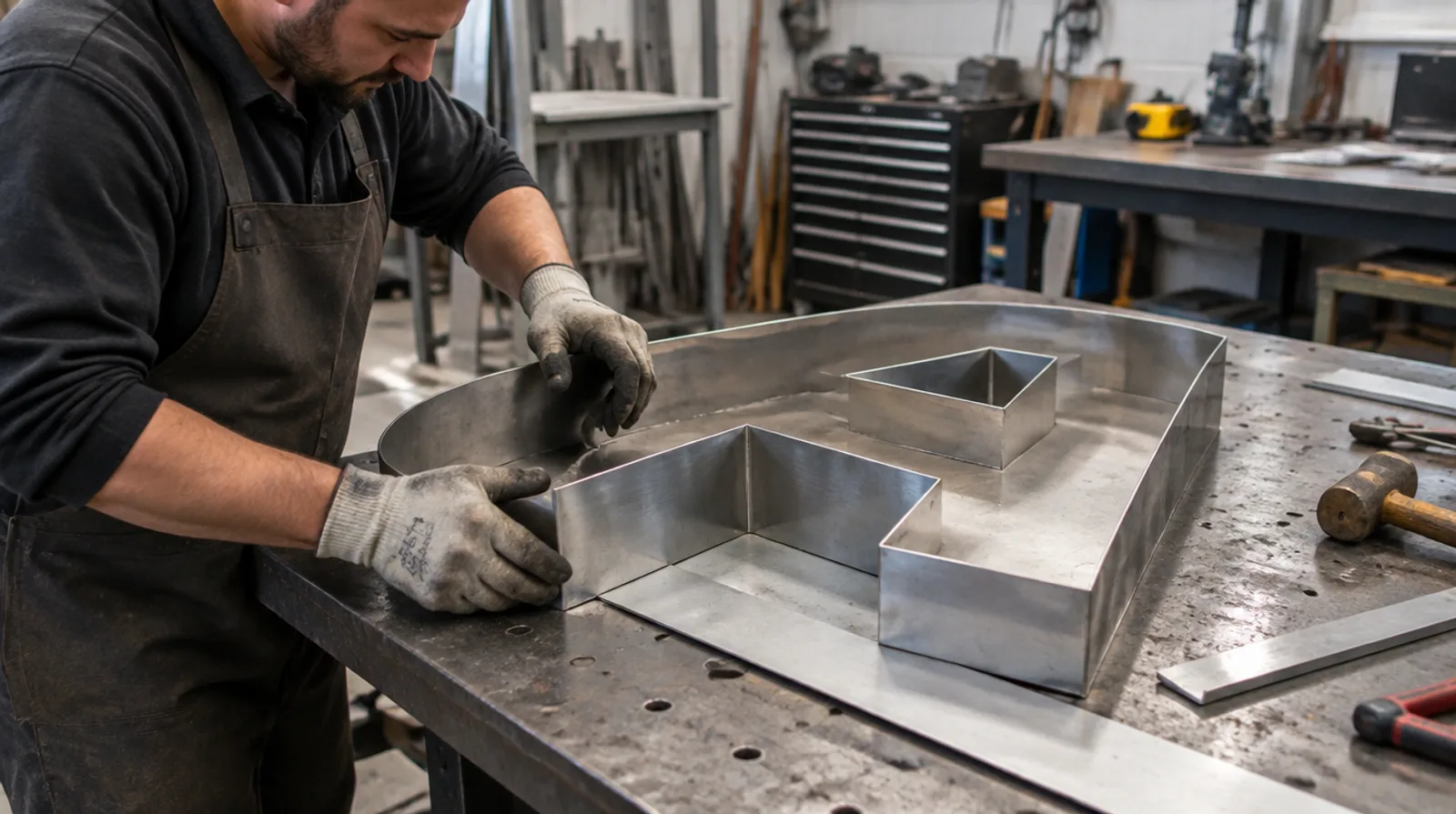
"3D lettering" covers four materials, and they are not interchangeable.
- Acrylic. Laser-cut solid letters for indoor walls, and the translucent faces of front-lit letters. Coloured acrylic is mostly 3 mm, so thicker-looking letters are built up in layers or made as box-up.
- PVC. Thick, light, flat-cut letters, usually painted or left white or black. Depth without the cost of metal; best indoors and for non-lit signs.
- Stainless steel. Box-up letters with a brushed or mirror finish, or gold-tone finishes. The classic choice for back-lit signs and corporate fronts. See stainless steel box-up letter signs.
- Aluminium. Box-up letters that are lighter than stainless steel and take paint well, so they suit large letters and brand colours.
How these are cut, bent and joined is covered in how shopfront signage is made. If you are still deciding whether 3D is worth it at all, read 3D letter signboard vs flat signs.
Minimum Letter Height and Stroke
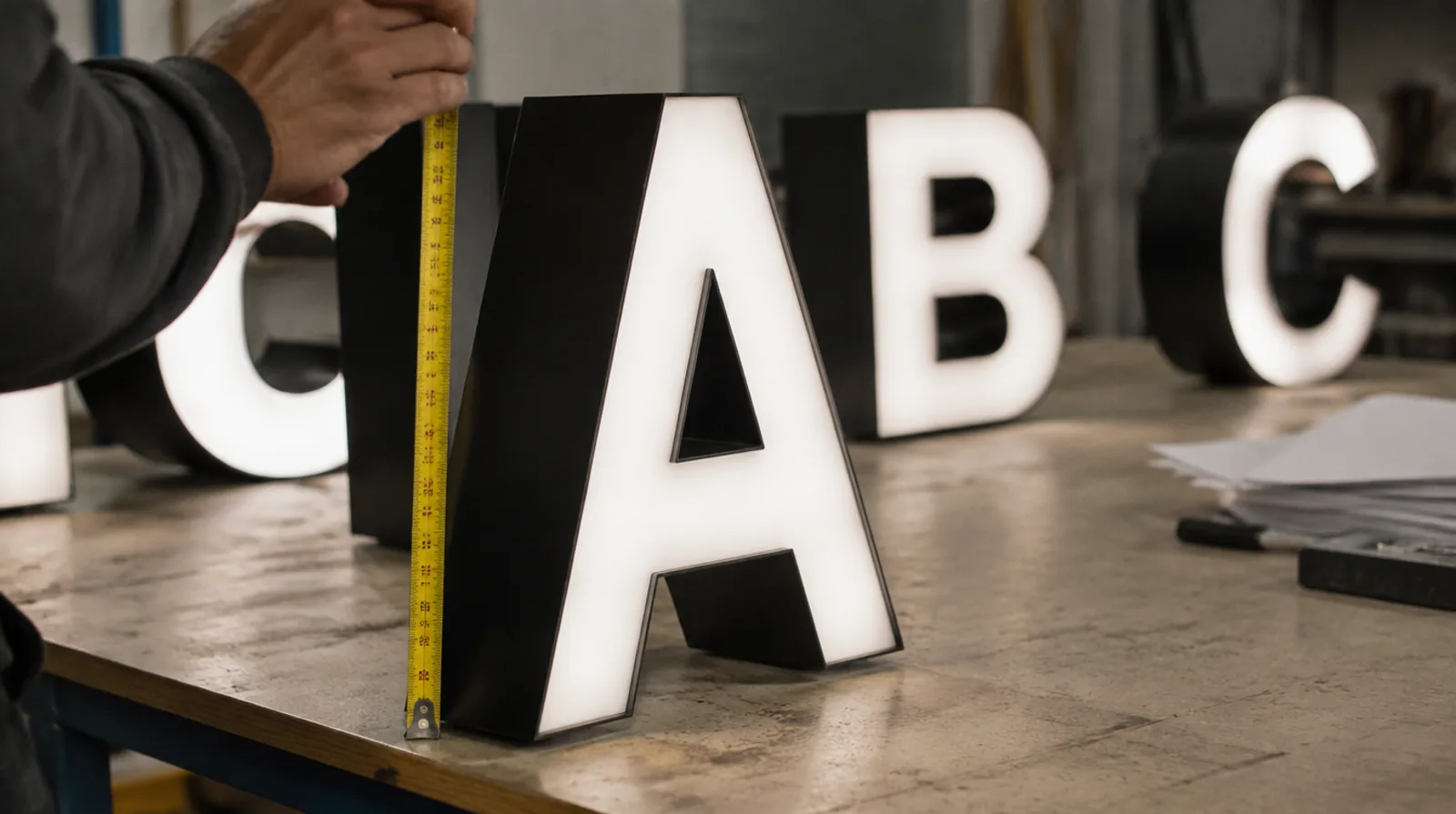
This is where many logo designs run into trouble.
For LED letters, plan on a letter height of about 15–20 cm or more. The limit is not really the height; it is the stroke — the width of each bar of the letter. LED modules and their wiring have to fit inside, and the light needs space to spread. A 15 cm letter in a bold font works. The same height in a thin or condensed font may not.
Practical rules:
- Bold fonts. Sans-serif, medium to heavy weights light best.
- Thin scripts and fine serifs are better made as non-lit flat-cut letters, or built as one joined shape on a lit backing panel.
- Small taglines under a lit name are normally made non-lit, or printed on a panel.
- Non-lit letters can be much smaller, since nothing has to fit inside.
Height for readability is a separate question from height for buildability. The viewing-distance table in our signboard size guide covers the first.
What Drives the Price
3D lettering is quoted per job. The factors:
- Number of letters — each is made separately.
- Letter height and depth — more material and more bending.
- Material and finish — stainless steel and special finishes cost more than aluminium, PVC or acrylic.
- Lighting — LEDs, power supplies and wiring; back-lit usually costs more than front-lit.
- Font complexity — curves and scripts take longer than straight block letters.
- Backing panel, if the letters are not fixed directly to the wall.
- Installation — height, access and wiring distance.
Ordering and Installation
Send your logo as a vector file, the overall width you want, lit or non-lit, a photo of the wall or fascia, and your location through the contact page or WhatsApp. We reply with a quote and a mockup for approval before production.
Simple non-lit acrylic and PVC letters typically take 3–5 working days after payment and design confirmation. Box-up and LED letters involve metalwork and wiring and take longer; we give the time with the quote.
On-site installation is available in KL and Selangor only. Outside the Klang Valley we fabricate and deliver the letters with a drilling template, for a local installer or electrician to fit. Illuminated signs must be connected by a qualified electrician.
Frequently Asked Questions
What is the difference between front-lit and back-lit 3D letters?
In a front-lit letter the LEDs shine forward through a translucent acrylic face, so the letter itself glows. In a back-lit or halo letter the face is solid metal and the LEDs shine backwards onto the wall, creating a glow around a dark letter. Front-lit is brighter and read from further away; back-lit is softer.
What is the minimum size for LED 3D letters?
Plan on a letter height of about 15-20 cm or more. The real limit is the stroke width: LED modules and wiring must fit inside each bar of the letter and the light needs room to spread. Bold fonts work at the smaller end; thin or condensed fonts need to be larger or made non-lit.
Which is better for a shopfront, front-lit or back-lit?
For a shopfront that must be read from the road at night, front-lit is usually better because the glowing face is brighter. Back-lit suits offices, hotels, clinics and feature walls viewed from closer, where a refined look matters more than maximum distance.
What materials are 3D letters made from?
Acrylic, PVC, stainless steel and aluminium. Acrylic is used for solid indoor letters and for the faces of front-lit letters. PVC gives thick, light non-lit letters. Stainless steel and aluminium are formed into box-up letters, with stainless common for back-lit signs and aluminium for large or painted letters.
Can back-lit letters go on any wall?
No. Halo lighting works best on a flat, matt, light-coloured wall. Glossy surfaces such as polished tile, glass or mirror-finish panels reflect the individual LEDs as dots, and very dark walls absorb most of the glow.
Do you install 3D lettering?
On-site installation is available in KL and Selangor only. Outside the Klang Valley we fabricate and deliver the letters with a drilling template for a local installer, and illuminated signs should be connected by a qualified electrician.