The question behind this page
I need a custom acrylic box or display case — should it be glued or self-assembly, how thick, and what will change the price?
Key Takeaways
- Glued boxes arrive ready to use, with clear, sealed joints. They are the better choice for retail counters, heavy items and anything on permanent display.
- Self-assembly boxes ship flat and slot together. They cost less to send and suit collectors and smaller cases.
- 3 mm acrylic is right for small cases; 5 mm is the safer choice as the box gets bigger or carries weight.
- Most custom boxes we make are under about 60 cm on the longest side. Larger showcases are possible but are a different build.
- Hinged doors, locks, bases and shelves are options, and each one adds work.
- Price depends on size, thickness, build type, extras and quantity — not on a fixed list.
The Short Answer
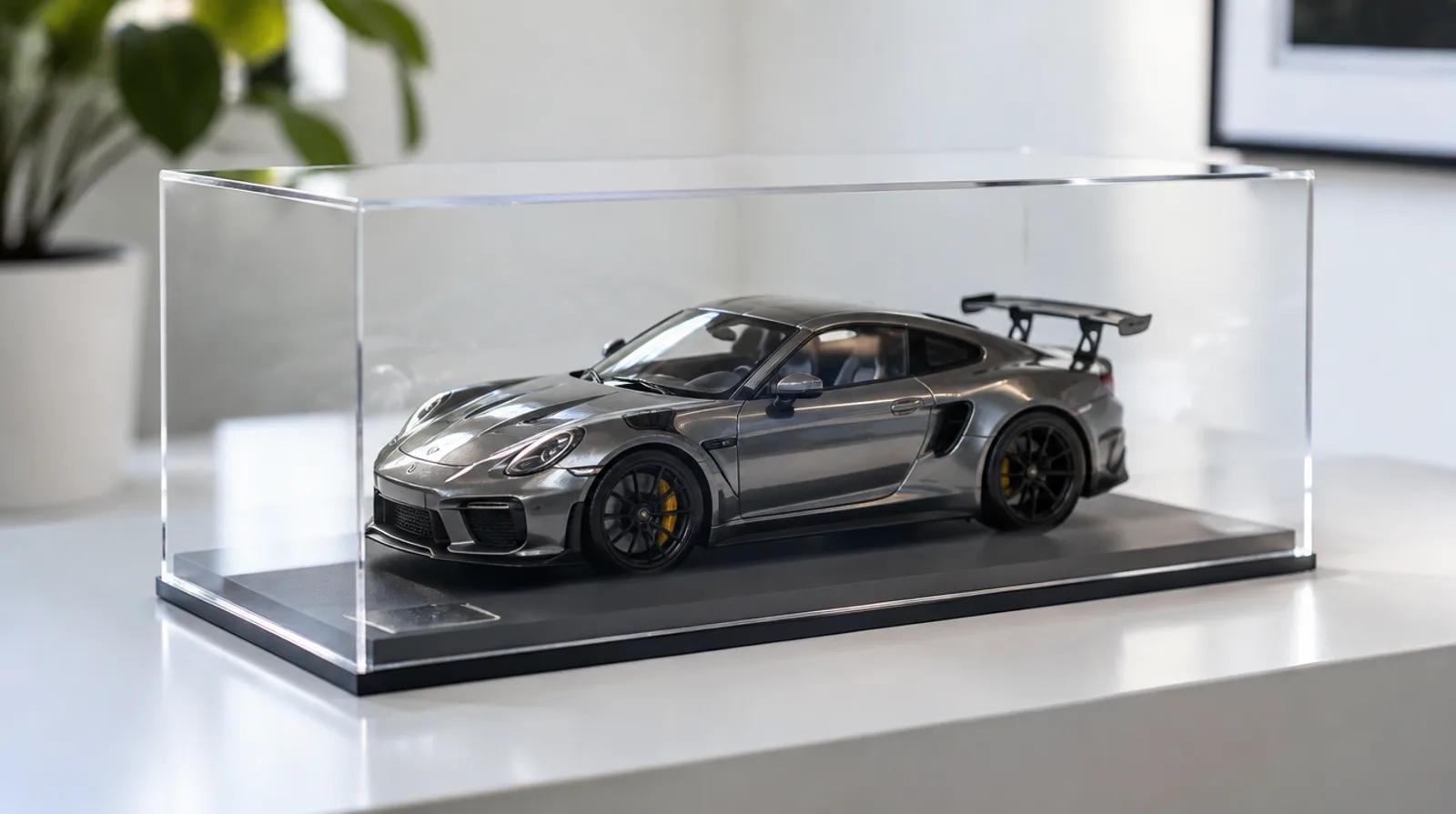
Choose a glued box if it will be handled by customers, carry weight or stay on display for years. Choose self-assembly if you want the lowest delivery cost, a smaller case, or a box you can take apart and store.
Both are cut from the same clear acrylic sheet on the same laser. The difference is how the panels are joined, and that decides how the box looks at the corners, how strong it is, and how it reaches you.
If you already know what you want, the custom acrylic display case page takes your dimensions directly, and custom acrylic fabrication covers one-off shapes that are not a plain box.
Glued Acrylic Boxes
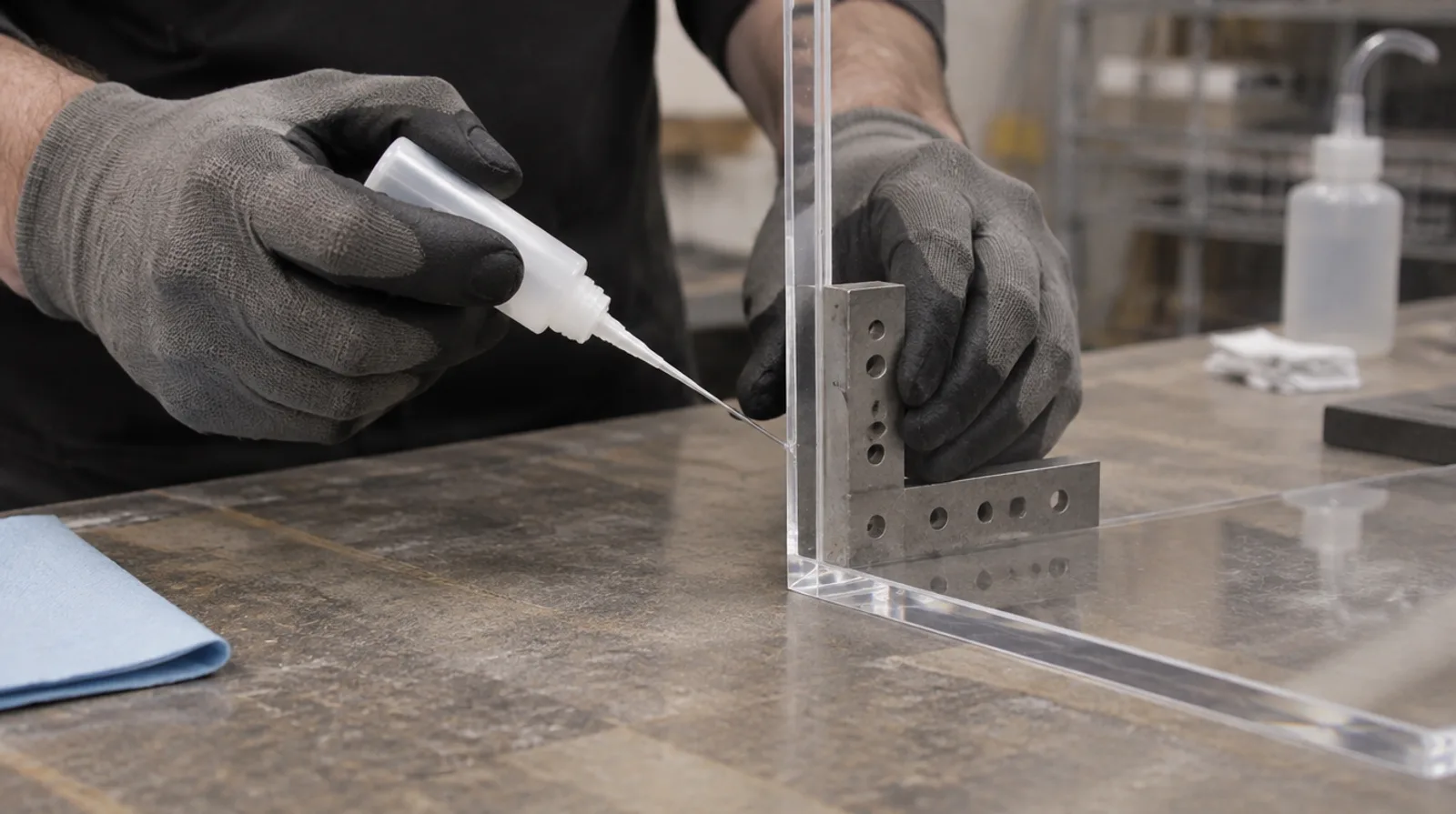
A glued box is built in our workshop. Each panel is laser cut, the edges are lined up in a jig, and the joints are bonded with acrylic solvent. The solvent softens the two surfaces so they fuse, which is why the method is also called chemical welding. Done well, the joint is clear rather than milky, and the box behaves like one piece.
What you gain:
- A clean look. Straight, clear corners with no tabs or slots showing.
- Strength. The joint is bonded along its whole length, so the box resists twisting.
- A better dust seal. There are no gaps between panels.
- No work for you. It arrives assembled.
What it costs you:
- More labour, so a higher price than the same size in self-assembly.
- Bulky delivery. An assembled box ships as an empty volume and needs careful packing. For large glued cases, collection from Balakong or our own delivery within KL and Selangor is the safer route.
- It is permanent. A glued box cannot be flat-packed later.
Self-Assembly Acrylic Boxes
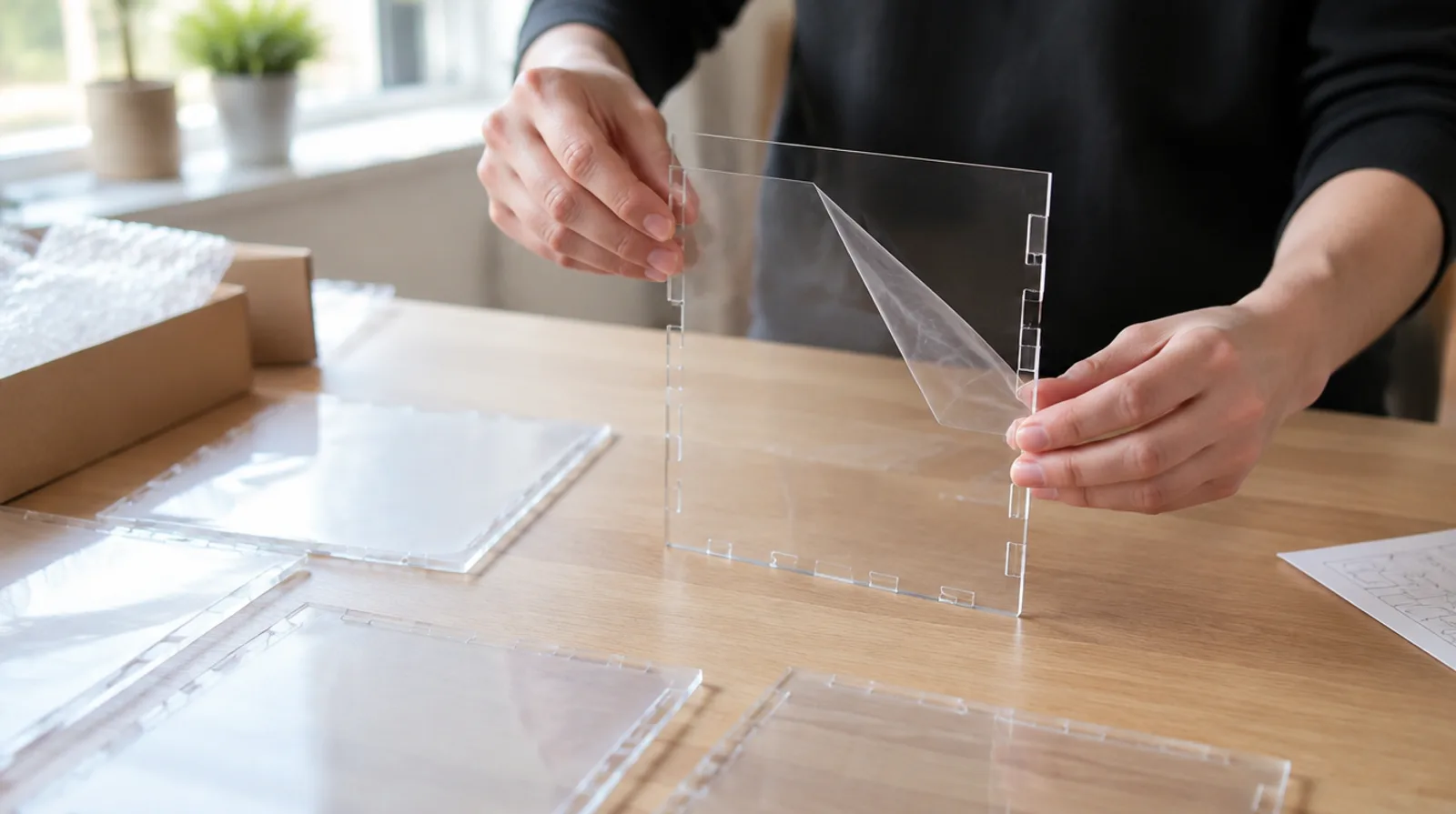
A self-assembly box arrives as flat panels. The edges are cut with interlocking finger joints, so the panels slot into each other without glue or tools. You peel off the protective film, slot the sides together and set the case over your item.
What you gain:
- Lower cost. There is no assembly labour in the price.
- Cheap, safe delivery. A flat parcel is far less likely to be damaged by a courier than an assembled box.
- Stackable and storable. Cases can be lined up or taken apart when you move.
Need help with Acrylic Box?
Get a free quote from UMAKE — custom signage designed and manufactured in Malaysia.
The trade-offs are visible finger joints at every corner, a little more movement in the box than a glued one, and a practical size limit — slot-together joints suit smaller cases. Our ready-made version is the self-assembly stackable display case, in stock sizes and custom sizes.
For big or heavy designs, some knock-down cases use screws or brackets instead of slots. If you need a large case that still ships flat, tell us and we will say which fixing suits it.
Glued vs Self-Assembly: Side by Side
| Glued | Self-assembly | |
|---|---|---|
| Corners | Clear, plain edges | Visible finger joints |
| Strength | Rigid, bonded along every joint | Holds its shape; not for heavy loads |
| Dust | Sealed joints | Close fit, small gaps possible |
| Delivery | Assembled and bulky | Flat parcel by courier |
| Cost | Higher — includes assembly labour | Lower |
| Best for | Shop counters, trophies, heavy or valuable items | Figurines, models, gifts, home collections |
3 mm or 5 mm?
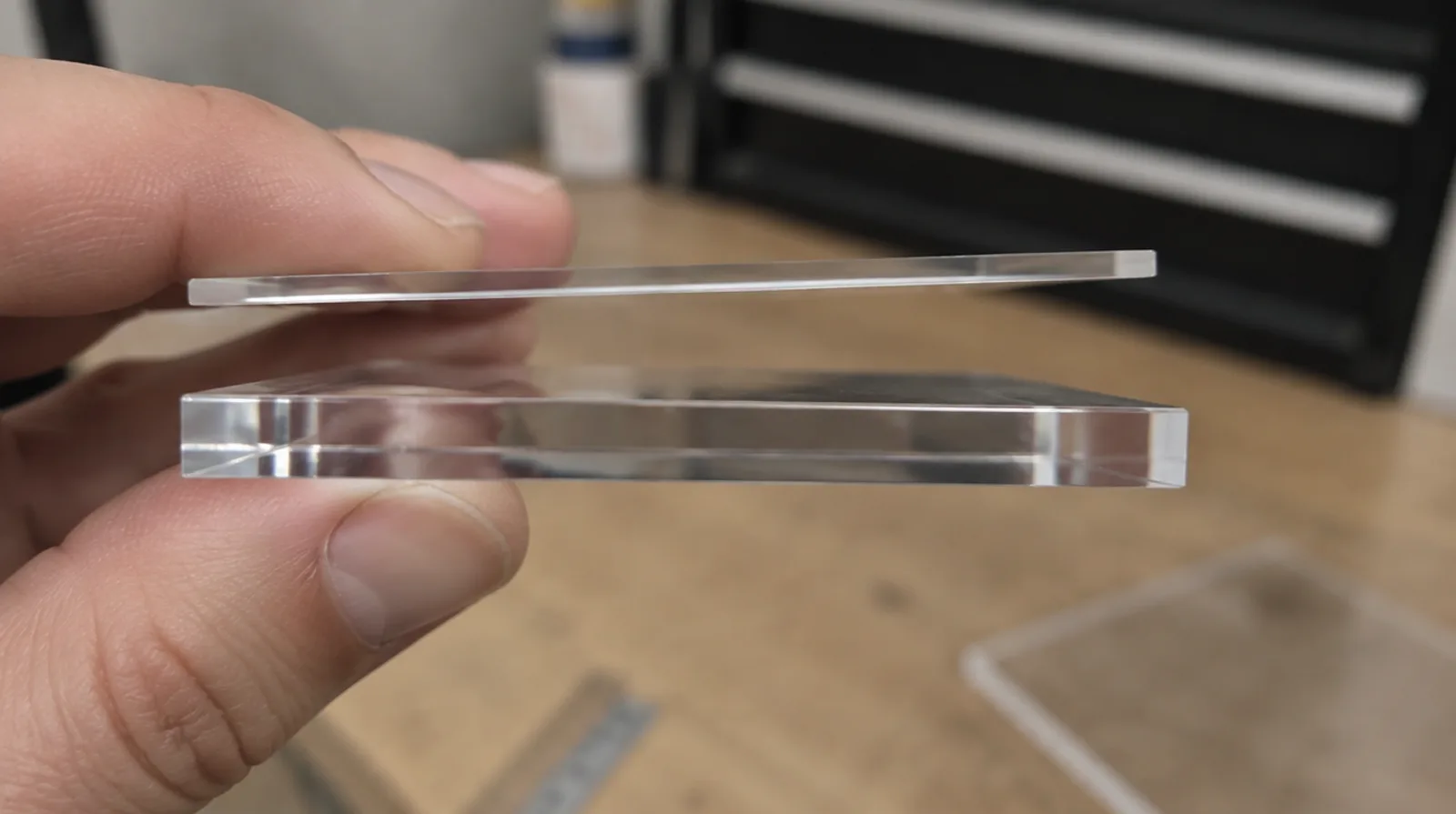
Thickness is the second decision, and it follows the size of the box.
- 3 mm clear is light and economical. It is right for small cases — a figurine, a model car, a single product on a counter.
- 5 mm clear is noticeably stiffer. Use it when a panel is long enough to flex, when the box has a shelf or carries weight, or when customers will lean on it.
A long, thin panel bows. If one side of your box is much above 40 cm, 5 mm is the safer choice. Thicker sheet, such as 6 mm or 10 mm, is used mostly for bases rather than walls.
On size: most custom boxes we build are under about 60 cm on the longest side. Larger showcases can be made, but they need thicker sheet, sometimes internal supports, and delivery planning, so they are quoted as a project rather than as a standard box. Measuring guidance is in how to choose the right display case size.
Hinged Doors, Lids and Other Options
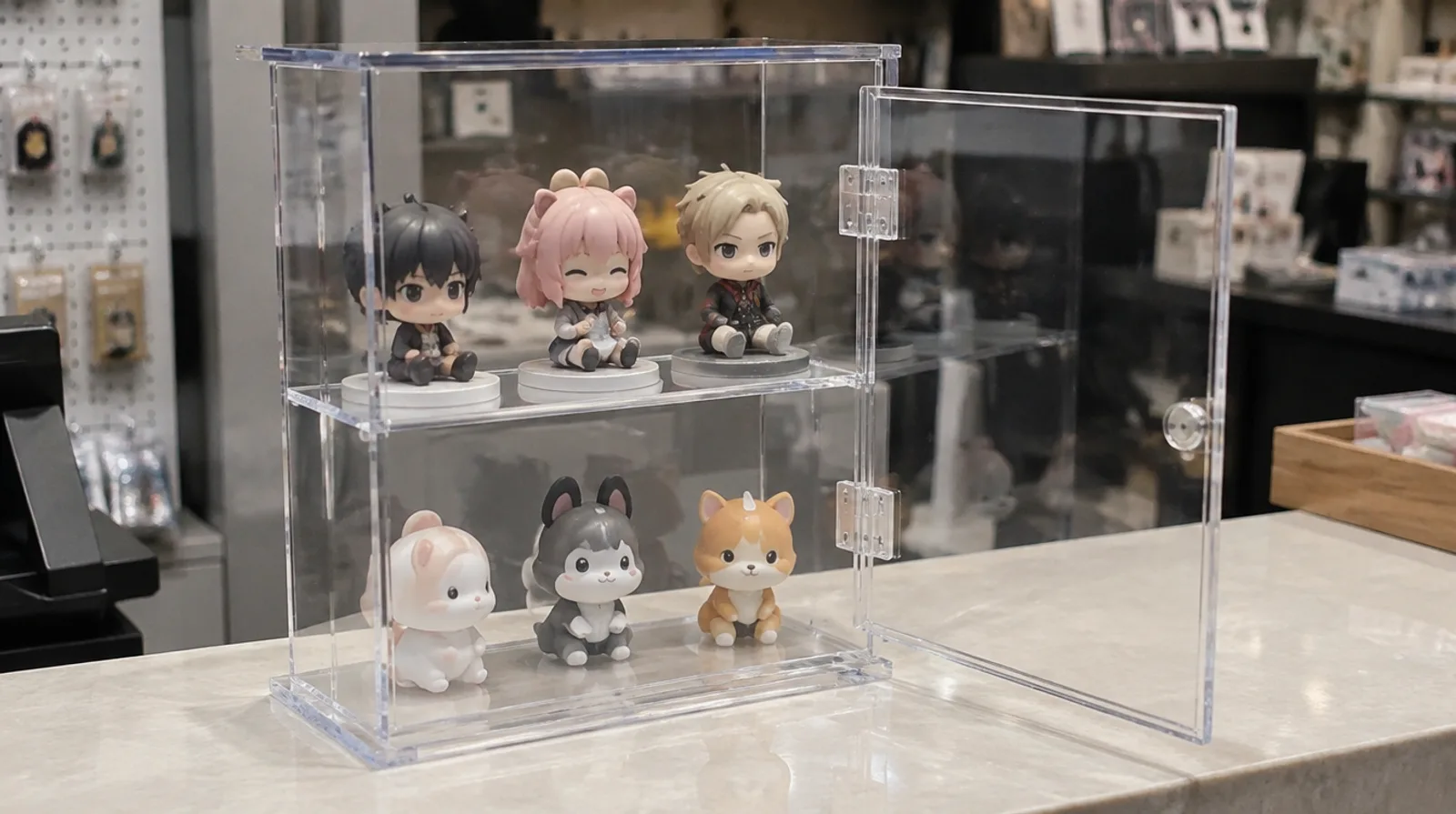
A plain five-sided cover that lifts off is the simplest and cheapest box. If you need to reach inside often, add an opening:
- Hinged door. A front or side panel on small hinges with a catch. Best for retail cases opened many times a day.
- Lift-off or hinged lid. Suits donation boxes, lucky draw boxes and storage.
- Lock. A small cam lock for cases holding valuables or cash.
- Base. A black, white or clear base, sometimes thicker than the walls, so the item sits on a stage.
- Shelves and dividers. Fixed tiers for several items in one case.
- Slot or cut-out. For a collection or donation box.
- Printing or engraving. A logo or label on one panel.
Doors and locks need a rigid frame to hang from, so they are normally built on glued boxes in 5 mm rather than on slot-together cases.
What Affects the Price
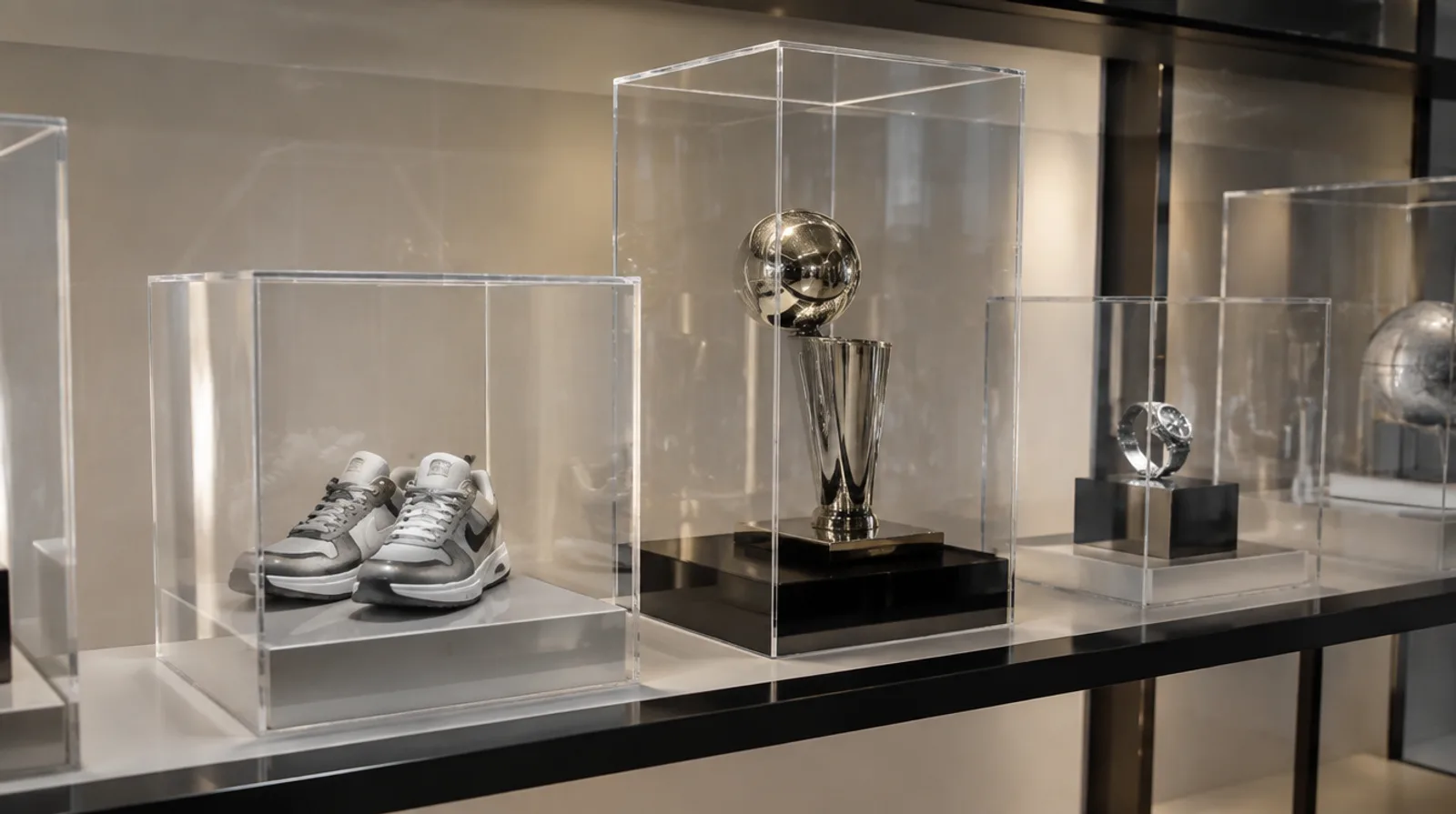
We quote each box because the same outer size can be built several ways. These are the things that move the number:
- Size. Material use rises quickly: doubling every dimension uses about four times the sheet.
- Thickness. 5 mm costs more than 3 mm, in material and in cutting time.
- Build type. Glued costs more than self-assembly because of the hand work.
- Openings and hardware. Hinges, catches, locks and shelves each add parts and labour.
- Base and colour. A coloured or thicker base is an extra sheet.
- Printing or engraving. Priced by area and artwork.
- Quantity. Ten identical boxes cost less each than one.
- Delivery. Flat-pack by courier is cheap; an assembled case costs more to move safely.
For how these add up in practice, see the acrylic display case price guide.
What to Send for a Quote
Send these through the contact page or WhatsApp and we can usually quote without a back-and-forth:
- Internal size — length × width × height, in centimetres. Measure the item, then add clearance on every side.
- What goes inside and roughly how heavy it is.
- Glued or self-assembly, or tell us how it will be used and we will suggest one.
- Thickness, if you have a preference.
- Options — door, lid, lock, base, shelf, logo.
- Quantity and the date you need it.
Typical lead time is 3–5 working days after payment and design confirmation. Glued cases with doors, and larger quantities, can take longer.
Frequently Asked Questions
Is a glued acrylic box stronger than a self-assembly one?
Yes. A glued box is bonded along the full length of every joint, so it is rigid and behaves like one piece. A self-assembly box holds its shape through interlocking finger joints, which is enough for light display items but not for heavy loads or frequent handling.
What thickness should a custom acrylic box be?
3 mm clear acrylic suits small cases for figurines, models and single products. Choose 5 mm when a panel is long enough to flex, when the box has a shelf, door or lock, or when it will carry weight. As a guide, if one side is much above 40 cm, use 5 mm.
How big can a custom acrylic box be?
Most custom boxes we make are under about 60 cm on the longest side. Larger showcases are possible but need thicker sheet, sometimes internal supports, and delivery planning, so they are quoted as a project.
Can an acrylic box have a hinged door?
Yes. A hinged front or side door with a catch is common on retail cases, and a small lock can be added for valuables. Doors and locks are normally built on glued boxes in 5 mm acrylic, because they need a rigid frame to hang from.
Will a self-assembly acrylic box keep dust out?
It keeps most dust off the item because the panels fit closely, but small gaps at the finger joints are possible. A glued box has sealed joints and is the better choice where dust protection matters most.
How long does a custom acrylic box take to make?
Typically 3-5 working days after payment and design confirmation. Glued cases with doors, locks or shelves, and larger quantities, can take longer; we confirm the time when we quote.


