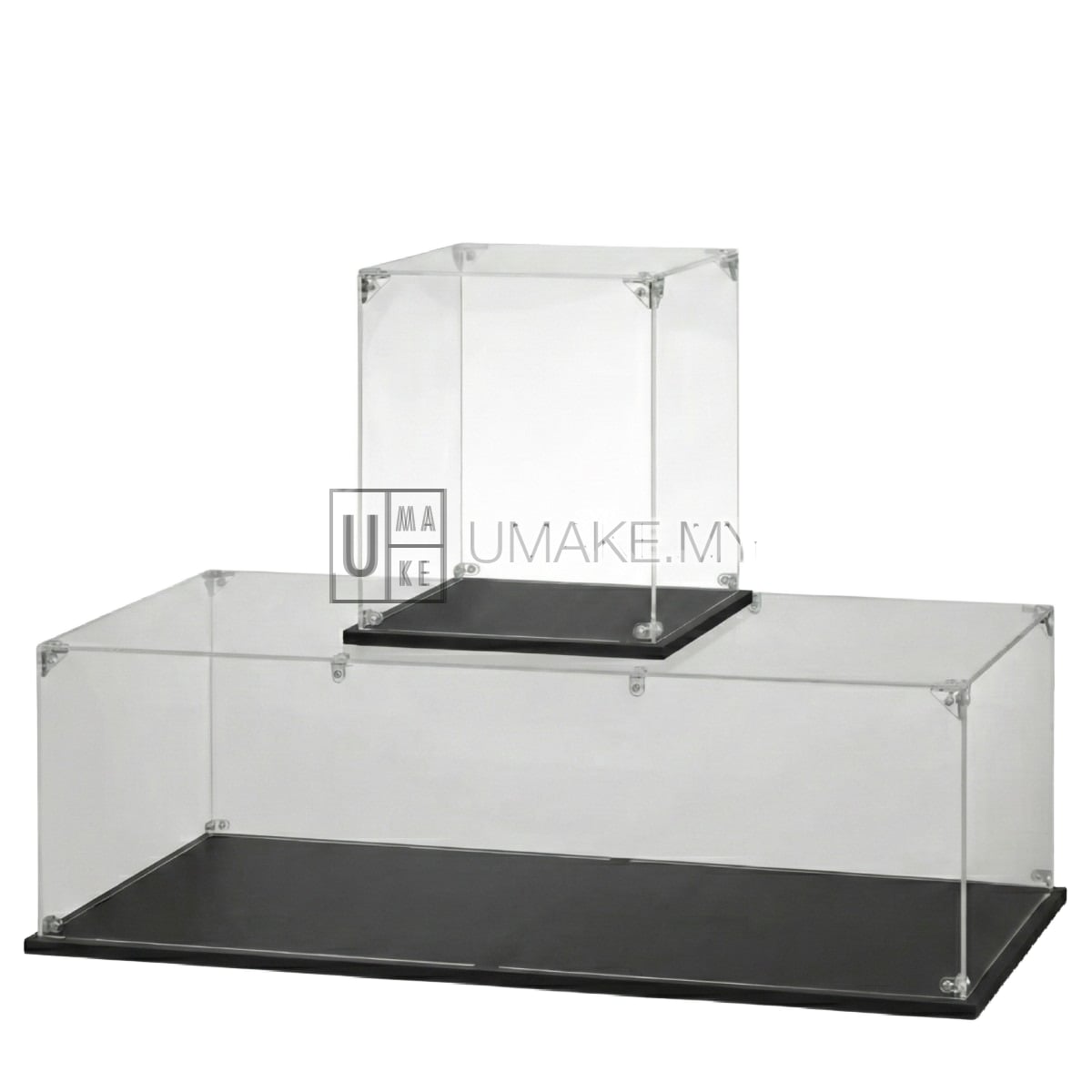
To request an acrylic fabrication quote, send the intended use, a dimensioned sketch, quantity, colour, assembly requirements and delivery location. Identify any dimensions that must fit another object. If you do not know the sheet thickness, ask the fabricator to recommend it for the load and construction instead of guessing.
This checklist helps buyers prepare one consistent brief for a display, cover, holder or custom enclosure. For an overview of available processes, start with the acrylic fabrication service guide.
Key Takeaways
- Label measurements as internal clear space or overall external size.
- Separate essential requirements from preferences that suppliers can price as alternatives.
- Compare quotations using the same assembly, printing, packing and delivery scope.
1. Describe what the finished item must do
Start with the purpose rather than a photograph alone. A cover protecting a model, a retail riser carrying products and a wall-mounted information holder can look similar while needing different construction.
State whether the item sits indoors, near a window, outdoors under cover or in an exposed location. Describe how people use it: lift off a cover, open a door, replace a printed insert or move the complete unit every day. Include the weight and footprint of anything it supports. A reference photograph communicates appearance, but it cannot confirm hidden joints, thickness or load capacity.
For display projects, the display stand and case guide can help you name the format before requesting a price.
2. Mark the dimensions that determine fit
Use a simple front, side and top sketch with every measurement in one unit, preferably millimetres. Label width, depth and height rather than sending an unexplained sequence of numbers.
For a hypothetical display cover, write “minimum internal clear space: 400 mm wide × 250 mm deep × 300 mm high.” That tells the fabricator what must fit inside. It does not prescribe the final outside dimensions, because sheet thickness and joint design still need to be accounted for.
- Mark the largest object that must fit inside.
- Show openings for cables, handles, ventilation or access.
- Locate holes from a named edge or centreline.
- Identify nearby walls, shelves or recesses that limit outside size.
- State whether a removable base counts toward the overall height.
Do not invent a tight tolerance for every dimension. Explain which fit is critical, and ask the supplier to confirm an achievable tolerance before approval. For flat parts, see the laser-cutting service details.
Need help with acrylic fabrication quote checklist?
Get a free quote from UMAKE — custom signage designed and manufactured in Malaysia.
3. Specify appearance and ask about construction
Describe transparency, colour, visible edges and the faces customers will see. “Clear acrylic” does not explain whether you expect an exposed polished edge, a printed face or a concealed fixing.
Ask the supplier to state the proposed material, thickness and assembly method in writing. If the product will be mounted or exposed to temperature changes, ask how movement will be accommodated. The sheet manufacturer's sign-fabrication guidance explicitly requires allowance for expansion and contraction. Its published details apply to the specified sheet product, so they should not be copied as universal dimensions for every acrylic assembly.
For printed work, identify the printed side, artwork orientation, whether the reverse must look finished, and any colour reference you can supply. Read the acrylic sheet selection guide if you need help describing the material appearance.
4. Request comparable quantities and delivery scope
Ask for each quantity you are realistically considering using the same specification. Keep a prototype separate from the production batch so its purpose and approval conditions are clear.
Specify whether the price should include cutting only, full assembly, print, hardware, protective packing and delivery. Add the destination postcode and explain whether pieces must arrive assembled or packed individually. If different branches need separate cartons, say so before the quotation.
Give the date the item must be usable, then ask the supplier to identify the artwork approval, sample approval and dispatch dates needed to meet it. A requested event date is not a confirmed production promise. The acrylic cutting cost guide provides context, but your specification should control the actual quote.
5. Copy this brief and approve the final drawing
Send one named revision of the brief, then check that the quotation and drawing refer to that revision. This makes later changes easier to identify.
- Item and purpose: what it holds, covers or displays.
- Location: indoor/outdoor, relevant heat or exposure.
- Dimensions: labelled sketch; internal versus external clearly stated.
- Material: colour and transparency; proposed thickness to confirm.
- Construction: access, joints, holes, fixings and load.
- Decoration: artwork file, print face and finish reference.
- Quantity: sample and batch quantities separately.
- Delivery: postcode, packing, assembly and required date.
- Approval: named person responsible for the final drawing.
Before approval, check spelling, units, usable internal space and every included accessory. Resolve any “to confirm” entries first. Keep the approved drawing with the order, and use the acrylic fabrication page to match the brief to the process required.
Frequently asked questions
Can I request a quote with only a hand sketch?
Yes, a labelled sketch can explain the requirement for an initial discussion. Include units, quantities and photographs. Ask whether a production drawing or artwork preparation is needed before manufacture.
Should I choose the acrylic thickness myself?
You can state a preferred thickness, but include the span, load and intended construction. Ask the fabricator to confirm suitability rather than treating thickness alone as a strength guarantee.
How do I compare two acrylic quotations?
Check that both use the same dimensions, material, quantity and finish. Then compare assembly, printing, hardware, packing, delivery and approval requirements. A lower total may cover less work.


