Disclaimer: This article is general information only, not tax advice. Tax treatment depends on your facts, and rates and rules can change. Always confirm with a licensed tax agent or with LHDN (Lembaga Hasil Dalam Negeri) before filing.
The Short Answer
Yes — in most cases. A business signboard in Malaysia is generally treated as "plant" (apparatus used to carry on the business), so it typically qualifies for capital allowance under Schedule 3 of the Income Tax Act 1967. That means instead of deducting accounting depreciation (which is not allowed for tax), you claim an Initial Allowance in the first year plus an Annual Allowance each year until the cost is written down. The key conditions are simple: your business must own the signboard, it must be in use for the business, and you should keep the supplier's tax invoice as proof of the spend.
Depreciation vs Capital Allowance — Why You Don't Just "Depreciate" a Signboard for Tax
This is the point that trips up most business owners. In your accounts, your accountant will usually depreciate a signboard — spreading its cost over, say, 5 to 10 years on a straight-line basis. That is correct for your financial statements. But for tax purposes, accounting depreciation is not deductible in Malaysia.
Instead, when LHDN computes your taxable income, that depreciation is added back, and a separate tax relief — the capital allowance — is claimed in its place. So the two systems run in parallel:
- Accounting depreciation — for your books, to reflect the asset wearing out over its useful life. Commonly 5–10 years for a signboard.
- Capital allowance — for tax, computed under Schedule 3 of the Income Tax Act 1967 on "qualifying plant expenditure".
The practical effect: you cannot simply put "signboard depreciation" through as a tax deduction. You claim a capital allowance instead, at the rates set out below.
Does a Signboard Qualify as "Plant"?
Capital allowance under Schedule 3 is available on qualifying plant expenditure — money spent on "plant" used in the business. "Plant" generally means apparatus with which the business is carried on, as opposed to the setting (the building) in which it is carried on, or pure decoration.
A business signboard generally falls on the "plant" side of that line: it is a functional asset that advertises and identifies the business, helps draw in customers, and is used to carry on the trade. That is different from:
- Part of the building structure itself (which is generally not plant), or
- Pure decoration with no business function.
Because a signboard is apparatus used to run and promote the business, it is commonly accepted as qualifying plant. That said, classification can depend on the specific facts and how the asset is described, so confirm the treatment with your tax agent.
The Conditions — Especially Ownership ("Dimiliki Oleh")
To claim a capital allowance on a signboard, all of the following generally need to hold for the basis period:
- You are carrying on a business — the asset must relate to a trade or business you operate.
- You incurred qualifying plant expenditure — you actually spent money buying or making the signboard.
- The asset is in use — the signboard is being used for the business at the end of the basis period.
- You own the asset — this is the one that catches people out.
The ownership rule (signboard "dimiliki oleh"): capital allowance is only available to the owner of the asset. You cannot claim a capital allowance on something you do not own. So if your landlord owns and installed the sign, the tenant generally cannot claim it — the landlord (if running a business) would be the one with the potential claim. The simplest way to keep the claim with your business is to buy the signboard yourself and have the tax invoice issued in your business's name.
This is exactly why a signboard you commission and pay for — in your company's name, used at your premises — sits cleanly within the rules.
Initial & Annual Allowance Rates (Worked Example)
Capital allowance on plant has two parts:
- Initial Allowance (IA) — a one-off allowance in the first year you incur the expenditure. The general rate is 20%.
- Annual Allowance (AA) — claimed every year (including the first) until the asset is fully written down. The rate depends on the asset class under the Income Tax (Qualifying Plant Annual Allowances) Rules 2000 — generally 14% for general plant and machinery, or 10% for furniture, fittings and "others".
A signboard is commonly claimed at the general rate or the fittings rate. Classification can vary, so confirm the correct rate with your tax agent. To show how the parallel systems compare, here is a worked example using IA 20% + AA 10% for an RM900 acrylic signboard, against a typical 5-year straight-line accounting depreciation:
| Year | Accounting depreciation (books, 5-yr SL) | Capital allowance (tax: IA 20% + AA 10%) | Tax written-down value |
|---|---|---|---|
| Year 1 | RM180 | RM270 (IA RM180 + AA RM90) | RM630 |
| Year 2 | RM180 | RM90 (AA) | RM540 |
| Year 3 | RM180 | RM90 (AA) | RM450 |
| Year 4 onward | RM180/yr to Year 5 | RM90/yr until written down | reduces each year |
Both columns eventually relieve the full RM900 — but only the capital allowance column counts for tax. The depreciation column is added back. For a larger RM3,000 stainless steel signboard, the same method applies: Year 1 would give an IA of RM600 (20%) plus an AA of RM300 (10%), a total of RM900 in the first year, with RM300 annual allowance thereafter.
Need help with Capital Allowance?
Get a free quote from UMAKE — custom signage designed and manufactured in Malaysia.
The figures above are illustrative, using general rates to show the mechanics. Your actual rate and treatment should be confirmed with your tax agent.
Small-Value Assets (RM2,000 or Less)
There is a useful shortcut for small or cheap signs. Assets that each cost RM2,000 or less can often be written off 100% in the year of purchase as a "small value asset" — instead of spreading the allowance over many years.
- For many businesses, this means a small acrylic sign (for example, in the RM79.90–RM900 range) can typically be claimed in full in the first year.
- There is generally an annual aggregate cap on the total small-value-asset claim for non-SME companies; SMEs generally have no such cap, which is helpful for small businesses buying a few signs at once.
This is one reason a modest signboard is so tax-efficient: the relief commonly lands in the same year you spend the money. As always, confirm eligibility and any cap with your tax agent.
Why the Tax Invoice Matters
Whatever the rate or method, your claim rests on proof that you incurred the qualifying expenditure. LHDN expects you to keep a proper tax invoice from a registered supplier, showing the supplier's details, your business name, a description of the signboard, and the amount paid. Keep it with your records for the standard retention period.
- It evidences the cost on which you compute the allowance.
- It shows the asset was bought in your business's name — supporting the ownership condition.
- It dates the expenditure to the correct basis period.
UMAKE issues proper invoices. Every order comes with a proper tax invoice in your business name, so your accountant has the documentation needed to support a capital allowance claim. Need it billed to a specific company name? Just tell us when you order.
A note on indirect tax: SST (Sales and Service Tax) is generally a cost for most businesses — unlike the old GST input-tax mechanism, you usually cannot "claim back" SST unless you are registered and it relates to your taxable supplies. So budget the signboard at its SST-inclusive price when planning. Confirm your specific SST position with your tax agent.
UMAKE Business Signboards
All UMAKE business signboards are custom-made, durable, and supplied with a proper tax invoice in your business name — ready for your accountant to record as a qualifying asset. Choose by your look and material:
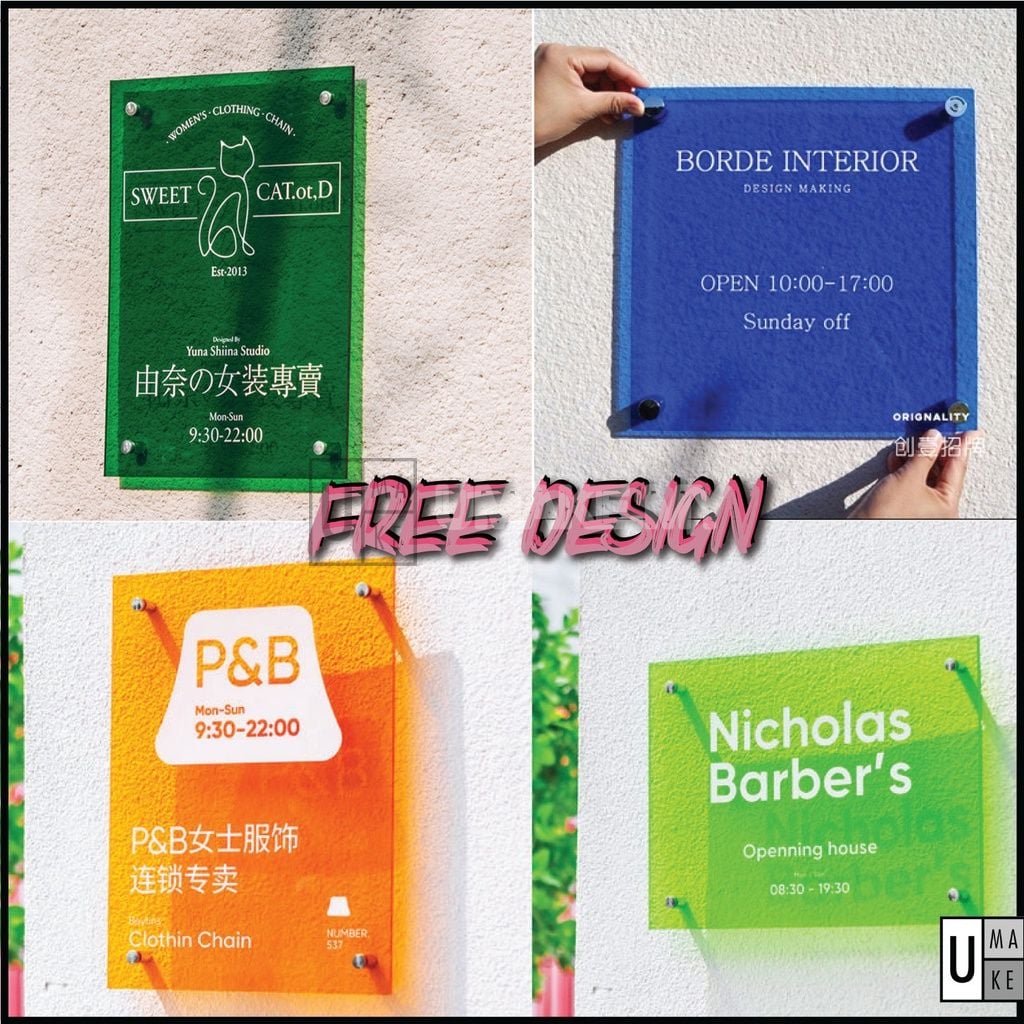
Coloured Transparent Acrylic Business Signboard
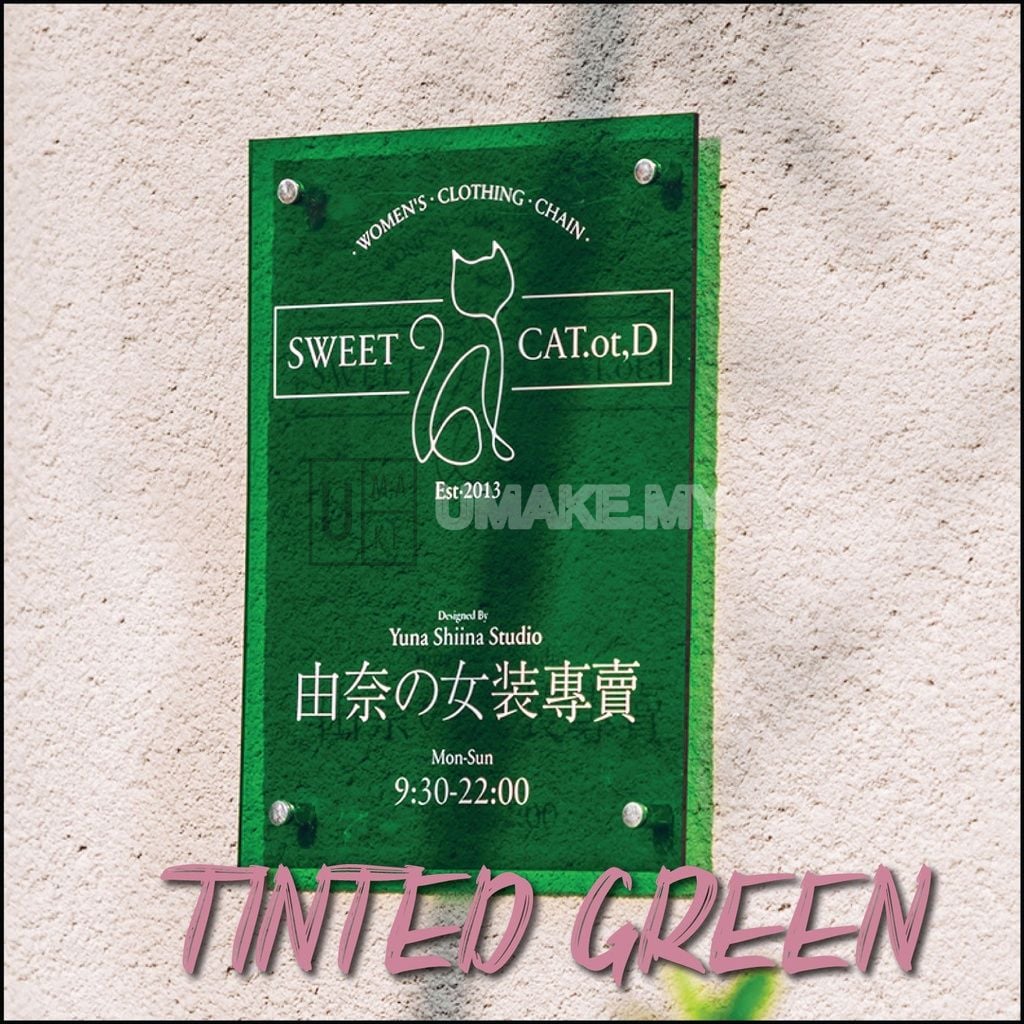
A premium coloured transparent acrylic signboard — the everyday choice for cafes, studios and offices. Modern, light and durable. From RM79.90. View the Acrylic Business Signboard →
Custom Stainless Steel Business Signboard
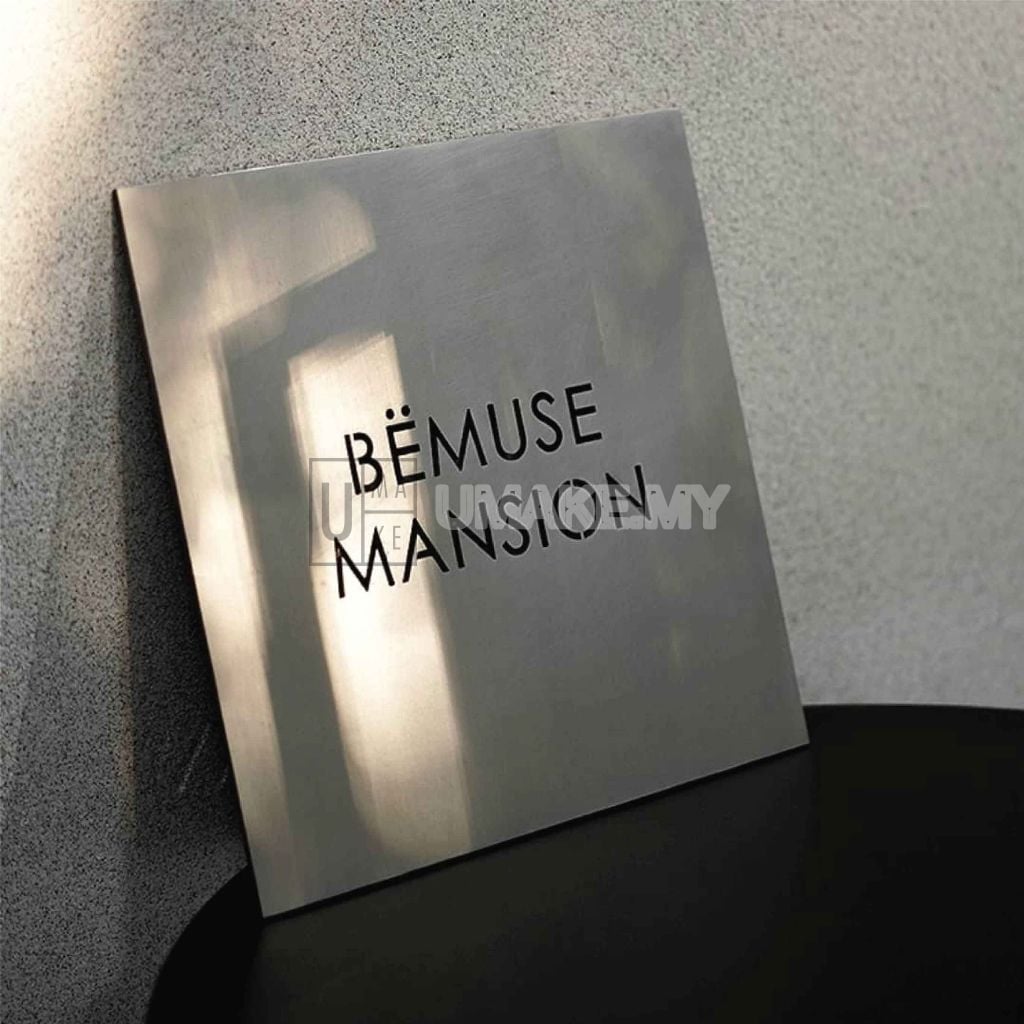
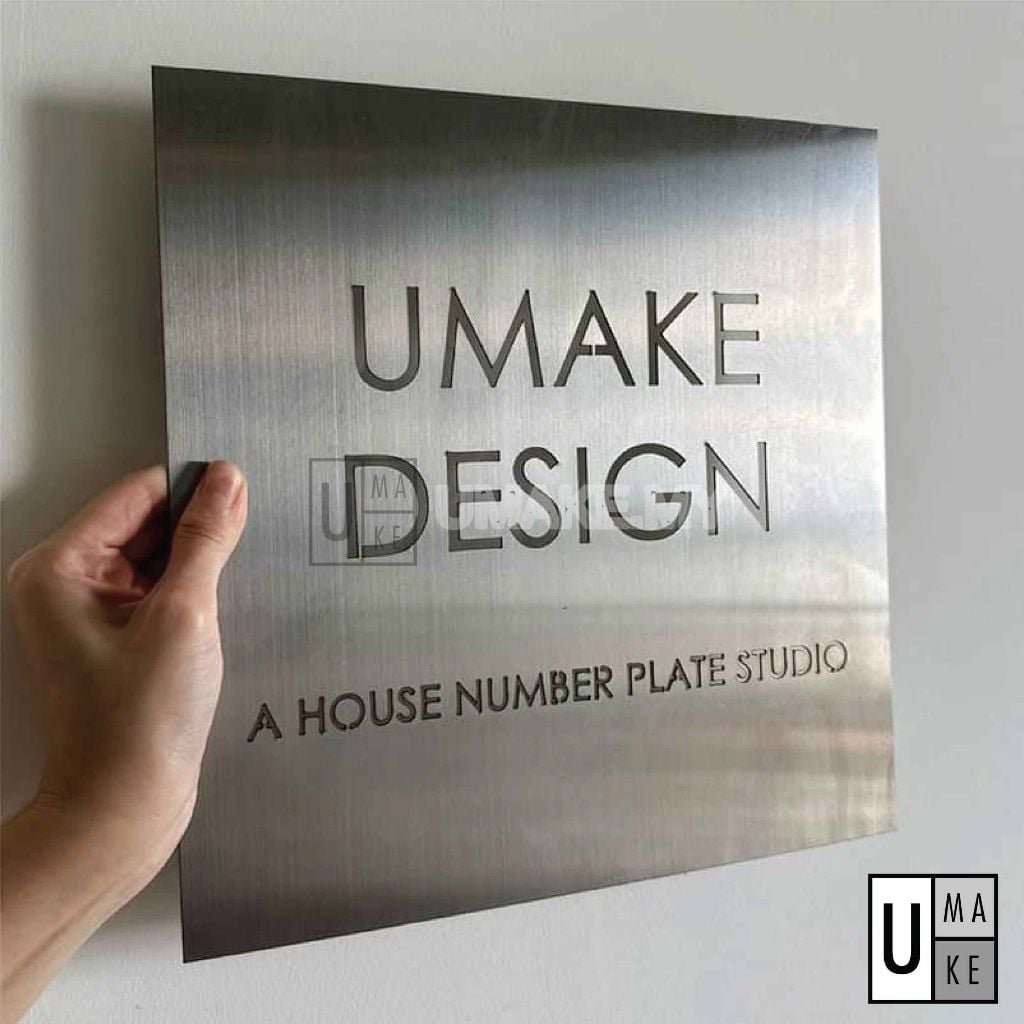
A laser-cut stainless steel company signboard — tough, rust-resistant and ideal for a long-lasting shopfront or office sign. From RM79.90. View the Stainless Steel Signboard →
Custom 3D Acrylic Company Sign
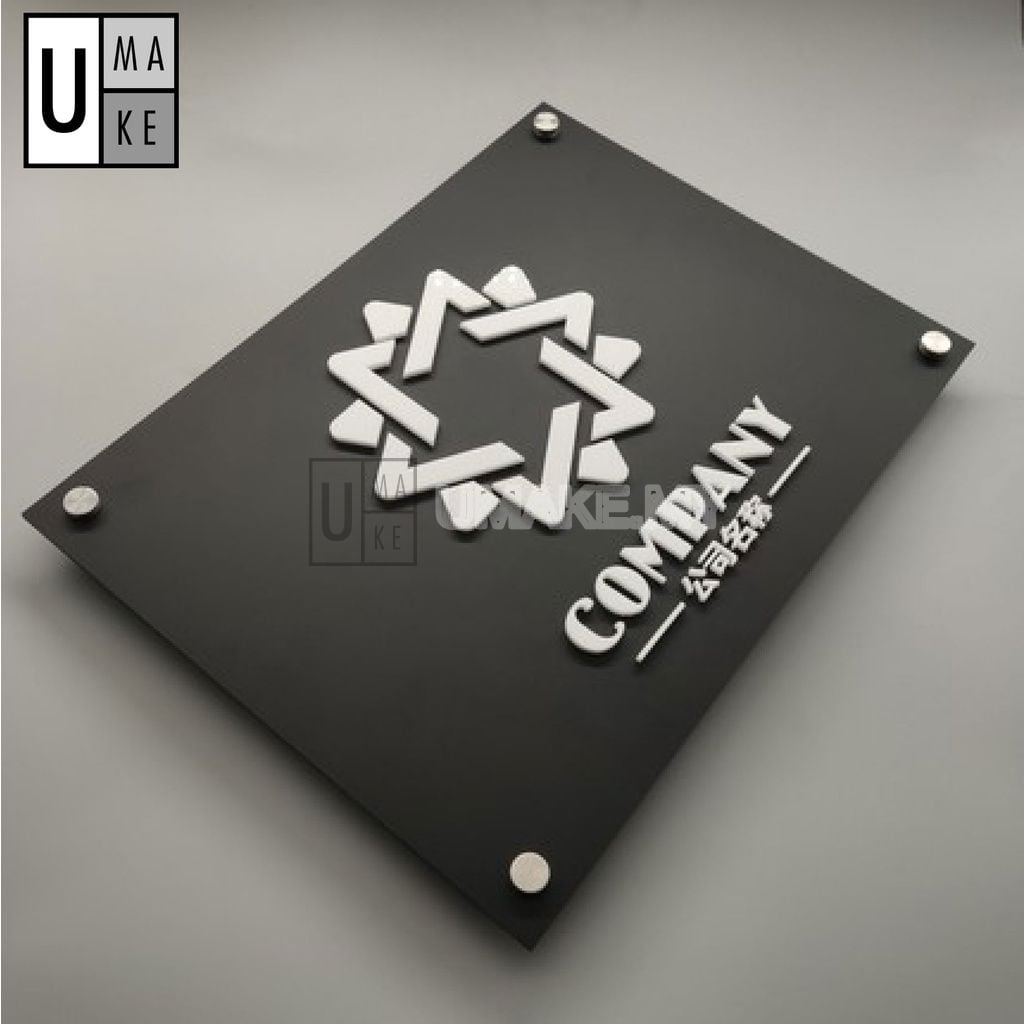
Raised 3D lettering for a premium office, workshop or reception sign that makes a statement at the door. From RM99.90. View the 3D Company Sign →
Buying a Signboard for Your Business?
UMAKE manufactures custom acrylic, stainless steel and 3D business signboards in-house in Balakong, Selangor — and every order comes with a proper tax invoice in your business name, ready for your capital allowance claim.
WhatsApp Us for a Quote →Frequently Asked Questions
Can I claim capital allowance on a signboard in Malaysia?
Generally yes. A business signboard is typically treated as "plant" under Schedule 3 of the Income Tax Act 1967, so it usually qualifies for capital allowance — an initial allowance (commonly 20%) plus an annual allowance — provided your business owns the sign and uses it. Confirm the specifics with your tax agent.
Is a signboard treated as plant or as part of the building?
A signboard is generally treated as "plant" — apparatus used to carry on and promote the business — rather than part of the building structure or pure decoration. That is why it commonly qualifies for capital allowance. Classification can depend on the facts, so confirm with your tax agent.
What allowance rate applies to a signboard?
The general structure is an initial allowance of around 20% in the first year, plus an annual allowance until the cost is written down. The annual rate is commonly 14% for general plant and machinery or 10% for fittings and "others" under the 2000 Rules. A signboard is usually claimed at the general or fittings rate — confirm the correct rate with your tax agent.
Can I claim if I rent the shop and the landlord owns the sign?
Generally no. Capital allowance is only available to the owner of the asset, so if the landlord owns the signboard, the tenant typically cannot claim it. To keep the claim with your business, buy the signboard yourself and have the tax invoice issued in your business name.
Can a cheap signboard be written off fully in one year?
Often yes. Assets costing RM2,000 or less each can frequently be written off 100% in the year of purchase as small-value assets. There is generally an annual aggregate cap for non-SME companies, while SMEs generally have no such cap. Confirm eligibility with your tax agent.
What depreciation rate should I use for a signboard in the accounts?
In your accounts, many businesses depreciate a signboard straight-line over about 5 to 10 years, depending on expected useful life. Remember that this accounting depreciation is added back for tax and replaced by the capital allowance — the two are separate.
Do I need a tax invoice to claim?
Yes, you should keep a proper tax invoice from a registered supplier as proof of the qualifying expenditure. It evidences the cost, supports the ownership condition, and dates the spend to the correct basis period. UMAKE issues proper invoices in your business name.
Is the SST on a signboard claimable?
For most businesses, SST is generally a cost and is not "claimed back" the way GST input tax once was — unless you are registered and it relates to your taxable supplies. So plan around the SST-inclusive price. Confirm your specific SST position with your tax agent.
Buy Your Business Signboard from UMAKE
A custom signboard is a working business asset — one that typically qualifies for capital allowance when your business owns and uses it. UMAKE manufactures acrylic, stainless steel and 3D company signs in-house in Balakong, Selangor, and supplies a proper tax invoice in your business name with every order.
Browse Business Signboards WhatsApp Us for a Quote
This article is general guidance only and does not constitute tax advice. Tax treatment depends on your facts and current law. Please confirm with a licensed tax agent or LHDN.


