You just bought a new house number plate and now you are staring at your wall, wondering how to put it up without making a mess. Should you use tape? Do you need to drill holes? What if your wall is tiled?
Do not worry — installing a house number plate is much easier than you think. Most plates can be installed in under 10 minutes with very basic tools. This guide covers both methods (tape and screws) and shows you exactly how to do it on any type of Malaysian wall.

Before You Start: What You Need to Know
Before you pick a spot and start sticking or drilling, take a few minutes to check these things:
1. Check Your Wall Surface
Look at the wall where you want to install the plate. Is it smooth tile, rough concrete, painted plaster, or exposed brick? The wall type determines which mounting method works best. We will cover each wall type in detail below.
2. Check If Your Area Has Rules
Some housing areas, condos, and gated communities in Malaysia have specific rules about house number plates — size, colour, height from ground, or which wall to put it on. Check with your management office or Jawatankuasa (JMB) before installing.
3. Think About Visibility
Your house number needs to be visible from the road. Think about: Can delivery riders see it at night? Is there a tree or gate blocking the view? Will the plate be too small from a distance? The whole point of a house number plate is for people to find your home easily.
Tape Mount vs Screw Mount — Which One?
There are two main ways to install a house number plate. Each has its pros and cons.
| Tape Mount (3M VHB) | Screw Mount | |
|---|---|---|
| Best for | Smooth tiles, painted walls, renters | Concrete, brick, rough surfaces |
| Drilling needed? | No | Yes |
| Time to install | 5 minutes | 15-20 minutes |
| Removable? | Yes (with heat gun or hair dryer) | Leaves screw holes in wall |
| Hold strength | Good (up to 3-5 kg) | Very strong (10+ kg) |
| Works on rough walls? | No | Yes |
| Cost | RM0 (included with plate) | RM0-20 (drill + wall plugs) |
Quick rule: If you can run your hand across the wall and it feels smooth — use tape. If it feels rough or sandy — use screws.
How to Install with 3M Tape (No Drilling)
This is the easiest method. No tools needed, no holes in your wall. Works best on smooth surfaces like glazed tiles, glass, polished stone, or smooth painted walls.
What You Need
- Your house number plate (with 3M VHB tape included — most UMAKE plates include this)
- A clean cloth or tissue
- Rubbing alcohol or a damp cloth (to clean the wall)
- A pencil and ruler (for marking position)
- A spirit level or your phone's level app (optional, for making sure it is straight)
Step 1: Clean the Wall
Wipe the wall area where you want to stick the plate. Remove all dust, dirt, and oil. If the wall has been painted recently, make sure the paint is fully dry (wait at least 7 days after painting). The tape will not stick properly to dusty or oily surfaces.
Step 2: Mark the Position
Hold the plate against the wall at the height you want. Use a pencil to lightly mark the top corners. Step back and check from a distance — is it centred? Is it level? Adjust now, because once the tape sticks, it is very hard to reposition.
Step 3: Apply the Tape
If the tape is not already on your plate, peel off one side of the 3M VHB tape strips and press them firmly onto the back of your plate. Use strips along all edges and one in the centre for even distribution.
Step 4: Peel and Press
Peel off the remaining protective liner from the tape. Carefully align the plate with your pencil marks and press it firmly against the wall. Apply strong, even pressure for at least 30 seconds — press on all areas, especially the edges and corners.
Step 5: Leave It Alone
Do not touch or adjust the plate for 24 hours. 3M VHB tape reaches full bonding strength after 24 hours. During this time, do not press, pull, or lean anything against it.
Important: Do not install in the rain or if the wall is wet. Tape will not bond to a wet surface. Wait for a dry day or dry the wall with a cloth first. In Malaysia, mornings before the afternoon rain are usually the best time.
How to Install with Screws (Stronger Hold)
Screw mounting gives the strongest hold and works on any wall surface. This is the best method for heavy stainless steel plates, rough walls, or areas exposed to strong wind and rain.
What You Need
- Your house number plate
- Stainless steel screws (included with most UMAKE plates)
- Wall plugs / rawl plugs (included or buy for RM2-3 at any hardware store)
- A drill with masonry bit (for concrete/brick) or tile bit (for tiles)
- A pencil and ruler
- A spirit level or phone level app
- A screwdriver (Phillips head)
Step 1: Mark the Hole Positions
Hold the plate against the wall at your desired position. Use a pencil to mark through the screw holes onto the wall. If your plate does not have pre-drilled holes, mark where you want the screws to go — typically at the 4 corners, about 10-15mm from the edge.
Need help with house-number-plate?
Get a free quote from UMAKE — custom signage designed and manufactured in Malaysia.
Step 2: Drill the Holes
Put on safety glasses. Using your drill with the correct bit, drill into each marked spot. For concrete or brick, use a masonry bit. For tiles, use a tile/glass bit and start at low speed to avoid cracking the tile. Drill to the depth of your wall plug — usually about 30-40mm.
Step 3: Insert Wall Plugs
Push a wall plug (rawl plug) into each drilled hole. Tap gently with a hammer if needed until the plug is flush with the wall surface. The plug expands when you drive the screw in, creating a strong anchor.
Step 4: Attach the Plate
Hold the plate over the wall plugs, align the holes, and drive in the screws. Tighten until the plate is firmly against the wall — but do not overtighten, as this can crack acrylic plates.
Step 5: Add Spacers (Optional)
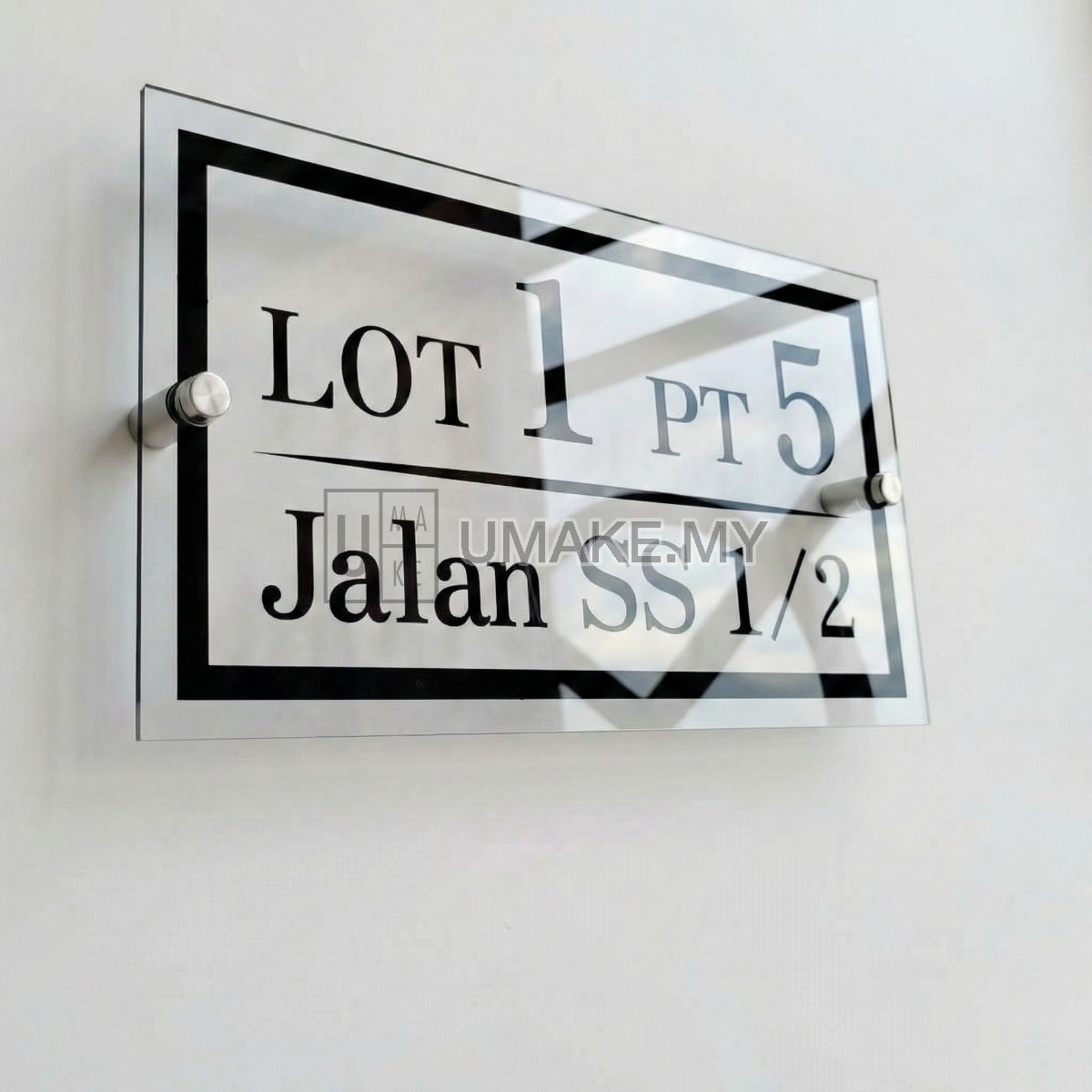
Some premium plates come with standoff spacers that create a gap between the plate and wall. This gives a modern floating effect and adds depth with shadows. If your plate includes spacers, slide them onto the screws before attaching the plate.
Installation Tips for Different Wall Types
Malaysian homes use many different wall materials. Here is what to do for each type:
Glazed Tiles (Most Common in Malaysia)
Glazed tiles are the most common exterior wall finish in Malaysian homes. For tape mount, tiles are perfect — the smooth surface gives excellent adhesion. For screw mount, use a tile drill bit and start at low speed. Put a small piece of masking tape over your mark first — this prevents the drill bit from slipping on the glazed surface.
Painted Concrete or Plaster
If the paint is in good condition (not peeling or flaking), tape mount works well. If the paint is old and peeling, scrape off the loose paint first, or use screw mount instead. For drilling, use a standard masonry bit.
Exposed Brick
Tape mount will not work on rough brick. Use screw mount only. Drill into the brick itself, not the mortar joints — mortar is weaker and may crumble. Use a masonry bit and wall plugs designed for brick.
Natural Stone (Marble, Granite)
Many semi-D and bungalow pillars in Malaysia use natural stone cladding. Tape mount works on polished stone. For screw mount, use a masonry bit and drill slowly to avoid cracking the stone. Consider using adhesive mount as an alternative — construction adhesive applied to the back of the plate.
Wood (Kampung-Style Homes)
Tape mount works on smooth, sealed wood. For screw mount, you can screw directly into wood — no wall plugs needed. Use stainless steel wood screws to prevent rust.
Where to Position Your House Number Plate
The right position makes your house number visible to delivery riders, visitors, and emergency services. Here are the guidelines:
Height
Install between 1.5m to 1.8m from the ground — roughly at adult eye level. This height is visible from the road and not blocked by parked cars or plants. If your house is set back far from the road, go slightly higher so it is visible from a distance.
Location
The best locations in order of preference:
- Next to your main gate or front door — the most natural place visitors look
- On the front pillar or wall — visible from the road
- On the fence or gate itself — only if the gate is always closed and facing the road
Lighting
If your area does not have bright street lights, consider a plate with built-in LED or a nearby motion sensor light. Delivery riders often come after dark — especially food delivery. A visible house number saves them (and you) a lot of frustration.
5 Common Mistakes to Avoid
- Installing on a dirty wall — even a thin layer of dust will make tape fail. Always clean the surface first.
- Not waiting 24 hours — 3M tape needs time to bond. If you push or adjust it too early, it will fall off.
- Using regular tape instead of 3M VHB — normal double-sided tape cannot handle outdoor conditions. Only 3M VHB (Very High Bond) tape is designed for outdoor, permanent mounting.
- Drilling too close to tile edges — drill at least 20mm away from tile edges and grout lines to prevent cracking.
- Using zinc-plated screws outdoors — zinc screws rust within months in Malaysian weather. Always use stainless steel screws for outdoor installations.
Frequently Asked Questions
1. Can I install a house number plate by myself?
Yes. Tape mount requires no tools at all — anyone can do it in 5 minutes. Screw mount needs a drill, but even if you have never drilled before, it is straightforward. Most UMAKE plates come with full hardware and instructions.
2. Will 3M tape hold in Malaysian rain and heat?
Yes. 3M VHB tape is specifically designed for outdoor use. It is waterproof, UV-resistant, and can withstand temperatures from -40 to 90 degrees Celsius — well within Malaysia's climate range of 25-35 degrees. It holds up to 3-5 kg, which is more than enough for most house number plates.
3. How do I remove a tape-mounted plate without damaging the wall?
Use a hair dryer on the hot setting. Hold it about 10cm from the plate and heat the tape for 2-3 minutes. The heat softens the adhesive, and you can then slowly peel the plate off. Any remaining tape residue can be removed by rubbing it gently with cooking oil or adhesive remover.
4. What size drill bit should I use?
Match the drill bit size to your wall plug size. Most house number plate kits use 6mm or 8mm wall plugs, so use a 6mm or 8mm masonry bit. If you are drilling into tiles, use a 6mm tile/glass bit at low speed first, then switch to a masonry bit for the concrete behind the tile.
5. My wall is uneven. Can I still install a house number plate?
Yes. For slightly uneven walls, use standoff spacers — they bridge small gaps between the plate and wall. For very uneven walls (like exposed stone), use screw mount with longer standoff spacers. The plate will float in front of the wall surface, creating a modern look.
6. Do I need to hire someone to install it?
For most installations, no. Tape mount is completely DIY. Screw mount just needs a basic drill. If you do not own a drill, you can rent one from hardware stores for about RM20-30 per day, or ask a friend. If you prefer professional installation, UMAKE offers installation service in the Klang Valley area.
7. How long does a house number plate last outdoors in Malaysia?
Material matters. Stainless steel (304 grade) lasts 15-20+ years outdoors with zero maintenance. Acrylic plates last 7-10 years in direct sunlight — longer in shaded or semi-covered areas. The tape or screws also last many years since they are designed for permanent outdoor use. For a detailed comparison, read our best house number plate designs guide.
8. Can I install a solar LED house number plate the same way?
Solar LED plates use screw mount because they are heavier than standard plates (due to the solar panel and battery). The installation is the same as regular screw mount — just make sure the solar panel faces a direction that gets direct sunlight for at least 4-5 hours per day. Read our complete solar LED house plate guide for more details.
Ready to Install? Shop UMAKE House Number Plates
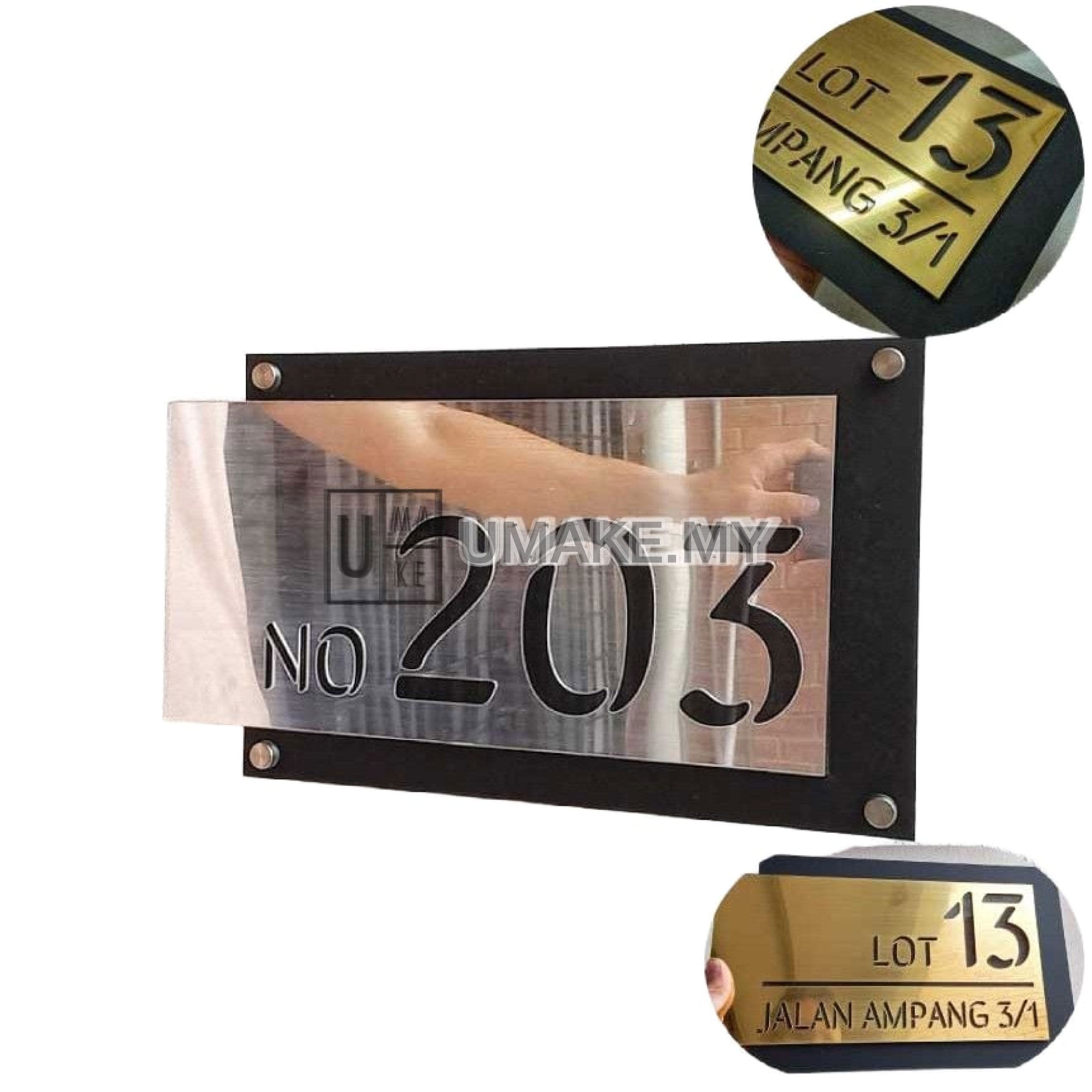
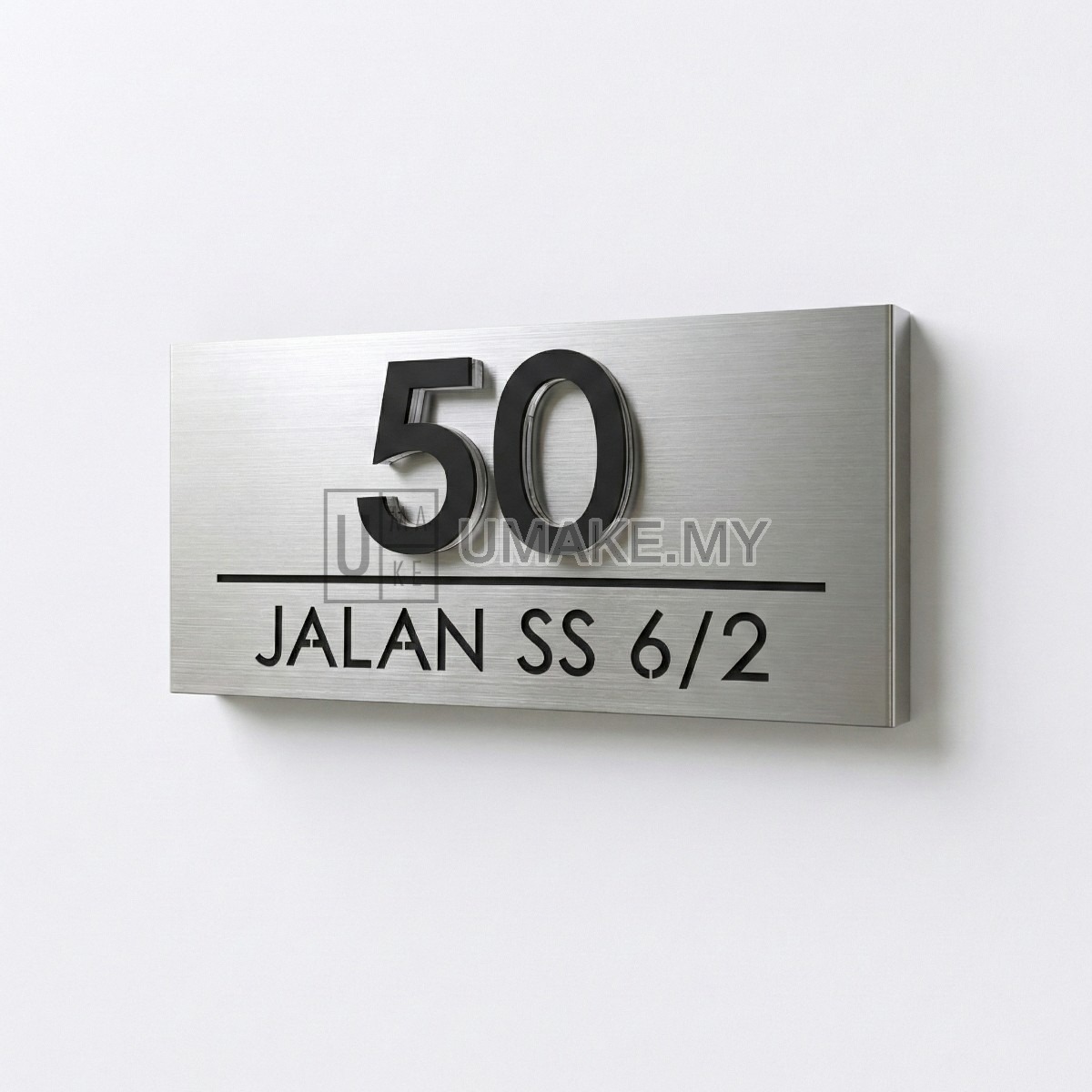
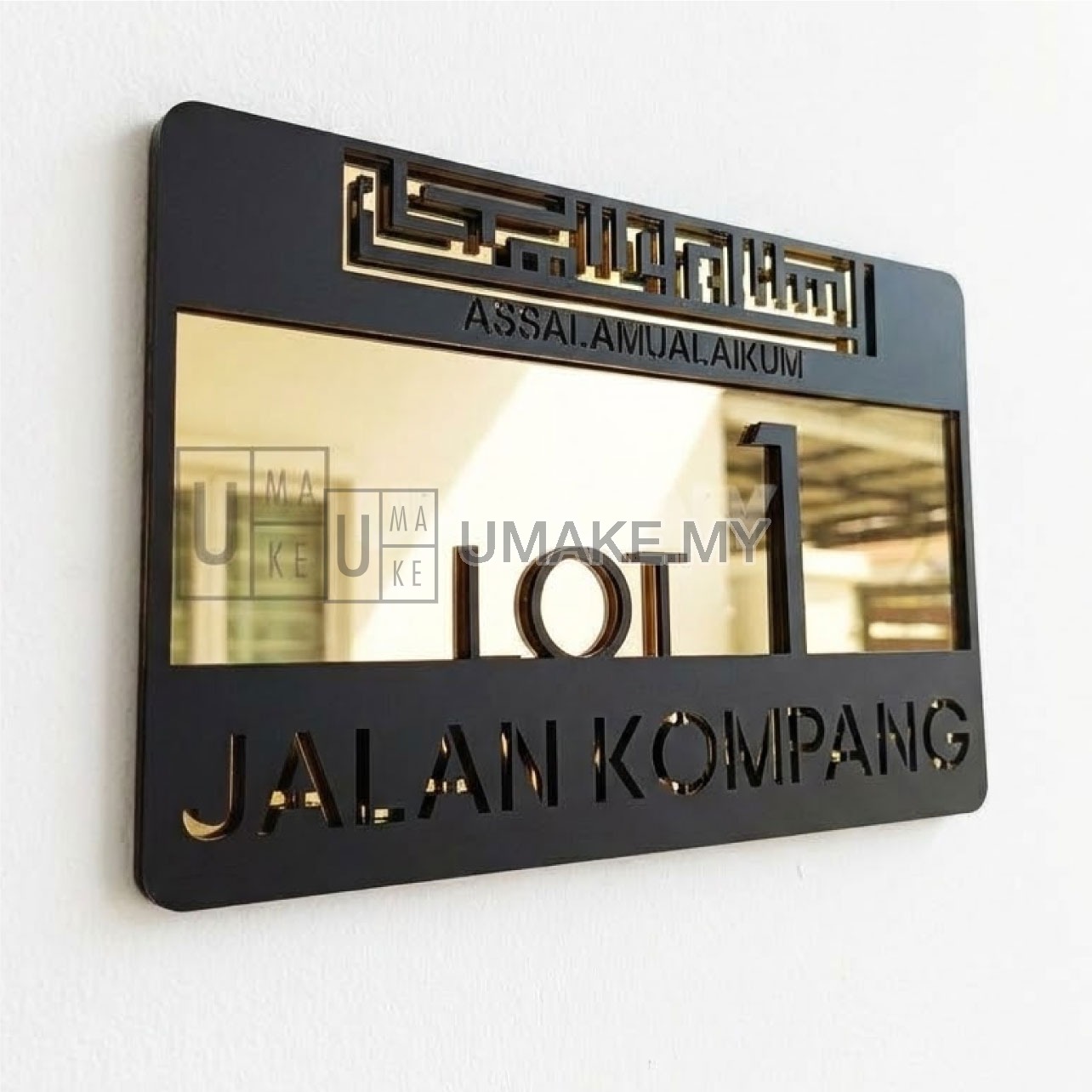
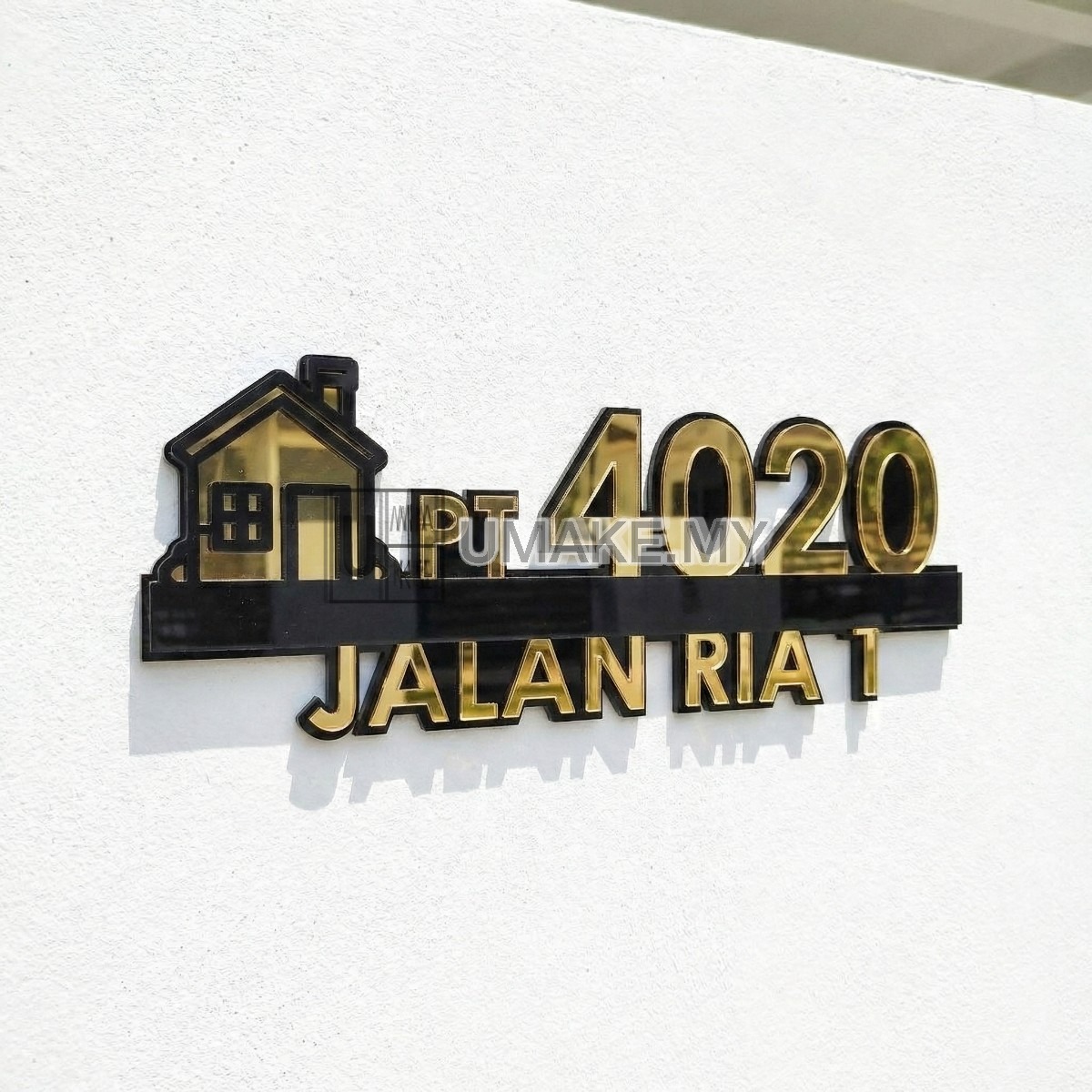
All UMAKE house number plates come with free mounting hardware — 3M VHB tape for smooth walls, or stainless steel screws with wall plugs for concrete. Every plate is custom-made in our factory in Balakong, Selangor.
Browse All House Number Plates
Related Articles You Might Like
- Best House Number Plate Designs in Malaysia (2026)
- How to Choose a House Number Plate in Malaysia
- Solar LED House Number Plate Malaysia: Complete Guide
- Feng Shui House Number Plates: Lucky Numbers & Placement Guide
- House Number Plate Malaysia: Complete Buying Guide
- Ganesha & Hindu House Number Plate Malaysia Guide


