If you manage, design or renovate a commercial building in Malaysia, braille signage is not a nice-to-have — it is part of your legal accessibility obligations. Under UBBL By-law 34A and the Persons with Disabilities Act 2008 (Akta OKU), buildings that the public uses must provide access facilities for persons with disabilities, and the technical yardstick authorities use is MS 1184:2014, Malaysia's universal design code of practice.
Yet most building owners only hear about tactile and braille signage at the worst possible moment — during plan submission, a CCC inspection, or an accessibility audit. This guide explains what the rules actually say, which signs in your building need braille, what good tactile signage looks like, and what it costs to get compliant.
Is Braille Signage Mandatory in Malaysia?
For most non-residential buildings, yes. Three layers of law and standards work together:
- UBBL By-law 34A — the 1990 amendment to the Uniform Building By-laws makes it compulsory for buildings to provide access that enables disabled persons to get into, out of, and move within the building. Access includes the information layer: signs people can find and read.
- Akta OKU 2008 (Persons with Disabilities Act) — gives persons with disabilities the right to access public facilities on an equal basis, and puts the responsibility on providers of those facilities.
- MS 1184:2014 — the Malaysian Standard code of practice for universal design and accessibility in the built environment. UBBL 34A compliance is assessed against this standard: features provided for disabled persons shall be according to MS 1184:2014 or the latest version.
In practice, this means new commercial buildings and major renovations submitted for approval are expected to show accessible signage as part of the accessibility provisions — and existing buildings can be caught out during audits, tenant fit-out approvals, or complaints made under Akta OKU.
What Is MS 1184:2014?
MS 1184:2014 (Universal Design and Accessibility in the Built Environment — Code of Practice) is the standard architects and submitting persons reference when designing for accessibility in Malaysia. It covers ramps, lifts, toilets, parking, tactile guiding paths — and the signage that ties all of these together.
On signage and information, the standard's direction is consistent: information and signs must be appropriately sized, effectively designed, suitably placed, and easy to understand — including formats that work for people with visual impairment, which is where embossed (raised) lettering and braille come in. A frequently cited concrete example: lifts should provide embossed and braille floor numbering beside the outside call button, and call buttons and car operating panels should carry braille features.
If your building already handles fire-safety signage under Bomba requirements, think of MS 1184 as the same discipline applied to accessibility. (Related reading: our KELUAR vs EXIT sign requirements guide.)
Which Signs Must Be Tactile or Braille?
Based on MS 1184's accessibility provisions and standard universal-design practice, these are the locations in a commercial building where tactile and braille signage is expected:
- Lift lobbies — embossed + braille floor number beside the call button on every floor; braille on call buttons and car operating panels.
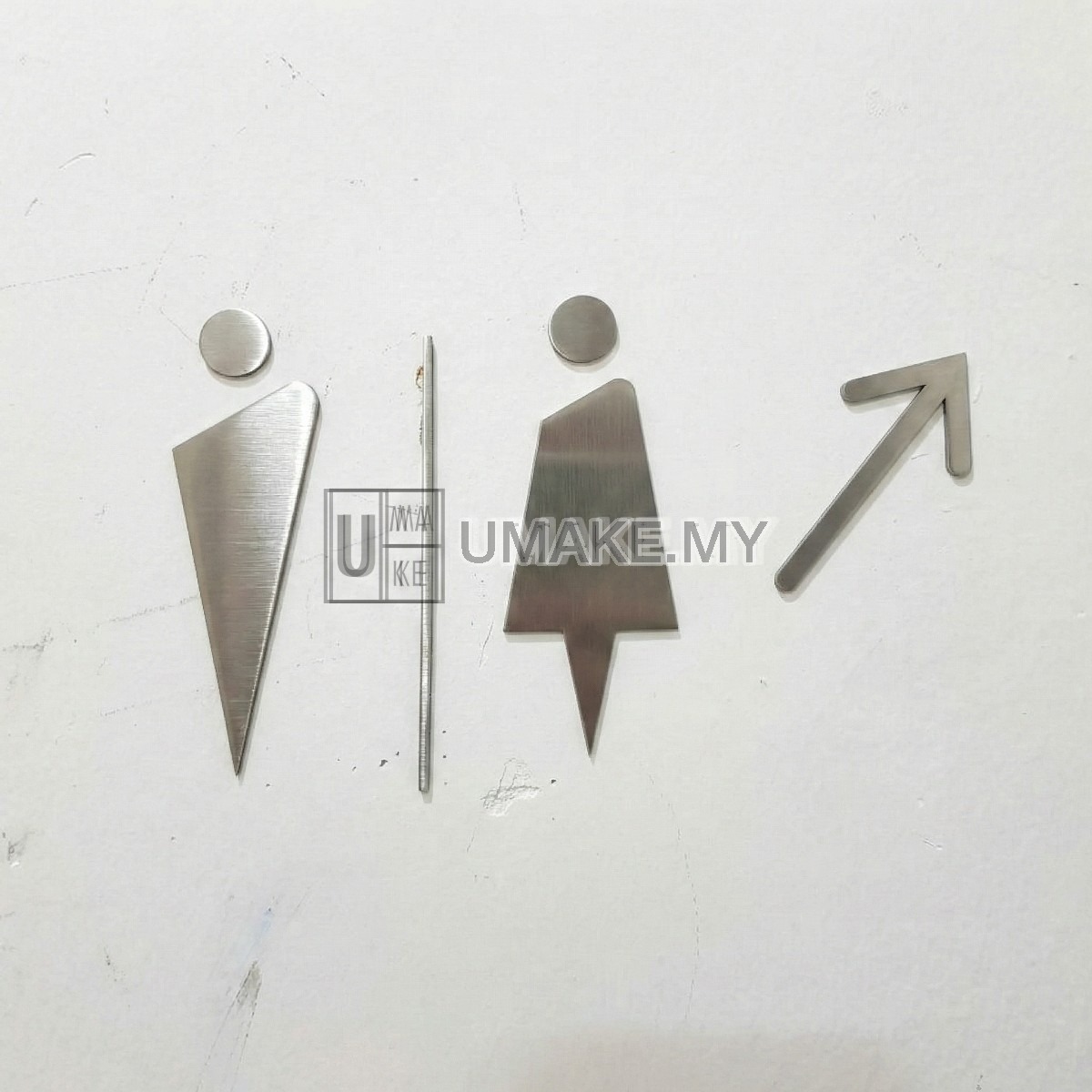
- Toilets and accessible facilities — male / female / OKU-accessible toilet identification with raised symbols and braille.
- Staircases — floor level identification at each landing.
- Room and door identification — office numbers, meeting rooms, surau, and facility rooms in public-access areas.
- Accessible parking, ramps and entrances — directional signs to accessible routes and facilities.
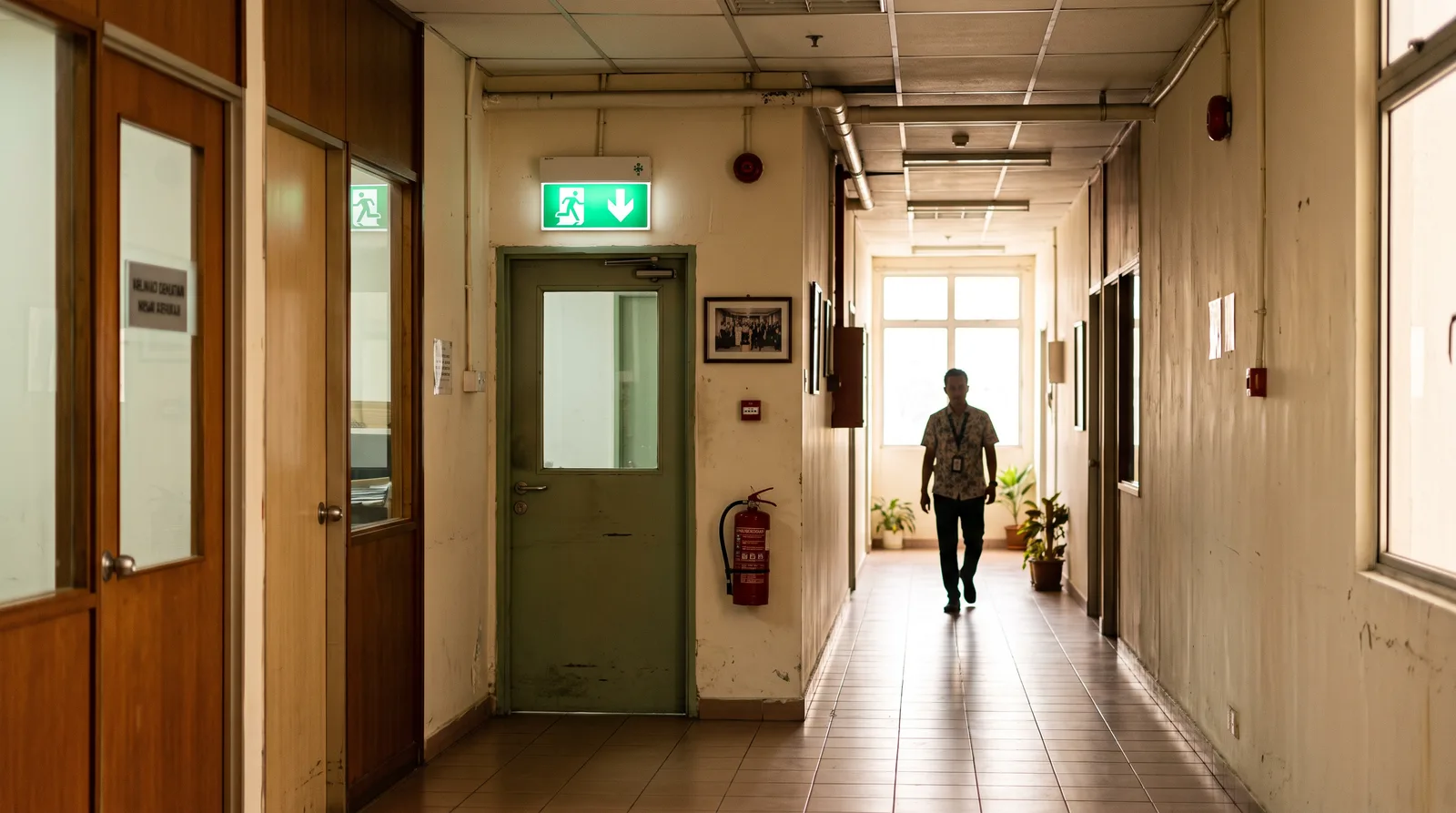
- Emergency egress — exit routes benefit from tactile identification alongside the standard KELUAR signage.
A typical multi-storey office block needs 40–150 tactile plates once you count every lift landing, toilet, stair core and public-facing room — which is why this is usually ordered as a building set, not one sign at a time.
Design Requirements: Height, Contrast & Braille Placement
MS 1184 requires signs to be effectively designed and positioned for their users. The specifications below reflect common practice used by accessibility consultants in Malaysia (aligned with international tactile signage norms) — your submitting architect should confirm the exact values against MS 1184:2014 for your project:
| Element | Typical Requirement |
|---|---|
| Mounting height | Sign centreline roughly 1,200–1,600 mm from floor, on the latch side of doors |
| Raised (embossed) characters | Characters raised approx. 1 mm from the surface, sans-serif, generous letter spacing |
| Braille | Grade 1/Grade 2 braille dots placed directly below the corresponding text |
| Contrast | Strong luminance contrast between characters and background (e.g. white on dark blue), non-glare finish |
| Pictograms | International symbols (accessibility, toilet, stairs) raised alongside text |
| Lift floor plates | Embossed + braille floor number beside the call button at every landing |
The practical takeaway: a compliant tactile sign is engineered, not just printed. Flat-printed signs — even beautiful ones — do not satisfy tactile requirements because there is nothing to touch.
Need help with braille signage malaysia?
Get a free quote from UMAKE — custom signage designed and manufactured in Malaysia.
Need MS 1184-Compliant Signage for Your Building?
UMAKE laser-cuts and UV-prints tactile & braille signage at our own factory in Klang — raised lettering, braille, toilet and lift sets, delivered nationwide. No middleman, no MOQ.
WhatsApp Us for a Building Quote →Who Is Responsible for Compliance?
Responsibility shifts through the building's life:
- New buildings: the architect / submitting person must incorporate accessibility provisions in plans, and these are checked on the path to CCC (Certificate of Completion and Compliance).
- Renovations and fit-outs: renovation works trigger the same UBBL obligations — local authorities can require accessibility upgrades as a condition of approval.
- Existing buildings: the building owner or JMB/management corporation carries the Akta OKU duty. Accessibility audits, tenant requirements (especially government and GLC tenants) and public complaints are the common triggers.
Government projects follow JKR specifications, which explicitly require disabled-access features to follow MS 1184:2014 or the latest version — including braille on lift systems.
Materials: How Braille & Tactile Signs Are Made
Three constructions dominate the Malaysian market, and all three are manufactured in-house at UMAKE:
1. Layered acrylic (most popular)
A laser-cut acrylic base with individually cut raised letters and pictograms bonded on top, plus braille formed from inserted beads or raised UV-printed dots. Durable, cost-effective, and fully customisable in colour — the standard choice for offices, malls and hospitals.
2. Stainless steel / aluminium
Etched or laser-engraved metal plates with raised elements and inserted braille beads. Premium look for hotel and corporate lobbies, and extremely vandal-resistant. See our office & door signage guide for how these fit a full building signage scheme.
3. UV-printed with raised dome finish
UV printing builds the visual layer (including high-contrast colour and pictograms), with clear raised varnish or acrylic overlays forming the tactile layer. Fast turnaround for large sets with many unique room names.
Because UMAKE runs its own laser cutters and UV printers, tactile sets are produced as one batch — consistent colours, consistent heights, one delivery. That matters when a building needs 100+ plates that must look identical.
How Much Does Braille Signage Cost in Malaysia?
Typical factory-direct pricing for custom tactile & braille signage:
| Item | Typical Price (RM) |
|---|---|
| Standard toilet / room plate (acrylic, ~150–200 mm, raised + braille) | RM 60 – RM 120 |
| Lift floor plate (embossed number + braille) | RM 60 – RM 100 |
| Premium stainless steel tactile plate | RM 150 – RM 250 |
| Full building set (40–150 plates) | Quoted per set — bulk pricing applies |
Retrofitting a mid-size office block is usually a four-figure project — far cheaper than the delays of a failed inspection or a stalled CCC. For context on general signage pricing, see our complete safety signage guide.
Building Compliance Checklist
- Walk every floor: list lifts, toilets, stair cores, public rooms and accessible facilities.
- Check each location: is there a sign, is it raised/tactile, does it carry braille, is it mounted at a touchable height?
- Photograph gaps and mark them on the floor plan.
- Confirm specs with your architect or accessibility consultant against MS 1184:2014.
- Order as one batch so heights, colours and braille style are consistent building-wide.
- Keep the delivery order and specs on file — useful evidence for audits and CCC documentation.
Frequently Asked Questions
Is braille signage compulsory for all buildings in Malaysia?
It is required for buildings the public uses — offices, malls, hospitals, schools, hotels and government buildings — through UBBL By-law 34A and Akta OKU 2008, assessed against MS 1184:2014. Private landed homes are not affected.
What is the difference between tactile and braille signage?
Tactile signage uses raised letters and pictograms that can be read by touch; braille is the dot-code system read by trained braille users. A compliant sign usually combines both: raised text and symbols with braille underneath.
Do lift buttons really need braille in Malaysia?
Yes — embossed and braille floor numbering beside the outside call button, plus braille on call buttons and car operating panels, is the clearest signage requirement in MS 1184 lift provisions and JKR lift specifications.
Can I just print braille dots on a flat sticker?
No. Braille must be physically raised to be readable by touch. Flat-printed dots fail their entire purpose and will not pass an accessibility audit.
How long does it take to produce a full building set?
Factory-direct production of a typical 50–150 plate set takes about 1–2 weeks depending on materials and approval of the artwork list. Send your floor plan or room list for an exact schedule.
Ready to Make Your Building Compliant?
UMAKE manufactures custom tactile and braille signage at our own factory — laser-cut acrylic, stainless steel and UV-printed sets, engineered to MS 1184-aligned specifications and delivered across Malaysia. Send us your floor plan or room list and we will return a per-plate quote within one working day.


