Shopping for a new house number plate and stuck between acrylic and stainless steel? You are not alone. These are the two most popular materials for house number plates in Malaysia — and each one has a very different personality.
Acrylic gives you bold colours, a sleek modern look, and a budget-friendly price tag. Stainless steel gives you raw toughness, a premium metallic finish, and decades of durability. But which one actually makes more sense for your Malaysian home?
In this guide, we compare acrylic vs stainless steel house number plates across every factor that matters — durability, pricing, aesthetics, weather resistance, and maintenance — so you can make a confident decision.
Why Your House Number Plate Material Matters in Malaysia
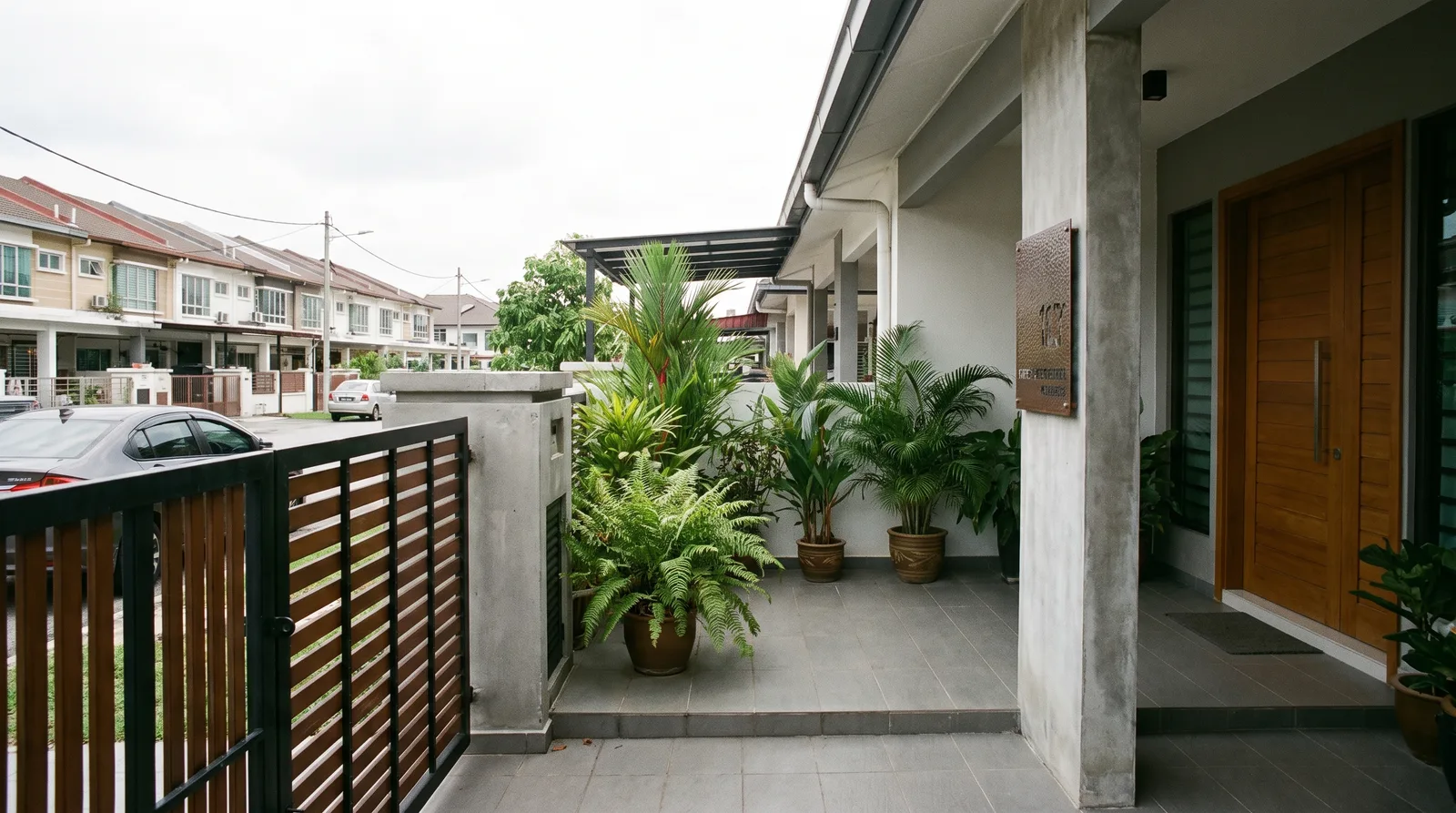
A house number plate is not just decoration — it serves a real purpose. Delivery riders, Grab drivers, and emergency services (bomba, ambulance) all rely on visible, readable house numbers to find your home quickly.
In Malaysia, your house number plate faces some of the toughest conditions on earth:
- UV radiation — 12 hours of intense tropical sunlight, 365 days a year
- Monsoon rain — heavy downpours from November to March (and surprise storms year-round)
- Humidity — average 70-90% relative humidity that accelerates corrosion and fading
- Heat — surface temperatures can exceed 60°C on sun-exposed walls
Cheap materials like painted wood or thin plastic won't survive more than 1-2 years in these conditions. That's why most Malaysian homeowners narrow it down to two materials that actually last: acrylic or stainless steel.
If you want a broader overview of all available materials, check out our complete guide to house number plate designs in Malaysia.
Acrylic House Number Plates: Pros, Cons & Best Uses
Acrylic house number plates — especially 3D acrylic plates with individually cut letters mounted on a backing panel — are the most popular choice among Malaysian homeowners today. And for good reason.
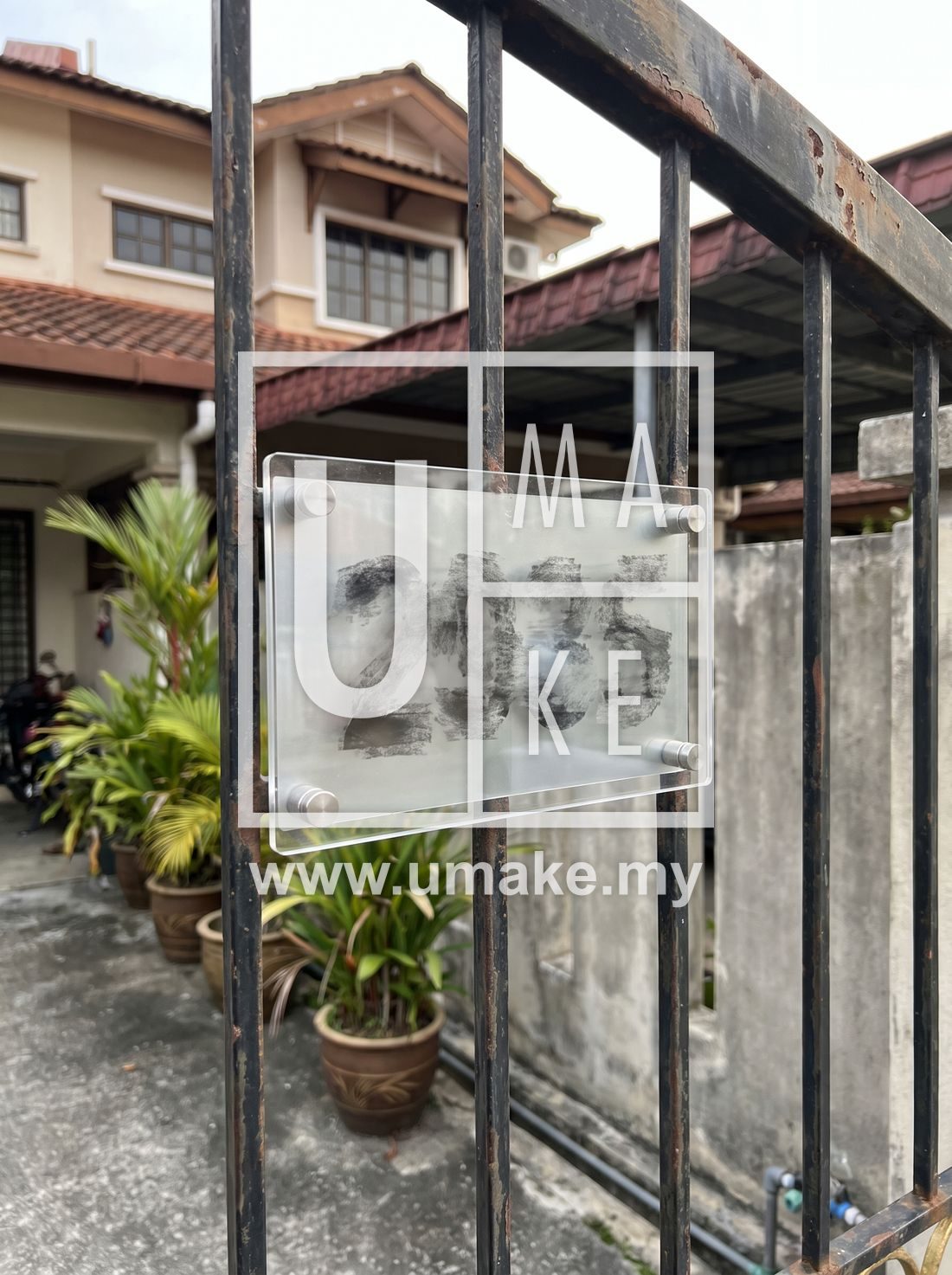
Pros of Acrylic
- Affordable — Prices start from RM35-80 for a standard plate, making it accessible for every homeowner
- Huge colour range — Available in black, white, gold, rose gold, mirror, frosted, and custom colours
- Lightweight — Easy to mount on any wall surface, including plaster and drywall, without heavy-duty anchors
- Modern 3D effect — Individually cut letters create a floating shadow effect that looks sharp on modern homes
- Glass-like finish — High-gloss acrylic panels mimic the look of glass at a fraction of the cost
- Customisable — Laser-cut to any font, size, or design. Add family names, QR codes, or decorative elements
- UV-stable (quality cast acrylic) — Cast acrylic resists yellowing for 10-15 years when properly manufactured
Cons of Acrylic
- Scratches more easily — Acrylic is softer than metal and can get surface scratches over time
- Can crack on impact — A stray football or falling branch can crack an acrylic panel
- Cheaper grades yellow — Extruded (cheap) acrylic yellows in 2-3 years under UV. Always use cast acrylic
- Lifespan of 10-15 years — Good, but not "forever" like stainless steel
Best Uses for Acrylic
Acrylic house number plates are ideal for:
- Modern terraced houses and link homes
- Condos and apartments (lightweight, no drilling damage)
- Homeowners who want bold colours or design customisation
- Budget-conscious buyers who want a premium look without the premium price
Stainless Steel House Number Plates: Pros, Cons & Best Uses
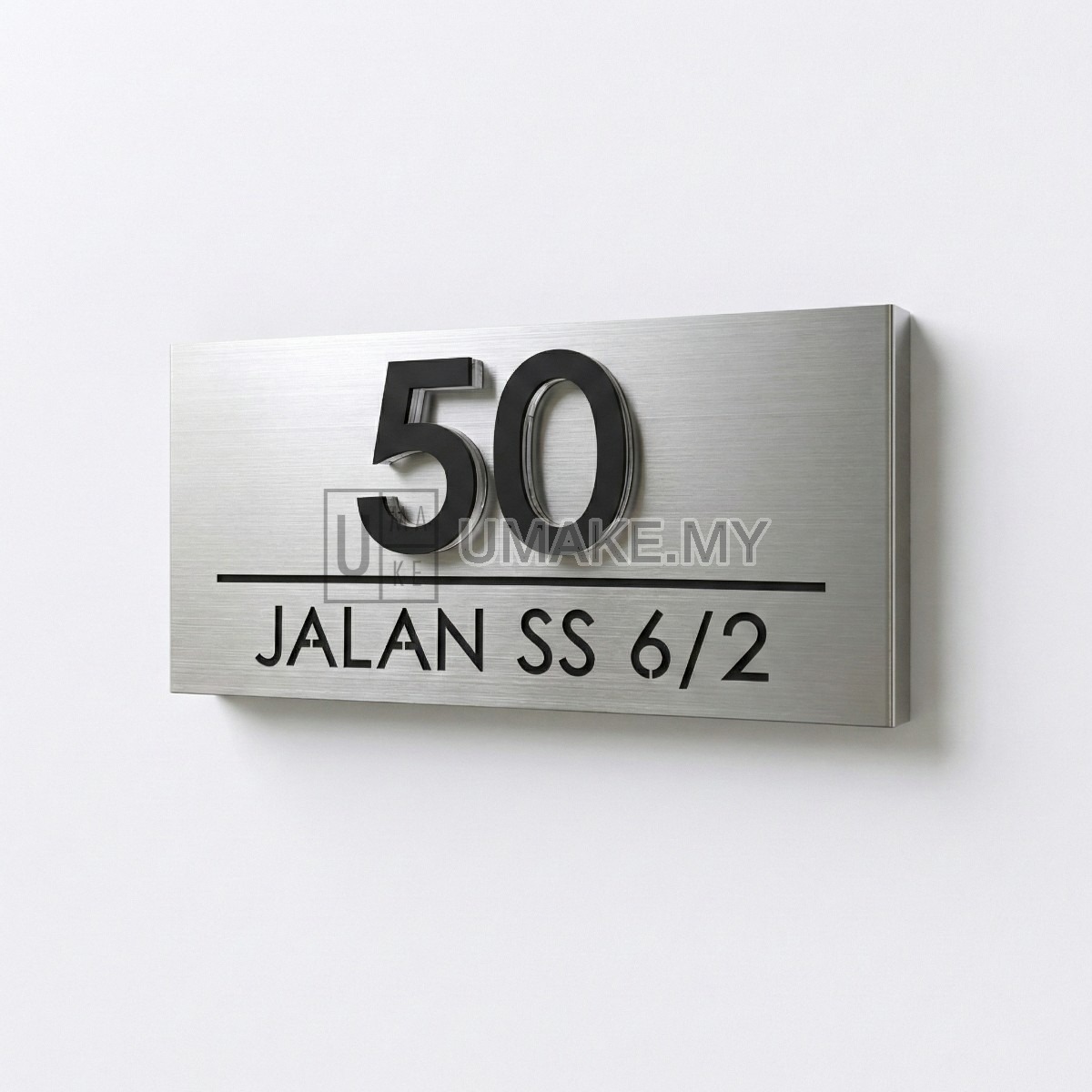
Stainless steel house number plates are the go-to for homeowners who want something built to last a lifetime. They are especially popular for bungalows, semi-Ds, and high-end properties where durability and premium aesthetics matter.
Pros of Stainless Steel
- Extremely durable — 304-grade stainless steel lasts 20-30+ years outdoors without degrading
- Corrosion resistant — Will not rust, even in Malaysia's humid, salty coastal air
- Premium look — Mirror polish, brushed, PVD gold, or matte black finishes look high-end
- Impact resistant — Metal won't crack or shatter like acrylic
- Zero UV fading — Metal does not yellow, discolour, or degrade from sunlight
- Adds property value — A quality stainless steel plate signals a well-maintained home
- Fire resistant — Does not melt or deform in extreme heat
Cons of Stainless Steel
- Higher cost — Prices range from RM80-350+ depending on size, finish, and complexity
- Heavier — Requires proper wall anchors and mounting hardware (stainless steel screws, not zinc-plated)
- Limited colour options — Natural silver, gold (PVD), rose gold, or black only. No bright colours
- Fingerprints on mirror finish — Mirror-polished plates show fingerprints and watermarks easily
- Longer production time — Laser cutting and finishing takes longer than acrylic fabrication
Best Uses for Stainless Steel
Stainless steel house number plates are ideal for:
- Bungalows and semi-detached homes with large facades
- Properties near the coast (Penang, JB, Port Dickson) where salt air corrodes other materials
- Homeowners who want a "buy once, last forever" solution
- High-end renovations or new builds where premium finish matters
Acrylic vs Stainless Steel: Head-to-Head Comparison
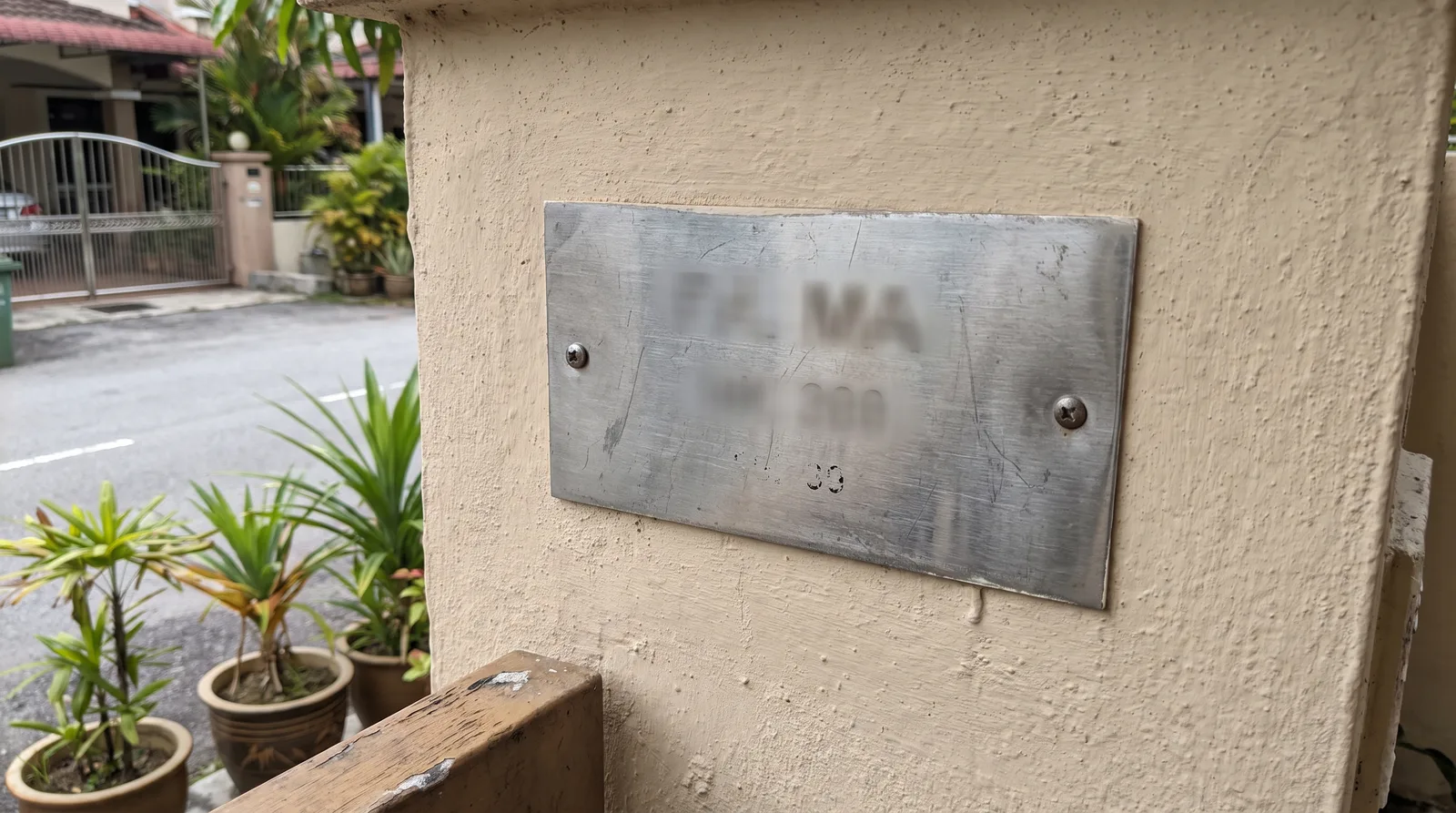
Here is a side-by-side comparison to make your decision easier:
| Feature | Acrylic | Stainless Steel |
|---|---|---|
| Durability | 10-15 years | 20-30+ years |
| UV Resistance | Good (cast acrylic) | Excellent |
| Rain & Humidity | Good — waterproof | Excellent — rust-proof |
| Impact Resistance | Moderate — can crack | High — dent-proof |
| Weight | Very light (~200-500g) | Heavier (~500g-2kg) |
| Price Range | RM 35 – RM 150 | RM 80 – RM 350+ |
| Colour Options | Wide (any colour) | Limited (silver, gold, black) |
| Customisation | Highly flexible | Moderate |
| Installation | Easy (adhesive or screws) | Needs wall plugs & SS screws |
| Maintenance | Low — damp cloth wipe | Low — occasional polish |
| Best For | Modern, colourful, budget | Premium, coastal, long-term |
The verdict? Neither material is objectively "better." Acrylic wins on price, customisation, and visual variety. Stainless steel wins on raw durability and premium feel. The right choice depends on your home, your budget, and your priorities.
Need help with House Number Plates?
Get a free quote from UMAKE — custom signage designed and manufactured in Malaysia.
UMAKE Makes Both — Compare Them Side by Side
We manufacture both acrylic and stainless steel house number plates in our Balakong factory. Fully customised, factory-direct pricing, no middleman.
Browse All House Number Plates →Which Material Suits Your Home?
Different home types call for different materials. Here is a quick guide based on common Malaysian property types:
| Property Type | Recommended Material | Why |
|---|---|---|
| Terraced house | Acrylic | Affordable, easy to mount, modern look that stands out in a row of identical homes |
| Semi-detached | Either | Both work well — choose based on your facade style and budget |
| Bungalow | Stainless Steel | Larger facade needs a premium, substantial plate that matches the home's stature |
| Condo / Apartment | Acrylic | Lightweight, easy adhesive mounting, no drilling required |
| Coastal property | Stainless Steel (304 grade) | Salt air corrodes most materials — only marine-grade stainless steel survives long-term |
| New build / renovation | Either | Match it to your architecture — minimalist modern (acrylic) or industrial/luxury (steel) |
How Malaysia's Climate Affects Each Material
Malaysia's tropical climate is one of the harshest environments for outdoor materials. Here is how each material holds up:
UV Exposure (Sunlight)
Acrylic: Quality cast acrylic contains built-in UV stabilisers that prevent yellowing for 10-15 years. However, cheap extruded acrylic (the kind you find on Shopee for RM15) will yellow within 2-3 years. Always ask your supplier if they use cast acrylic.
Stainless Steel: Metal is completely immune to UV damage. Sunlight will not cause any discolouration, fading, or degradation — ever.
Monsoon Rain & Humidity
Acrylic: Acrylic is inherently waterproof and does not absorb moisture. It handles rain perfectly. The only risk is water stains from mineral deposits drying on the surface, which are easily wiped off.
Stainless Steel: 304-grade stainless steel is rust-proof and corrosion-resistant, even in high-humidity environments. The critical detail? Use stainless steel screws for mounting, not zinc-plated ones. Zinc screws will rust and streak brown stains down your wall within months.
Heat
Acrylic: Acrylic can soften at temperatures above 80°C. While this is rarely an issue for house plates, a west-facing wall in direct afternoon sun can push surface temperatures to 60-70°C on the hottest days.
Stainless Steel: Steel's melting point is over 1,400°C. Malaysian heat is irrelevant.
Price Comparison: What to Expect in 2026
Here are real market prices for custom house number plates in Malaysia as of 2026:
| Type | Acrylic Price | Stainless Steel Price |
|---|---|---|
| Basic (numbers only) | RM 35 – RM 60 | RM 80 – RM 120 |
| 3D with backing plate | RM 60 – RM 120 | RM 120 – RM 250 |
| Custom design (name + number) | RM 80 – RM 150 | RM 150 – RM 350+ |
| Solar LED (illuminated) | RM 100 – RM 180 | RM 150 – RM 300 |
Cost per year of use: If an acrylic plate costs RM80 and lasts 12 years, that is about RM6.70/year. A stainless steel plate at RM180 lasting 25 years works out to RM7.20/year. The long-term cost is nearly identical — stainless steel just requires a larger upfront investment.
Read our complete signboard price guide for Malaysia for more pricing details across all materials.
How to Maintain Your House Number Plate
Acrylic Maintenance
- Wipe with a soft damp cloth and mild soap every 1-2 months
- Never use abrasive cleaners, rough sponges, or Cif — they scratch the surface
- For stubborn water stains, use a 50/50 vinegar-water solution
- Apply a thin coat of car wax once a year for extra UV protection and shine
Stainless Steel Maintenance
- Wipe with warm water and mild detergent — that is usually all you need
- For mirror-polished plates, use glass cleaner to remove fingerprints and watermarks
- For brushed finish plates, always wipe in the direction of the grain
- Check mounting screws once a year — tighten if needed (use stainless steel screws only)
Both materials are genuinely low-maintenance. You will spend less than 5 minutes a month keeping either material looking new.
Frequently Asked Questions
What is the best material for a house number plate in Malaysia?
It depends on your priorities. Acrylic is the best choice if you want affordability, colour variety, and modern 3D designs. Stainless steel is better if you prioritise maximum durability, corrosion resistance, and a premium metallic finish. For most Malaysian terraced houses, quality acrylic offers the best balance of looks and value.
How long does an acrylic house number plate last in Malaysia?
A quality cast acrylic house number plate lasts 10-15 years in Malaysia's tropical climate. Cheap extruded acrylic may yellow or crack within 2-3 years. Always confirm that your supplier uses cast (not extruded) acrylic for outdoor applications.
Is stainless steel house number plate worth the extra cost?
Yes, if longevity is your top priority. Stainless steel plates last 20-30+ years and require almost zero maintenance. When you calculate the cost per year, stainless steel and acrylic are very similar — stainless steel just needs a larger upfront payment. It is especially worth it for coastal homes or luxury properties.
Can I use acrylic house number plates outdoors?
Absolutely. Quality cast acrylic is designed for outdoor use and is waterproof, UV-resistant, and weather-resistant. It is used for outdoor signage all across Malaysia. Just avoid placing it where it could be hit by falling objects or heavy impact.
What mounting hardware should I use for stainless steel house number plates?
Always use stainless steel screws and wall plugs. Never use zinc-plated screws — they will rust within months in Malaysia's humidity and leave brown rust streaks on your wall. If mounting on tiles or glass, use strong outdoor adhesive tape rated for outdoor use.
Ready to Choose Your House Number Plate?
Whether you go with the modern versatility of acrylic or the lasting toughness of stainless steel, the most important thing is choosing a quality product from a manufacturer who uses proper materials and finishes.
At UMAKE, we manufacture both acrylic and stainless steel house number plates at our factory in Balakong, Selangor. Every plate is laser-cut, fully customised to your design, and built to handle Malaysia's weather. No minimum order, factory-direct pricing.


